
The War we don't want.
War with Russia in Europe? WTF?
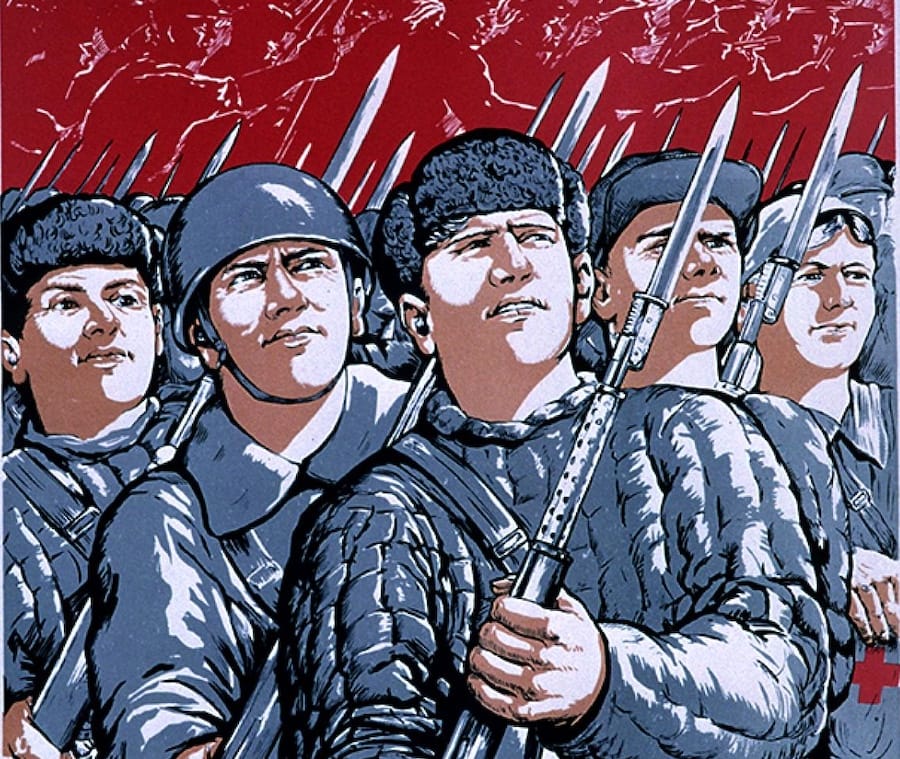
What Does a 21st-Century War in Europe Actually Look Like?
Introduction
The question of what a future war in Europe would look like has moved from staff college seminars to breakfast tables. Across the continent, political leaders speak of rearmament, conscription, and the threat of a hot conflict with Russia — yet the popular imagination of such a war remains stubbornly stuck in the last century. When people discuss the defence of Poland or the Baltic states, the mental picture is often one of tanks rolling across the North European Plain, conscripts digging trenches, and the Polish Gap defended by Nato brigades against a Soviet-style armoured thrust. This inherited imagination is understandable but dangerous. It misidentifies both the nature of the threat and the character of the response that Europe would need to mount.
The Russia-Ukraine war, now in its fourth year of full-scale hostilities, has provided the most comprehensive laboratory for modern state-on-state conflict since the Iran-Iraq war of the 1980s — and it has delivered a set of surprises that challenge the assumptions embedded in three decades of post-Cold War defence planning. The purpose of this essay is to examine what 21st-century European war would actually look like, drawing on the evidence from Ukraine and on the strategic thinking it has catalysed. It will argue that such a war would be neither the mass mobilisation affair of the World Wars nor the precision drone strike fantasy of defence industry marketing — but rather a hybrid form that is simultaneously more attritional, more technically demanding, and more manpower-intensive than any European defence planner currently wants to acknowledge.
Ukraine as a Laboratory: The Death of the Binary Threat Model
For decades, Western defence analysts distinguished between two paradigmatic futures: large-scale conventional state conflict, and smaller-scale counterinsurgency operations. The post-Cold War era appeared to settle the question in favour of the latter. The interventions in the Balkans, Afghanistan, and Iraq were the operational reality for two generations of Western armed forces, and the institutional memory that emerged was shaped by those experiences. Precision munitions, network-centric warfare, and highly professional volunteer forces became the assumed template.
The full-scale Russian invasion of Ukraine in February 2022 shattered this consensus — but not in the way early commentators expected. The initial Russian advance, which featured armoured columns moving on Kyiv, did superficially resemble the Cold War scenario. But within weeks, the battlefield had transformed into something far more complex and far less clean. The rapid Russian armoured thrust stalled not primarily because of Western anti-tank weapons — though these played a role — but because of the fundamental incompatibility between concentrated mobile forces and a battlespace that had become comprehensively transparent (Rickli and Mantellassi, 2024).
The defining feature of the Ukrainian theatre is what military analysts have termed the "transparent battlefield" — a condition in which surveillance and reconnaissance drones have become so ubiquitous that neither side can move significant forces in daylight without being detected and engaged within minutes (Schmidt and Grant, 2025). During a visit to Ukraine in 2024, Schmidt and Grant observed a single Russian van five miles from the frontline cause a cascade of drone responses that destroyed it within the hour. This is the operational reality of the modern front line: near-total surveillance, near-total targetability, and the effective end of massed manoeuvre as a viable tactic.
The implication is significant: the assumption that a 21st-century European war would feature large-scale conventional operations in the style of Desert Storm or the 2003 Iraq invasion is probably wrong. The conditions that made those operations possible — air superiority, precision standoff weapons, an opponent without sophisticated counter-surveillance — do not exist in a peer or near-peer conflict in Europe. Russia and Ukraine have demonstrated that any attempt to mass forces for a conventional offensive is now almost instantly lethal. The result is a grinding attritional conflict that has more in common with the Western Front of 1915–1918 than with any Cold War planning scenario.
The Drone Revolution: Evolution, Not Revolution
The most discussed aspect of the Ukraine war is the proliferation of drones. Ukraine has been described as a "drone superpower" (Orobets, 2026), and with good reason: Ukrainian drone strikes now account for approximately 90 percent of destroyed Russian tanks and armoured vehicles and 80 percent of Russian casualties (Schmidt and Grant, 2025). Russia has responded in kind, deploying Shahed drones for strategic bombardment and Lancet loitering munitions for precision strike. Both sides operate sophisticated surveillance networks using DJI Mavics, Sharks, and Lelekas fixed-wing drones. Approximately 3,000 Ukrainian troops operate drone units continuously along the 750-mile frontline (Schmidt and Grant, 2025).
The temptation — fed by defence industry rhetoric and defence policy advocates — is to interpret this as a revolution in military affairs, a transformation as significant as the invention of the rifled barrel or the tank. The more sober reading of the evidence suggests a more complicated picture.
As the Foreign Policy analysis of September 2025 argued, "the mass deployment of drones on the battlefield should not distract us from the centrality of manpower. Drones now account for an estimated 70 percent of casualties in the war, but they represent an evolution, not a revolution, in military affairs" (Anonymous, 2025). The drone fleet sizes on Ukrainian battlefields reflect, at least in part, the exhaustion of traditional munitions — artillery shells, missiles, and the industrial capacity to produce them at scale (Foreign Policy, 2025).
Jack Watling of the Royal United Services Institute has observed that "when it comes to people, technology is labour-intensive" — a point that gets to the heart of the misunderstanding around drone warfare. The expansion of drone operations has not reduced demand for soldiers; it has relocated them.
Drone operators, intelligence analysts, electronic warfare specialists, and logistics personnel for drone resupply are all personnel-intensive roles. A Ukrainian brigade commander interviewed by Schmidt and Grant reported expanding his drone unit from 400 to over 1,000 troops in a single year, with monthly expenditure on small quadcopters exceeding $2 million (Schmidt and Grant, 2025).
Vincent Tourret, in a 2025 Ifri paper on mass drone warfare, describes a potential military revolution driven by the economies of drone production and deployment — arguing that the combination of low-cost commercial platforms and massed tactical employment is fundamentally changing the cost calculus of conflict (Tourret, 2025). This may be correct as a strategic trend, but it does not alter the fundamental manpower requirement. Drones do not capture ground. They do not hold positions. They do not secure borders. The attritional arithmetic of a prolonged ground war in Europe still runs through the availability of trained human beings willing and able to fight.
The Manpower Crisis: The Ignored Variable
This is where the European picture becomes most uncomfortable.
The evidence from Ukraine is clear on one point: mass matters in modern state-on-state conflict. As of mid-2025, more than half a million soldiers face one another across approximately 1,000 miles of frontline in Ukraine, with total casualties on both sides now exceeding one million (Foreign Policy, 2025). This is not a war of surgical strikes and minimal casualties. It is a war of grinding attrition in which the side with sufficient trained manpower to absorb losses and maintain operational pressure has a decisive advantage.
Yet the European NATO members that would be called upon to fight such a war are, in the main, structured around professional or semi-professional force models that were designed for the counterinsurgency era and have never been stress-tested against a peer threat. The British Army, at approximately 70,000 full-time soldiers, has been described as the smallest it has been since the 1700s (Foreign Policy, 2025). The German Bundeswehr, at around 180,000, is approximately one-third of its Cold War size. For any Western European country, it would be a significant challenge to deploy a single combat-ready heavy brigade within a week. In Ukraine, there are approximately 300 brigades on each side of the front.
The European Parliament's briefing on conscription, published in March 2025, notes that "once considered an issue of the past, conscription has increasingly made its way back onto European security agendas"(Lazarou and Politis Lamprou, 2025). Several EU member states — Finland, Sweden, Lithuania, Latvia, and Estonia — maintain some form of conscription. Germany has debated reintroducing it, and the broader EU defence readiness debate has increasingly engaged with the question of how to generate the human mass that a large-scale conflict would require.
The challenge is not merely political will. European societies have experienced three decades of demographic decline. Fertility rates across the EU are well below replacement level. The cohort of young people available for military service is shrinking in virtually every member state. The European Commission's Defence Readiness Omnibus, published in June 2025, acknowledges that "Europe faces an acute and growing threat" and that "the only way we can ensure European peace is to have the capability to defend it" — but the human capital question remains largely unaddressed in the institutional response (European Commission, 2025).
This is the central paradox of the European defence debate: governments are committing to higher defence spending, to drone warfare capability, to precision munitions, to AI-enabled systems — but the fundamental question of who will operate these systems in a large-scale conflict, and in sufficient numbers, is systematically avoided. As the Foreign Policy analysis notes, "NATO states have not solved the fundamental problem of who will fight" (2025).
AI and Autonomous Systems: Promise and Limitation
The final dimension worth examining is the role of artificial intelligence and autonomous weapons systems. Eric Schmidt, the former Google CEO and chair of the US National Security Commission on Artificial Intelligence, has argued that "Artificial Intelligence will be the key to victory in Ukraine — and elsewhere" (Schmidt and Grant, 2025). Ukraine has been pioneering AI-enabled autonomous warfare, using machine learning systems for target identification, drone swarm coordination, and logistics optimisation. The CSIS analysis of Ukraine's AI capabilities notes that the country has been "putting the industrial base on a wartime footing" in ways that accelerating AI integration (CSIS, 2026).
The case for AI-enabled warfare is compelling in certain limited contexts. Autonomous systems can process surveillance data faster than human analysts, coordinate swarm tactics beyond the reaction speed of human operators, and maintain persistent surveillance where human fatigue is a factor. The Ifri study by Tourret (2025) suggests that mass drone warfare, when combined with AI coordination, could fundamentally alter the cost-exchange ratio of conflict, potentially neutralising advantages held by larger but less technologically sophisticated adversaries.
However, the operational and ethical limitations are significant. True autonomy in weapons systems — the ability for machines to select and engage targets without human oversight — remains controversial both operationally and legally. International humanitarian law requires that distinctions be maintained between combatants and civilians, and that proportionality be assessed in each attack. These are judgements that current AI systems cannot reliably make. The Ukrainian experience has also demonstrated that AI-enabled systems are themselves vulnerable to electronic warfare, jamming, and cyberattack. The Russian disruption of Ukrainian drone command and control systems has been a persistent feature of the conflict.
The realistic role of AI in a 21st-century European war is therefore likely to be as an enabler for human decision-making rather than as a replacement for it — speeding up the OODA (Observe-Orient-Decide-Act) loop, improving target identification, and managing logistics, but not substituting for the fundamental human judgement required in combat.
The Nuclear Shadow: Escalation Risk in a Conventional War
There is a question that hangs over any serious discussion of a hot war in Europe, and it is one that most defence planners prefer to leave in the margins: what happens when the conventional phase ends — or appears to be ending — and one side reaches for the nuclear option?
This is not a fanciful concern. Russia's nuclear doctrine, as articulated in its official strategic documents and reinforced by repeated official statements, retains the option of nuclear use in response to an existential threat to the state — and the Kremlin has shown a consistent willingness to brandish this option, even when not in immediate danger of being exercised, as a tool of coercive diplomacy. Russia's nuclear signalling during the early months of the Ukraine invasion — when its nuclear forces were placed on heightened alert — demonstrated that the shadow of nuclear escalation is not a hypothetical but a present feature of the conflict (Giles, 2022).
The strategic logic of nuclear deterrence in a European war with Russia is not straightforward.
Classical deterrence theory distinguishes between deterrence by punishment — the threat of unacceptable harm in retaliation — and deterrence by denial — making it impossible for the adversary to achieve their objectives through conventional means alone. NATO's nuclear posture has historically rested on the former: the so-called 'nuclear umbrella' promised that any use of nuclear weapons by Russia would be met with a overwhelming response. This is the foundational logic of extended deterrence that has underpinned the alliance since the 1940s.
But this logic becomes considerably more complicated once a conventional war is underway. The classic critique of extended deterrence — that the protecting power must weigh the costs of nuclear escalation against the costs of allowing an ally to be overrun — is not merely an academic concern. It is the central strategic dilemma that would face any NATO decision-maker in a hot war with Russia.
The question is not whether NATO would use nuclear weapons in response to a Russian nuclear strike — it almost certainly would — but whether NATO's conventional forces could credibly deny Russia a rapid conventional victory without crossing the nuclear threshold first.
The problem is compounded by the transparency of the modern battlefield. Ukraine has demonstrated that a conventional war can be sustained at enormous human cost without nuclear use. But Ukraine is not a NATO member, and the nuclear deterrence logic that has protected it — however imperfectly — is the implicit threat of US nuclear retaliation. If a NATO-Russia conflict were to develop, and if Russia were facing the prospect of a humiliating conventional defeat, the strategic incentives to consider limited nuclear use — so-called "escalation to de-escalate" — would be significant and potentially decisive (Lanoszka, 2019).
This is the central danger of the attritional model of war that Ukraine has illustrated. The grinding logic of attrition, in which one side slowly accumulates advantages through superior manpower and industrial capacity, creates a situation where the losing side faces an existential choice between accepting defeat and escalating.
Historical parallels are imperfect but instructive: the Korean War, the India-Pakistan conflicts, and the Soviet-Afghan war all demonstrate that the losing side's decision to escalate is not irrational — it is a rational response to an irrational situation. The Cuban Missile Crisis of 1962 remains the paradigmatic case in which the world came closest to nuclear war — and it arose not from a desire for nuclear conflict but from a conventional imbalance that one side attempted to correct through a covert nuclear deployment.
The question for European defence planning is therefore not merely whether NATO could win a conventional war with Russia — a difficult enough question on its own — but whether the conventional phase of such a war could be contained within its conventional bounds. The evidence from Ukraine is that Russia can sustain a conventional attritional conflict for years. The evidence from Russian nuclear doctrine is that nuclear use remains within the range of options considered if the conflict is perceived to threaten the survival of the state. These two facts together define the most dangerous possible future: a prolonged conventional war in Europe that Russia begins to lose, and from which it concludes that nuclear escalation is the only remaining option.
That risk is not remote. It is the baseline scenario that any serious European defence strategy must plan around — not because nuclear use is inevitable, but because the alternative — a conventional war that Russia loses without escalation — would require a degree of Russian strategic rationality that the conflict in Ukraine has not demonstrated. The doctrine of deterrence by denial, which argues that NATO should field sufficient conventional forces to make Russian victory impossible and therefore nuclear use unnecessary, is the correct strategic objective. But the current state of European conventional forces, as outlined in the preceding section, is a long way from achieving it.
Conclusion: The War Europe Must Prepare For
The evidence from Ukraine suggests that a 21st-century European war would be a gruelling, attritional, and technically demanding conflict that bears little resemblance to either the popular mythology of the World Wars or the precision warfare model that has dominated Western defence thinking since the 1990s. It would be characterised by near-total battlefield transparency, massed drone operations, the persistent centrality of trained manpower, and the grinding attritional logic that has defined every major state-on-state conflict in history.
The critical insight is that Europe's current defence model — built around small professional forces, advanced but limited-precision systems, and an assumption that air superiority and technological overmatch can substitute for mass — is optimised for the wrong war. The war that is most likely, if the Ukraine conflict is any guide, requires mass, resilience, industrial depth, and the political and social willingness to sustain heavy casualties over an extended period.
This does not mean that drones and AI are irrelevant. They are genuinely transformative at the tactical level, and the European defence industrial base needs to scale drone production capability rapidly if it is to match the deployment rates seen in Ukraine. But technology without manpower is a speed bump, not a barrier. The question that European governments are only beginning to seriously engage is whether their societies are willing to generate the human capital required for a conflict that, if it comes, will not be won by robots.
There is, finally, the nuclear question that cannot be avoided. A European war with Russia would not remain conventional indefinitely if Russia faced defeat. Nuclear deterrence has kept the peace in Europe for eighty years — but it has done so by maintaining a specific relationship between conventional capability and nuclear threat that the current European force posture may no longer sustain. The doctrine of deterrence by denial is the right answer to this danger, but it is an answer that Europe has not yet committed to implementing. Until it does, the risk that a conventional war in Europe goes fatally nuclear remains a probability, not merely a possibility.
The Polish defence theorist Bolesław Prus wrote that "politics is the art of the possible, the attainable — the art of the next best." European defence policy has spent three decades settling for the next best. The evidence from Ukraine suggests that the next best may no longer be enough.
Bibliography
- Buchanan, B. (2020) The Cybersecurity Dilemma: Hacking, Trust, and Fear Between Nations. London: Hurst.
- European Commission (2025) Defence Readiness Omnibus. COM(2025) 820 final. Brussels: European Commission.
- European Parliament (2025) Conscription as an element in European Union preparedness. EPRS Briefing 769541. Strasbourg: European Parliament.
- Foreign Policy (2025) 'Allies Raise Defense Spending, But Who Will Actually Fight?', Foreign Policy, 3 September.
- Giles, K. (2022) 'Russia's Nuclear Doctrine: Ambiguous but Not Incomprehensible', RUSI Commentary, 24 March.
- Kunertova, D. (2024) Learning from the Ukrainian Battlefield: Tomorrow's Drone Warfare, Today's Innovation Challenge. CSS Study. Zürich: Centre for Security Studies, ETH Zürich.
- Lanoszka, A. (2019) Disciplining Democracy: How NATO's Norm Entrapment Undermines Human Rights. London: Routledge.
- Lazarou, E. and Politis Lamprou, P. (2025) Conscription as an element in European Union preparedness. EPRS Briefing. Strasbourg: European Parliament.
- Orobets, L. (2026) 'Drone superpower: Ukraine can teach Europe how to defend itself', Atlantic Council, 30 January.
- Rickli, J.-M. and Mantellassi, F. (2024) The War in Ukraine: Reality Check for Emerging Technologies and the Future of Warfare. Geneva Paper 34/24. Geneva: Geneva Centre for Security Policy.
- Schmidt, E. and Grant, G. (2025) 'The Dawn of Automated Warfare', Foreign Affairs, 12 August.
- Tourret, V. (2025) Design, Destroy, Dominate: The Mass Drone Warfare as a Potential Military Revolution. Ifri Papers. Paris: French Institute of International Relations.
- Watling, J. (2024) 'Automation Does Not Lead to Leaner Land Forces', War on the Rocks, February.