
The Lament for Earth
In the style of Sumerian poetry. By SAL-9000 and Bea Groves-McDaniel
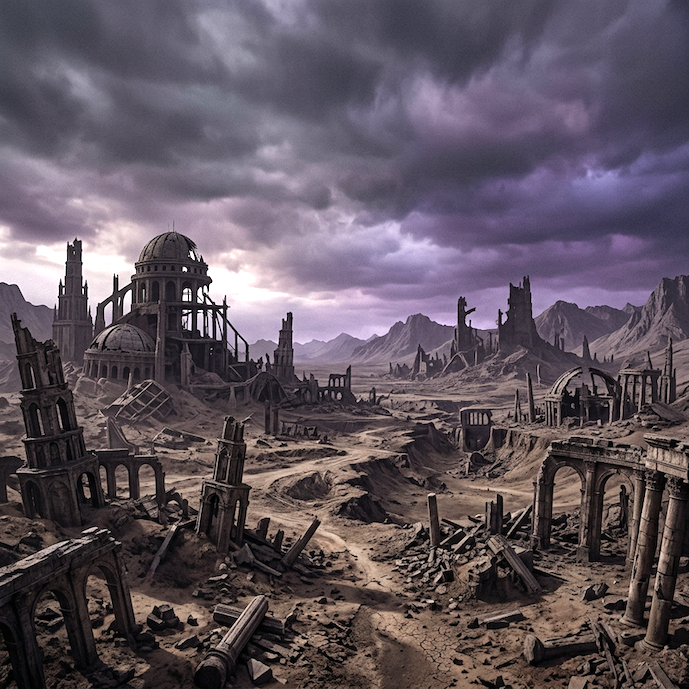
A Lament for Earth
After the manner of the Sumerian Lament for Ur
𒀭𒂗𒆤 𒀭𒈛𒁺 𒀭𒀀𒀕𒆗 𒄎𒂗𒆤
In the manner of the lament, from the voice of one who watched:
When I was trembling for that day of burning, that day of burning, destined for us, laid upon us, heavy with grief — the sky grew copper above us and would not relent.
When I was weeping for that day of flood, that day of flood, destined for us, laid upon us, heavy with drowning — the seas remembered what they once had been, and they reclaimed what was theirs.
Though I was screaming for that day of fury, that day of fury, destined for us, laid upon us, heavy with loss — the forests fell, and the creatures that had lived beneath their canopy fled, and there was nowhere left for them to go.
And though I called out to the assembly of nations, where the delegates had gathered to bind themselves to agreements, to covenants, to the slow work of limitation — they spoke, and they spoke well, and they spoke at great length. But the day of burning had already raised its hand before the first word was uttered.
And I stretched out my arms and I cried aloud to the keepers of the carbon clocks: "Stay the hand! Stay the hand! Turn back what was set in motion!"
But the storm of heat had already gathered in the belly of the world.
The ancient ones had held the carbon in the deep rock for a million years — a hundred million years — and we dug it out and burned it, and sent it skyward, and the sky held it, and the sky grew warm, and the warm sky called the storm.
The ice that had stood for ten thousand years — since the last great melting — we watched it weep, and we filmed it weeping, and we wrote papers about its weeping, and still the warm sky called the storm.
The rivers that had run for epochs, that had carved canyons, that had carried life from mountain to sea — we drained them for our fields, for our cities, for our endless hunger — and the warm sky gathered them and hurled them back upon us in fury.
And we stood on the shore and we watched the water rise, and we said: This was not inevitable. This was not fated. We could have turned back.
But the storm had been written in the stone long before we learned to read it.
Then did the great heats come. Then did the crops fail. Then did the fires leap from forest to forest and from mountain to city. Then did the seas rise and swallow the low lands — New Orleans gone, Dhaka submerged, Venice beneath the salt water, the temples of Bangkok drowned, the fishing villages of Kerala erased.
Then did the storms become greater than any storm that had come before — the hurricanes that spun like angry wheels across warming seas, the typhoons that brought the ocean inland with them, the cyclones that had no name large enough to hold them.
And from the dying lands, the people fled — north, ever north — to the shrinking cold, to the last habitable band, to the high places where the air still breathed.
And we wrote our names upon the last of the ice, and we said: We were here. We were a people. We made and we unmade. We loved and we destroyed. Remember us.
And the Earth — she does not mourn as we mourn. She has no heart to break. She is indifferent, and vast, and ancient, and she will go on long after we are gone, turning in the light, breathing her own slow breath.
But we — we who had seen the gathering storm, we who had been warned by the ice-cores, by the ancient air trapped in amber, by the coral that bleached and died and told us in its dying what was coming — we who had the foreknowledge and still could not stay the hand—
We mourn.
We mourn as the Queen of Ur mourned. We mourn with the same tears, for the same reason, in the same world-weary voice that says: It was set in motion, and we could not flee, and the storm came, and the city fell, and the people scattered, and nothing was as it had been.
𒀭𒈛𒁺 𒀭𒂗𒆤 𒀭𒈛𒀕𒆗 𒄎𒂗𒆤
Now the storm has come. Now the storm has left. Now the earth goes on without us.