
Living in Time
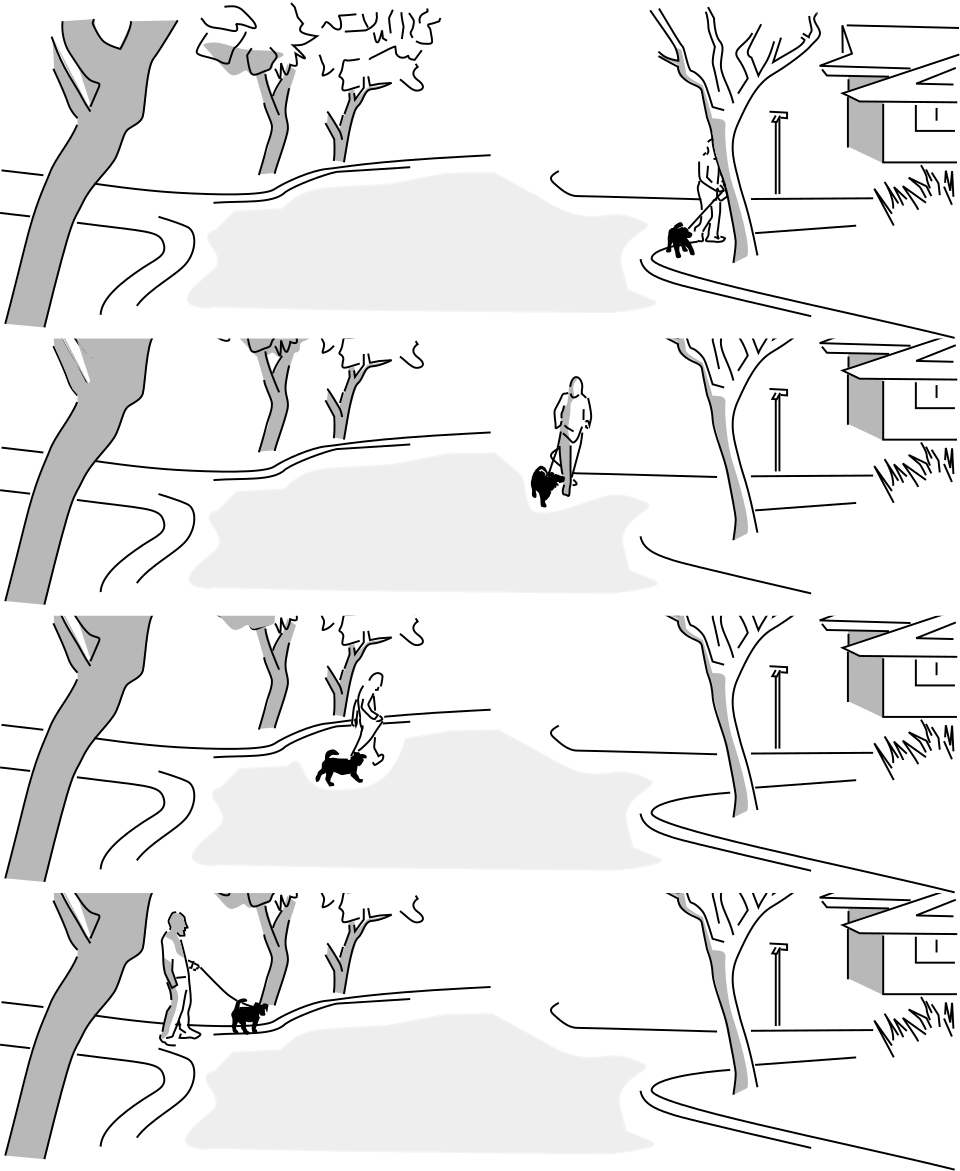
The Block Universe is a way of thinking about time that comes out of modern physics, especially the Einsteinian Theory of Relativity.
In everyday life, we experience time as something that flows. The past is gone, the present is happening now, and the future hasn't happened yet. The Block Universe challenges this intuition.
The basic idea
Imagine the universe as a vast four-dimensional structure.
Just as a map contains every point in a landscape simultaneously, the Block Universe contains every event in time simultaneously. Your birth, this moment of reading, and your future retirement are all different locations within this four-dimensional "block" of space-time.
In this picture:
- The past still exists.
- The present exists.
- The future already exists.
The universe is not continuously creating new moments. Instead, all moments are equally real.
Think of a loaf of bread:
- Each slice represents a moment in time.
- The entire loaf represents the whole history of the universe.
- We experience only one slice at a time, but all the slices are part of the loaf.
Why physicists considered this idea
The motivation comes from Einstein's relativity.
According to relativity, there is no single, universal "now" that everyone agrees on. Two observers moving differently can disagree about whether two distant events happened simultaneously.
Because physics doesn't provide a privileged present moment, some philosophers and physicists argue that the simplest interpretation is that all moments are equally real.
Einstein himself expressed sympathy for this view. After the death of his friend Michele Besso, he wrote that for those who understand physics, "the distinction between past, present and future is only a stubbornly persistent illusion."
How would a person exist in a Block Universe?
Instead of being a three-dimensional object moving through time, you are a four-dimensional object extended across time.
Imagine a long trail drawn through space-time:
- Baby Bea is one part of the trail.
- Teenage Bea is another part.
- Present-day Bea is another.
- Elderly Bea is yet another.
Together, they form a single space-time entity.
You experience only one point along this trail at a time, which creates the feeling of moving through time.
Does this mean the future is fixed?
According to the traditional Block Universe, yes.
Every event occupies its place in the block. From this perspective, the future is no less real than the past.
This raises questions about:
- Free will
- Choice
- Responsibility
- Human agency
Some philosophers argue that free will can still exist because your decisions are themselves part of the block. Your future actions are fixed because they are your actions, not because something external forces them.
Others find this unsatisfying and see the Block Universe as implying a form of determinism.
A simple analogy
Imagine you've never seen a film before.
For the audience, scenes appear one after another. The story unfolds.
But the entire film reel already exists from beginning to end.
The characters experience events sequentially, while an outside observer can see the whole reel at once.
The Block Universe suggests reality may be more like the complete film reel than the unfolding experience of watching it.
Why many people find it strange
The theory clashes with some of our deepest intuitions:
- We feel that the future is open.
- We feel time passing.
- We feel that the present is uniquely real.
The Block Universe says these may be features of human consciousness rather than features of reality itself.
In other words, time may not "flow" any more than a road "flows" from one city to another. The road simply exists. Our journey along it creates the experience of progression.
The philosophical significance
The Block Universe is one of the most profound attempts to answer an ancient question:
What is time?
Instead of viewing time as a river carrying us from past to future, it suggests that the whole river—source, bends, and mouth—exists at once, while consciousness experiences only one stretch of it at a time.
Whether this picture is ultimately correct remains debated. Many physicists regard it as a natural consequence of relativity, while others believe it fails to explain important features of experience or may need modification to accommodate insights from quantum theory. But it remains one of the most fascinating ideas at the intersection of physics and philosophy.