A Pillar of Democracy
On Adult Education
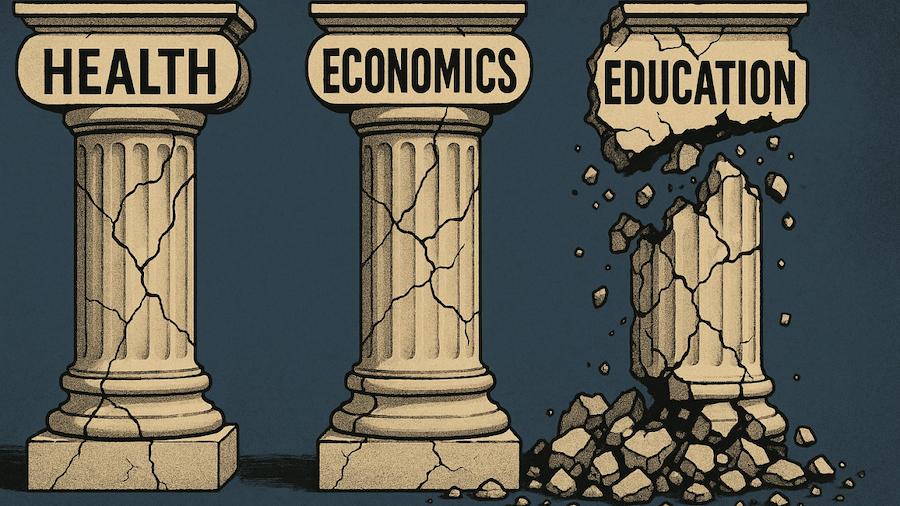
The Role of Adult Education in the UK:
A Pillar of Democracy
By Bea Groves-McDaniel
December 2024. Revised March 2025.
The Broad Path to Technocracy
'The value of adult education is not solely to be measured by direct increases in earning power or productive capacity, but by the quality of life it inspires in the individual and generates for the community at large. It is an agent changing and improving our society; but for each individual the means of change may differ and each must develop in his own way, at his own level and throughhis own talents.'
Preface to 'The Russel Report’ (HMG, 1973)
“The pathetic superstition prevails that by knowing more and more facts one arrives at knowledge of reality. Hundreds of scattered and unrelated facts are dumped into the heads of students; their time and energy are taken up by learning more and more facts so that there is little left for thinking. To be sure, thinking without a knowledge of facts remains empty and fictitious; but ‘information’ alone can be just as much of an obstacle to thinking as the lack of it.”
Erich Fromm (Die Angst vor der Freiheit 1941)
“Education either functions as an instrument which is used to facilitate integration of the younger generation into the logic of the present system and bring about conformity or it becomes the practice of freedom, the means by which men and women deal critically and creatively with reality and discover how to participate in the transformation of their world.”
Paulo Freire (Pedagogia do Oprimido, 1968)
Education for a better World
Democracy cannot succeed unless those who express their choice are prepared to choose wisely. The real safeguard of democracy, therefore, is education.
( Franklin Delano Roosevelt , September 27, 1938)
"A democracy requires an educated citizenry that can think critically, evaluate information, and participate in civic life."
( Barack Obama , 2016)
"Education empowers individuals to make informed decisions and engage meaningfully in democratic processes."
( Malala Yousafzai , 2018)
"An educated society is the backbone of a functioning democracy, where citizens understand their rights and responsibilities."
( Angela Merkel , 2017)
"Quality education equips citizens with the tools to participate fully in democratic governance."
( Ban Ki-Moon , 2015)
Liberal adult education has long been a crucial element in the UK’s educational landscape, playing a significant role in shaping society. Emerging from the industrial and social upheavals of the 19th century, it has become a tool for personal empowerment, community building, and broader social progress. This essay explores the historical development of liberal adult education in the UK and argues that its influence extends far beyond individual benefits; it strengthens democratic engagement, enhances economic prosperity, and fosters an inclusive society.
Historical Context of Liberal Adult Education in the UK
The origins of adult education in the UK can be traced back to the 19th century, an era marked by rapid industrialisation. The rise of factory work shifted traditional skill sets, leading to a demand for education among the working classes. The Industrial Revolution catalysed significant social and economic changes, including the creation of new labour forces that required better educational opportunities. Self-education societies, such as Mechanics' Institutes founded in the 1820s, provided working men with access to knowledge through lectures and libraries. These institutes laid the groundwork for modern adult education by fostering intellectual curiosity and practical skills in trades and technology. In 1903, Albert Mansbridge established the Workers' Educational Association (WEA), a pivotal development in adult education. The WEA aimed to provide liberal education to working adults, equipping them with the skills needed not just for employment but for thoughtful participation in civic life. Mansbridge famously noted, “The task of adult education is to enable the individual to come to terms with the complexity of modern life,” emphasising that the purpose of education was beyond economic utility; it was a cornerstone of democratic society.
20th Century Developments and Legislative Support
The 20th century saw substantial advancements in the reach of adult education. The Education Act 1944, also known as the Butler Act, mandated that local education authorities include adult education in their remit, marking a significant acknowledgement of its importance. Institutions like Ruskin College in Oxford provided intensive programs that encouraged working-class people to pursue leadership roles and contribute to public life. This period was also characterised by a growing emphasis on social justice and equality, facilitated by access to educational opportunities.
The Role of Adult Education in Supporting Democracy
The impact of adult education on democracy is profound. It provides individuals with the knowledge and critical thinking skills necessary to engage in democratic processes and make informed decisions.
Liberal adult education programs have a long history of fostering civic engagement by equipping learners with the tools to understand political systems, articulate their views, and participate meaningfully in society. Richard Hoggart’s The Uses of Literacy (1957) underscores that “the engagement of working people with the ideas and culture that inform their world remains essential for a functioning democracy.” This assertion highlights the importance of accessible education in maintaining an informed electorate that can hold leaders accountable and advocate for change.
Community-based adult education initiatives have empowered local movements and promoted grass-roots activism. For instance, adult learning programs have supported the rise of local leaders who use their knowledge to address community-specific issues such as housing, healthcare, and social services. This direct engagement strengthens the foundations of democracy by ensuring that power is not centralised but distributed across informed and active citizens.
Economic Benefits of Adult Education
Adult education not only strengthens democratic values but also contributes significantly to economic wellbeing. It supports lifelong learning, which in turn helps adapt the workforce to the evolving needs of the economy.
The connection between adult education and economic growth is well-documented. Studies conducted by the Department for Education show that adults who participate in lifelong learning programs report higher employment rates and increased earnings. Upskilling initiatives allow individuals to adapt to changes brought about by technological advancements, making them more resilient in the face of job market fluctuations.
In response to economic shifts, such as the decline of traditional industries in the late 20th century, adult education programs have been essential in retraining workers. Community colleges and vocational programs have played a key role in equipping individuals with new skills, enabling them to transition into emerging sectors such as information technology and renewable energy. This adaptability ensures that the UK’s workforce remains competitive on the global stage.
A notable example is the proliferation of digital literacy programs, which have been vital in preparing older adults and mid-career professionals for the demands of the modern workplace. Reports from the Workers’ Educational Association indicate that participants in digital skills courses often experience increased employability and career progression.
Fostering an Inclusive Society through Adult Education
Adult education is uniquely positioned to promote social inclusion by reaching marginalised and underserved communities. It bridges gaps in formal education, enabling those who may not have had access to traditional schooling to gain knowledge and skills.
Lyn Tett's research emphasises that “education contributes to social integration by enabling individuals to understand and navigate their social world.” (2010) Adult education programs tailored for marginalised groups, such as immigrants, low-income families, and people with disabilities, help reduce inequality and promote inclusivity. By providing pathways for personal and professional development, adult education fosters a sense of belonging and participation in society.
One of the most impactful forms of adult education has been English for Speakers of Other Languages (ESOL) programs. These initiatives equip immigrants with the language skills necessary for day-to-day interactions and access to the job market, enhancing their ability to integrate and contribute to society. The success of these programs is evident in the stories of participants who have gone on to secure stable employment, contribute to local communities, and engage in civic life.
Challenges and the Future of Adult Education in the UK
Despite its significant benefits, adult education faces numerous challenges. These include funding cuts, limited access in rural areas, and the perception of adult education as a secondary priority compared to traditional schooling.
Funding has been a persistent issue for adult education. Over the past two decades, budget cuts have reduced the scope and availability of programs, affecting both learners and educators. To address this, policy changes must prioritise adult education funding, ensuring it remains accessible and well-resourced.
Accessibility and Inclusivity
Another challenge is ensuring that adult education reaches all segments of the population. Rural areas, in particular, often lack adequate resources and infrastructure to support comprehensive adult education programs. Expanding online learning platforms and creating partnerships with local organisations could help bridge this gap.
Policy Recommendations for Sustainability
- To secure the future of adult education, policymakers should prioritise a multifaceted approach:
- Increased Funding: Reinstate or increase funding for adult education programs to expand their reach.
- Partnerships with Employers: Foster collaborations between educational institutions and businesses to create relevant training programs.
- Promotion of Lifelong Learning: Public awareness campaigns should emphasise the value of continuous learning for both personal growth and societal benefit.
Conclusion
The history of liberal adult education in the UK reflects its profound influence on the country’s
social, political, and economic landscape. From empowering the working class through the
Workers' Educational Association to supporting contemporary upskilling initiatives, adult education
has proven to be a vital instrument for fostering democracy, economic growth, and social inclusion.
To ensure that this legacy continues, it is imperative to address current challenges and adopt
policies that reinforce the importance of lifelong learning. By doing so, the UK can sustain a society
that values informed citizens, resilient workers, and inclusive communities.
The Addendum: A Commentary by the Author
I had originally intended to completely revise article above, on the state and status of adult education in the UK, with particular reference to the liberal curriculum. But try as I might, the words would just not come. Not a writer’s block, I might add, but I was simply unconvinced that a revision of the ‘official narrative’ about learning and adults would suffice.
My previous writing was largely in that vein; an officialese version of how education is seen. It bows to the national story of adult education, which in unvarnished terms, had been about a mass sell-out of values to the idea that all that truly matters (in the pragmatic British experience) is the funding of learning to earn. Or, as you could put it, the ‘UK plc’ concept that made a huge impact on adult learning since the days of Margaret Thatcher. This is a post-Thatcher world, and in many respects the ongoing narrative about learning has remained wholly within the vocational domain. How can we improve the growth of the UK economy, via pulling the levers of further education? How to train and re-train individuals to compete within a rapidly changing workplace? How do we create work-ready people, without expecting them to believe that they are owed something in return?
In many ways, national learning reciprocity has ended. It ended when any mention of learning-as- a-right-for-all became a derisory concept. Romantic, but not practicable. Or when the idea of adult learning became tarnished with the image that such endeavours concerned primarily blue-haired elderly folk learning about the delights of stately homes. Learning for leisure was acceptable. But only if it were paid for by those who wished to indulge their interests. Government money, extracted with menaces from ‘hard-working families’ (the ‘Tax Payer’), was meant for serious stuff like creating a new generation of tradespeople. Or tech’ people. Or social care workers. Or hospital staff. Or any other panic-ridden need that was in the political and media focus at the time.
The notion of learning was based on practicality. If we were to invest in colleges and universities, then there needed to be recognisable returns on the investment. The cohort that was processed through the system should, by definition, be able to repay its privilege in learning. This could be by repaying loans on fees, of course, but equally it could be by acting within one’s life as a contributor towards the national targets for growth. Growth brings prosperity. Prosperity brings happiness. Happiness brings stability. Stability brings growth. And on, and on.
The rotating wheels of industry and commerce required fuel, not just from finance, but also from a population committed to the national good. Through competitive living. We have foreigners to deal with, after all. We have immigrants who want our jobs. We must be job-fit at all times.
But all is not well. Some of us (myself being a clear example) felt that this whole agenda was a fraught with fragility. Though one could heartily agree with the need for skills training that could provide a livelihood, there was something missing. A kind of adequacy. A feeling which said ‘there’s more to life than simply having a job, a car, a partner, and a mortgage’. Small though this matter was, it nagged away in the background of both educational discourse and the realities of a societal life. The fragility lay in the lack of a return on the commitment to the skills agenda. The idea that further education training could solve (or mitigate) the nation’s problems relied purely on a putative consideration that materialism provided the kind of psychological satisfaction that was sufficient for a stable society. A society that minimised alienation, and produced lasting communities.
But it seems that history has not born that assumption out. Societal division has grown over the past thirty years. We find ourselves not just politically polarised, but also divided over confidence in society’s foundations. Democracy, science, and belonging are not the ‘givens’ that they once were. By this, I mean that though the functions of democracy exist, the spirit that imbued them with value is under assault. Though we rely more and more on our technology to solve our problems, our confidence in its veracity has sprung leaks. That wonderful category of respected social magicians, scientists, are no longer unequivocally respected in a way that they once were. Belonging (in terms of being part of a social contract based on reciprocity) is no longer clear cut. Old class values and their consequent communities have disappeared as deindustrialisation took hold. Individuals were left to their own devices, getting on their bikes and serving themselves. Scaremongering about personal identity, equity in marriage, notions of sexuality, the safety of children, the fear of those not like ‘us’, and the hidden abuses apparently at the core of once trusted national institutions, become prominent. We are increasingly divided from another. We are seduced by social paranoia, whether real or imagined. Who can we trust? Only the solitary self.
Don’t get me wrong, I am not arguing here that the reason why this happened is because of the abandonment of a rose-tinted educational principles. What I am arguing is that the public dialectic that enabled coherent discussion of the above issues has fallen into decay. The ‘public sphere’ (as envisioned by Jurgen Habermas) has almost disappeared, and we find ourselves in fewer and fewer safe zones where discourse can happen without the eyes of corporate interests peering over our shoulders. The Internet, that great leveller, did not produce the utopian paradise of coherent thought and personal growth. Instead, it evolved almighty self-defeating struggles over content, veracity, rationality and myth.
All is up for grabs; all is saleable.
That we need a public sphere of some sort, where honesty is not used as a weapon, and where empathy is a watchword, is surely essential to combat this alienating decay? Adult education is not the only solution, but it certainly is one of the most understandable and powerful. It is already part of a public inheritance, and lives in small enclaves where there is a desire to not simply set agendas, but to foster coherent processes that can evolve in their own way. Human beings like taking part, and greatly value being respected for being a part of something that matters. It is something in our nature: to be a person who grows because we participate in supportive environments. When this is achieved, then the importance of materialism becomes relative. The relevance of belonging cannot be created by materialism alone.
Our great weakness as educators is in having little confidence in this principle, even though the evidence for thinking otherwise has been strong over the past three decades. When Jean Lave and Etienne Wenger wrote their ground-breaking book ‘Situated Learning’ (1997), they used their broad anthropological research to show how learning naturally develops in social groupings, ranging from African tailors to American non-drinking alcoholics. When I first read their work it was an utter revelation. It dumped a whole range of assumptions about learning out of the academic window. This especially included the highly individualised concepts around learning styles, behaviourism, positivism, and the most radical of all: that learning can only take place in an individual mind. For Lave, learning was a community matter, mediated through social interaction. We learn by being with others, and the individual matter of assimilating information or skill is a post-facto function OF this process, rather than its foundation. Effectively, the Community of Practice was born.
Please note that I am not making the obvious ‘naturalistic fallacy’ here. I do not imply that what is natural must necessarily be good for all societies. What I am saying is that the workings of learning have been confusingly misinterpreted in the past.
Lave’s ideas are not a new suggestion. The philosopher Ludwig Wittgenstein had asserted as much back in the early 1950s in his work on Language Games and Forms of Life. Jean Piaget, John Dewey, Lev Vygotsky and Ernst von Glasersfeldt had all suggested similar ideas as they promoted the idea of constructivism (learning is not simply assimilated, it is constructed by social interaction). This was a respected movement, and a key to a large scale ‘unified theory’ of learning. So why did it not become the dominant discourse within the UK? Why do we still see it as an interesting theory, but not practical as a foundation for curriculum growth? Or how the workers and citizens of the future are developed?
Because of its implied association with a socialist narrative. Because of the rise (and rise) of individualism. Because of a sense of society predicated on the democracy-of-economy (how you spend your money) rather than the democracy-of-dialogue. Because of a fear within governments of all perspectives, that selling a story of social development would not win votes. People want bread today, not pie in the future. Learning about learning has always been a specialist pass-time in the UK. It is easy to believe that, because you’ve been to school, that you know everything you need to know about how learning happens.
Hence we make valiant efforts as teachers and organisers to make learning accessible and useful to the potential learners. But consistently fail to produce the kind of self-directed learning that helps us all deal with a rapidly changing society. Our students have learned the facts, but not how to manage the facts in a way that prevents dogmatism, whilst maintaining substantive coherent rationality. We are not failing because we lack the teaching skills, or the formative concepts. We fail because we are competing with historic precedents that need unlearning. Both within us and those we work with.
Social development is as important as economic development. Social cohesion (being able to live in a hugely diverse society) is not something that spontaneously comes into existence because we happen to become monetarily wealthy. It arrives because we rationally understand what is happening around us, and the morally acceptable options we have available. As a WHOLE society, not just the privileged few. It is in promoting this sense of understanding that is adult learning’s key role in the 21st century. Indeed, one might well argue that this has always been its role, but the acute urgency has truly become apparent today. As Abraham Lincoln once said (in very different circumstances), “The occasion is piled high with difficulty, and we must rise with the occasion. As our case is new, so we must think anew, and act anew. We must disenthrall ourselves...” (Lincoln, 1862) This is part of a general renewal of learning. I know that we are still up to this challenge. The question is: do we sincerely wish to take it on board? I leave that question to you.
Bibliography
Field, John. Lifelong Learning and the New Educational Order. Trentham Books, 2006.
Hoggart, Richard. The Uses of Literacy. Penguin, 1957.
Lincoln, Abraham. Message to Congress. 1862.
Tett, Lyn. Community Education, Learning and Development. Dunedin Academic Press, 2010.
Tight, Malcolm. Lifelong Learning: Concepts and Contexts. Routledge, 2014.
Workers’ Educational Association Annual Reports.
Department for Education reports and surveys on adult learning.
ESOL program impact studies and case studies from local councils.
About the Author
Beatrix E. Groves-McDaniel has worked within the UK post-compulsory education system since 1984. She was twice-elected President of the Institute for Learning, General Secretary of the Association of Part-Time Tutors, and is currently Governor for the Voluntary and Community Sector
with Cumbria, Northumberland and Tyne & Wear NHS Trust. She is a published author and was once Tutor of the Year.