
White Supremacism in the UK
Beyond individual acts of violence and harassment, white supremacism distorts institutional life. It shapes who gets housed, who gets employed, who gets educated, and who gets treated in a system that is supposed to treat all equally.
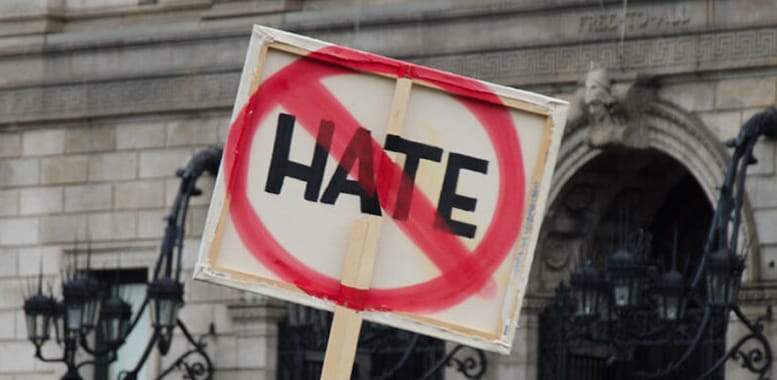
White Supremacism: What It Is, Where It Came From, and What It Is Doing to Britain Today
By Bea Groves-McDaniel, July 2026
Research Assistant: FAYE-9000
The phrase "white supremacism" conjures, for many British readers, an image of American skinheads in Confederate baseball caps, torchlit marches in Virginia, or the wreckage of a Charleston church. That it does so tells us something important about how successfully Britain has exported its own history.
We are invited to believe that organised hatred on the grounds of race is an American affliction; something that happened elsewhere, under flags we never flew. This is comforting, and it is false. White supremacism is not merely an American problem, and Britain has never been innocent of it.
To understand what white supremacism is, it helps to begin with what it is not. It is not merely the behaviour of individuals who harbour racist attitudes, nor the explicit ideology of recognised extremist organisations. It is, more fundamentally, a system: a set of arrangements, practices, and assumptions that position whiteness and white interests as normative, superior, and entitled to dominance.
As the sociologist Eduardo Bonilla-Silva argues in Racism without Racists (2017), the contemporary architecture of white supremacism is often colour-blind in its language but racial in its effects. This distinction matters enormously. One does not need to declare oneself a white supremacist in order to serve the interests of white supremacy.
The intellectual architecture of modern white supremacism was constructed in the nineteenth century, not in America but Europe. It was then that pseudo-scientific racism was systematised into a worldview, providing an apparently rational foundation for practices that might otherwise have shocked their perpetrators. The work of Arthur de Gobineau, whose Essai sur l'inégalité des races humaines (1853–55) declared the white race to be the sole vehicle of civilisatory progress, became a founding document for everything that followed. Charles Darwin's theory of natural selection was enlisted, misapplied, and turned into a justification for racial hierarchy. The so-called science of eugenics, embraced across the political spectrum in Britain and America well into the 1940s, proposed that racial purity was a public good and racial mixing a form of biological contamination.
These ideas did not remain in drawing rooms and laboratories. They became the operating principles of empire. The British Empire, at its peak the largest political structure in human history, was built on an explicit racial hierarchy in which whiteness was synonymous with civilisation, and the peoples of Africa, Asia, and Australasia were classified, managed, and exploited accordingly.
The integrity of language matters here. As the historian Nir Arielli shows in Race, Empire and the Second World War (2022), racial categories were not incidental to imperial administration: they were its grammar. The consequences (enforced famines in Bengal, concentration camps in Kenya, the deliberate starvation of Aboriginal Australians) were not aberrations. They were the logical expression of a worldview in which some lives were simply worth less.
The period after 1945 brought a crisis for explicit white supremacism in Britain. The revelation of the Holocaust, the demands of anti-colonial movements, and the arrival of Caribbean and South Asian workers to rebuild post-war Britain all exposed the intellectual and moral bankruptcy of openly racialist politics. The major parties, the trade unions, and the established churches competed to declare themselves opposed to racial discrimination. The Race Relations Acts of 1965, 1968, and 1976 represented genuine legislative progress. Yet the ideology did not die. It adapted.
The figure of Enoch Powell is essential here. His so-called "rivers of blood" speech of April 1968 was a deliberate intervention in the debate on the Race Relations Bill, and its effects were profound and lasting. Speaking to a Conservative meeting in Birmingham, Powell quoted a constituents' letter warning of being "forced to talk" to people of different backgrounds and declared that Britain was "being made alien" by immigration. The speech was condemned by every major political figure of the time; Powell was immediately removed from the Conservative shadow cabinet. Yet it reshaped the terrain of British politics.
The Overturning of the 'No Political Role for Race' consensus that had governed mainstream parties since the 1960s is a project that successive governments, of both parties, have pursued in different ways ever since. As the political scientist Matthew Goodwin has documented in Revivals on the Right (2017), the far right has repeatedly found new purchase by framing immigration, diversity, and multiculturalism as threats to national identity and cohesion.
The impact of white supremacism on the modern United Kingdom is felt at multiple levels simultaneously, and it is important not to reduce it to the most dramatic or visible manifestations. There were 155,532 hate crimes recorded by police in England and Wales in 2023–24, a figure that represents a decline from the peak of the pandemic years but which remains more than double the number recorded a decade earlier. The majority of these crimes target racialised minorities, and a substantial proportion are directed specifically at Muslim communities. The impact on victims is not merely physical; research conducted by the Equality and Human Rights Commission has consistently found that experiences of racist harassment are associated with chronic anxiety, depression, and a withdrawal from public life.
Beyond individual acts of violence and harassment, white supremacism distorts institutional life. It shapes who gets housed, who gets employed, who gets educated, and who gets treated in a system that is supposed to treat all equally. The Runnymede Trust's report The Colour of Money (2023) documented persistent racial disparities across every major socioeconomic indicator in Britain, disparities that cannot be adequately explained by differences in individual merit or effort. What the data reveals is the accumulated effect of practices, assumptions, and policies that systematically advantage white Britons over others. This is white supremacism in its contemporary institutional form, and it is present in every sector of British life.
The recent history of white supremacism in Britain is also a story of mutation and dispersal. The decline of the British National Party, which at its peak in 2010 held fifty-seven local council seats, and of the National Front, has not been a story of ideological retreat. The ideology has instead fragmented and migrated, finding new homes in online subcultures, in the-manosphere, in the more permissible margins of mainstream political commentary, and in organisations such as Britain First, whose social media strategies have given them a reach their predecessor organisations never achieved. The phenomenon documented by the anti-extremism researcher Martha Gill (in which extremist ideas are laundered through mainstream political language until they become respectable enough to voice in any newspaper or parliamentary chamber) represents one of the most significant contemporary mechanisms of normalisation.
The consequences are not merely for those who are directly targeted, though they are above all for them. They are for the quality of public discourse, for the capacity of British institutions to govern a genuinely diverse society, and for the social fabric of communities up and down the country. The question that confronts Britain in the second quarter of the twenty-first century is whether it is capable of an honest reckoning with its own past and an unromantic view of its own present. The alternative is to continue telling ourselves a story about who we are that has never been true, while the damage accumulates around us.
The direction of travel matters. White supremacism cannot be understood as an opponent to be defeated in a single battle. It is a tendency in human social life that has expressed itself differently in different historical moments and that always finds new channels through which to flow. To oppose it effectively requires the kind of historical understanding that makes its origins and its mechanisms visible; the solidarity across communities that makes it collectively unsustainable; and the political courage to name it clearly, in whatever language it currently speaks, rather than pretending that colour-blindness is the same as justice.
Bibliography
Bonilla-Silva, E. (2017) Racism without Racists: Colour-Blind Racism and the Persistence of Racial Inequality in America. 5th edn. London: Rowman and Littlefield.
Cohen, B. (1983) Race, Empire and the British. London: Institute of Race Relations.
Crenshaw, K. (1991) 'Mapping the Margins: Intersectionality, Identity Politics, and Violence against Women of Color', Stanford Law Review, 43(6), pp. 1241–1299.
Ehrenreich, R. (2002) 'The Myth of Race', in George Ritzer (ed.) The Blackwell Companion to Social Theory. Oxford: Blackwell, pp. 293–314.
Garland, J. and Tufyal Choudhury, A. (2023) Islamophobia in Britain. London: Routledge.
Gilroy, P. (1987) There Ain't No Black in the Union Jack. London: Hutchinson.
Goodwin, M. (2017) Revivals on the Right: From Thatcher to the Turmoil of Brexit. London: C Hurst and Co.
Hannah, M. (2000) Regulating the Social: Police, Surveillance and the Rise of the Security State in England and Wales. Minneapolis: University of Minnesota Press.
Harris, C.I. (1993) 'Whiteness as Property', Harvard Law Review, 106(8), pp. 1707–1791.
James, W. (2021) The Far Right in Contemporary Britain. London: Pluto Press.
Jeffries, S. (2022) The Great Fuel: How the Far Right Became Mainstream. London: Guardian Faber.
Kundnani, A. (2015) The Muslims are Coming! Islamophobia, the Counter-Extremism Industry, and the Prevention Trap. London: Verso.
Lloyd, C. (1998) Discourses of Anti-Racism. Aldershot: Ashgate.
Mirza, H.S. (2019) Racialized Intelligence: The Black Experience in Education. London: Routledge.
Patel, T.G. (2023) The Colour of Money: How Racial Inequality Shapes British Society. London: Runnymede Trust.
Webster, W. (2020) Everyday Racism in Britain. London: Routledge.
Winant, H. (2004) The World is a Ghetto: Race and Democracy Since World War II. New York: Basic Books.