
Totalitarian Thinking
The UK is in a dangerous position at the moment. Being reasonable just doesn't work when the very premise of a person's character rests on a 'mistake'. But it's an intended mistake, and it matters to those who believe it.
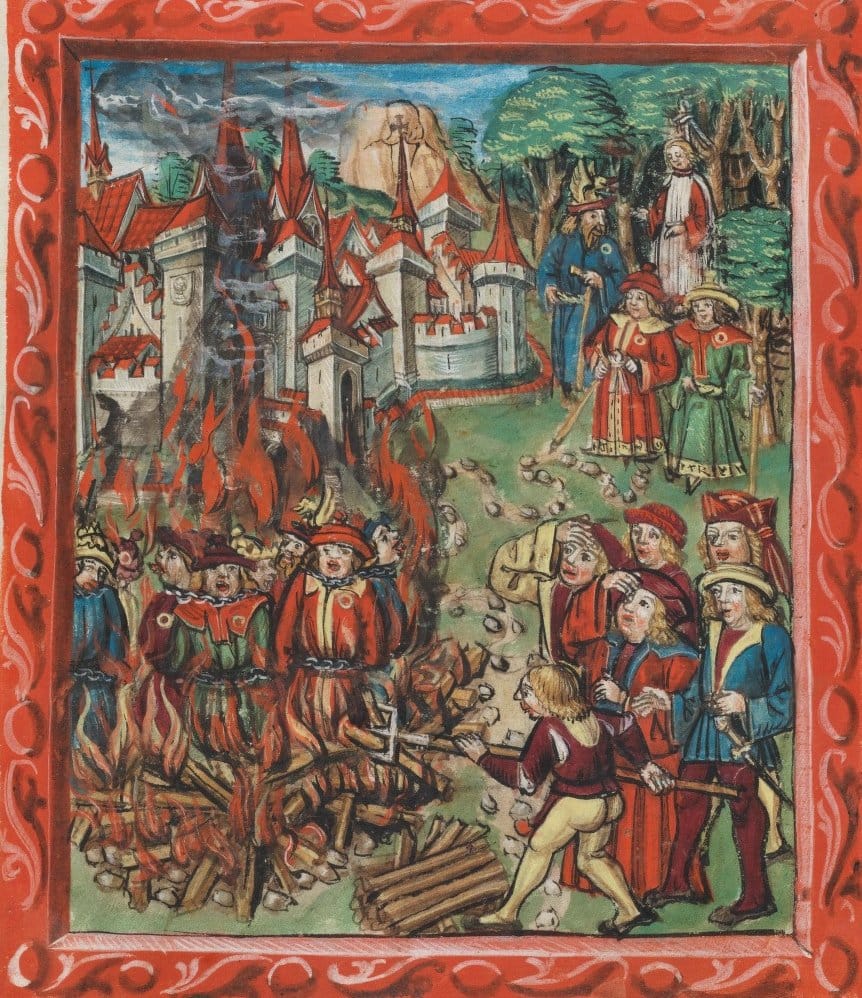
by Bea Groves-McDaniel. An expansion of a Facebook post.
8th August 2026
Let's consider the rise of totalitarian thinking.
This has been debated for a LONG time now, both on the right and left of politics. Philosophers such as Karl Popper and Hannah Arendt represent this quite well. But there are others.
The reason for the urgency of such discussion is pretty clear. The original cause was the rise of the Stalinist Soviet Union, German Nazism and Italian Fascist regimes (and others across Europe). But since then the issue has not gone away. The appalling nature of Pol Pot's dictatorship in Kampuchea. The cruel Chilean Pinochet, or the Videla-Galtieri period in Argentina. The Greek Pangalos junta. The Trump regime in the USA. The brutal Netanyahu government. The bloody dictatorships of Iran and Afghanistan. I could go on.
Truly, we should be nervous. Perhaps scared. Because the prevalence of such monstrous creations seems unconnected to the supposed security of democratic institutions within a nation. ANY society can fall victim to such a disaster. NO culture is immune. I include the UK in that statement.
Why? Well, part of the problem is the 𝗰𝗼𝗹𝗹𝗮𝗽𝘀𝗲 𝗼𝗳 𝗰𝗼𝗻𝗳𝗶𝗱𝗲𝗻𝗰𝗲 in decision-making institutions that support the presence of democracy. Or at least something that pragmatically seems like democracy. That is to say, a public belief in voting, representation, systems of administration, the law, fairness, and the prevention of harm within society (etc.). Once confidence is lost, then belief switches to demagoguery and the simple answers of fascism. History and geography have shown this to be the case. I really don't need to belabour the point.
Also, it's not just that confidence collapses, but that fascism's answer is a 'total-idea' concept. Fascistic regimes always start off with a fundamental concept from which ALL other concerns are measured. An example: if someone hammers home that being male and white is the 'naturally superior' condition of humanity, then every other consideration arises from the single idea. White supremacy operates from this fallacy, as do all other fascistic regimes. The core concept doesn't even need to be spoken; it just needs to be hegemonic. It becomes a persistent fallacy, based on protective self-censorship.
The other part of totalitarian thinking (as described above) is 𝗶𝗻𝘁𝗲𝗻𝘁𝗶𝗼𝗻𝗮𝗹 𝗶𝗴𝗻𝗼𝗿𝗮𝗻𝗰𝗲. Ignorance is usually something we all suffer from because of lack of valid information. I know that feeling only too well. But I'm not talking about those of us who just 'don't know'. I'm talking about the deliberate intent not to know. A turning away from rationality, logic, and thought-through systems of knowledge. Why? Because when crises occur, the need to protect a coherent set of emotionally important beliefs overrides everything else.
If you think of yourself fundamentally as a patriot, a king-and-country person, very English, and proud of who you are, but then are told that 'your' nation is being overrun by dark-skinned immigrants arriving in boats...the reaction (when confidence in democracy is at an all-time low) is not to think through the evidence but to react in defence of your feelings.
The feeling of danger doesn't have to be real. In fact, it's better if it's not. You can simply ignore any contrary evidence and double-down. That's what 'intentional ignorance' is, and it's been a factor in the rise of totalitarianism for as long as there's been such a term.
Suppose I told you that I was worried about Asian people using toilets alongside white people? Apart from you thinking I'd lost my mind, it would, under the surface, indicate a fear of a bodily risk (Asian men might invade toilets and molest children). This is irrational and baseless. It lacks substantive evidence. But it's very appealing as a justification of fears, at a time when you're being told that sex crime is at an all-time high. True or not, it doesn't matter. The belief 𝗮𝘀𝘀𝘂𝗮𝗴𝗲𝘀 the fear, supports its reasonableness, and makes talking about the topic much less personal. The fear becomes abstracted as a 'fact', even when there is no supporting evidence.
So we have it. The UK is in a dangerous position at the moment. Being reasonable just doesn't work when the very premise of a person's character rests on a 'mistake'. But it's an intended mistake, and the 'mistakes' matter to those who believe them.
If this sounds familiar to you with regard to the current treatment of transgender people, then: well done, you! The current flood of distaste (and hate) is a symptom of the rise of totalitarian thinking I've diagnosed above.
Explanatory Addendum:
Totalitarian thinking is a psychological mindset that demands absolute submission to a single reality, actively erasing nuance, doubt, and individual conscience. [1, 2, 3]
While totalitarian governments require state power to function, totalitarian thinking is a cognitive pattern that can exist within individuals, groups, or internet subcultures long before—or entirely outside of—a political regime. [3, 4, 5]
Core Characteristics of Totalitarian Thinking
Political theorists like Hannah Arendt and modern psychologists identify several defining markers of this mindset: [3, 4, 6]
- Rigid Binary Logic: The world is divided strictly into 'us versus them', 'pure versus corrupt,' or 'safe versus dangerous'. There is no room for a middle ground. [3, 7, 8]
- Ideological Infallibility: A single truth or theory is used to explain everything in history and human nature. Any factual evidence that contradicts the theory is dismissed as malicious propaganda. [1, 9, 10, 11, 12]
- The Deletion of Inwardness: Introspection and self-doubt are treated as weaknesses or acts of treason. The individual internalises the group's rules so deeply that their independent conscience is silenced. [1, 3, 13]
- Perpetual State of Emergency: The mindset is sustained by framing the present moment as an existential crisis. This sense of imminent danger is used to justify extreme measures and silence critics. [3]
- Scapegoating: Complex societal problems are reduced to the fault of a single, easily identifiable outgroup. [3]
Totalitarianism vs. Authoritarianism
Though often used interchangeably, the thinking patterns behind these two systems differ fundamentally in scope:
| Dimension | Authoritarian Thinking | Totalitarian Thinking |
|---|---|---|
| Scope of Control | Demands political obedience; leaves private life alone. | Demands total control over public, private, and inner thoughts. |
| Objective | Seeks passive submission and political apathy. | Seeks active ideological devotion and complete mobilization. |
| View on Dissent | Punishes actions that threaten the leadership's power. | Punishes thoughts, identities, and neutral non-conformity. |
Psychological Triggers
According to research published in Psychology Today, people typically slide into totalitarian thinking during times of acute social stress, anxiety, or isolation. When the world feels chaotic and unpredictable, human psychology craves absolute answers. Submitting to a rigid, all-encompassing ideology provides a powerful, comforting sense of order, purpose, and community—even if it requires surrendering intellectual freedom. [2, 3, 4, 7, 14]
How to Counter Totalitarian Thinking
To protect personal and collective intellectual freedom against these cognitive traps, focus on practising these habits:
- Cultivate Intellectual Humility: Actively remind yourself that you do not hold the absolute truth and that your assumptions could be wrong.
- Protect Pluralism: Seek out and listen to diverse perspectives, accepting that complex problems rarely have simple, single-cause solutions.
- Refuse the Binary: When presented with a forced choice between two extreme poles, look for the nuances, exceptions, and middle ground.
- Embrace Independent Thought: Maintain an active inner dialogue and critique your own belief systems as rigorously as you critique others. [3, 7, 15, 16, 17]
[1] https://www.loc.gov
[2] https://www.britannica.com
[3] https://www.psychologytoday.com
[4] https://www.thebritishacademy.ac.uk
[5] https://www.youtube.com
[6] https://www.youtube.com
[7] https://www.sciencedirect.com
[8] https://www.sciencedirect.com
[9] https://www.youtube.com
[10] https://www.ebsco.com
[11] https://www.youtube.com
[12] https://dailyemerald.com
[13] https://www.psychologytoday.com
[14] https://us.macmillan.com
[15] https://www.youtube.com
[16] https://www.hybridcollapse.com
[17] https://psychcentral.com