
TLDR: Category Error
A category error occurs when something is placed in a conceptual box it does not belong in. When a term or idea from one domain of meaning is applied in a context where it has no legitimate application.
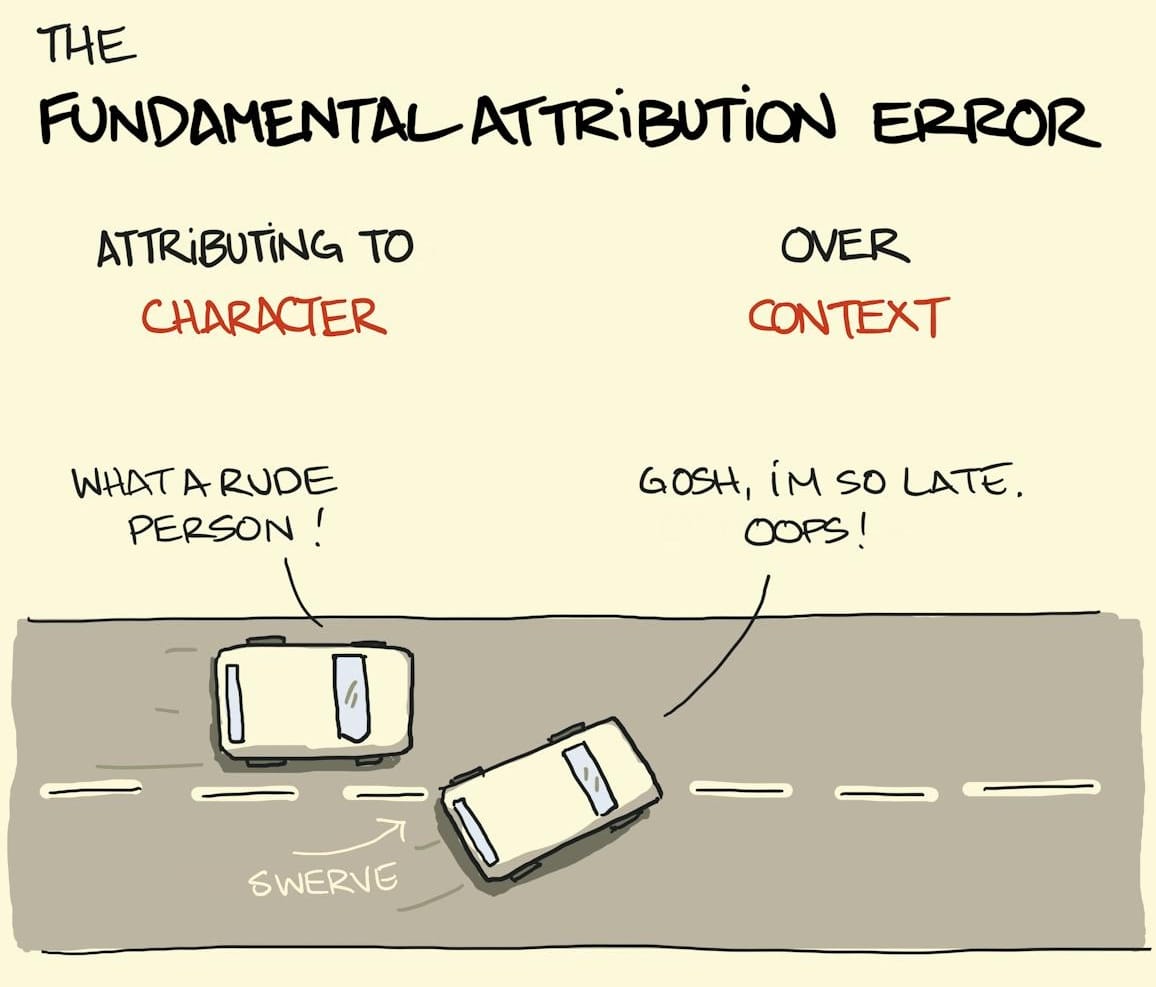
Category Error
By Bea Groves-McDaniel
1st November 2026
With the research assistance of SAL-9000
Some arguments are not won or lost on the evidence. They are lost at the level of language itself — before a single fact has been examined, the whole dispute has been conducted on terms that make resolution impossible. This is the territory of the category error, one of the most pervasive and least recognised mistakes in everyday reasoning.
What does it mean?
A category error occurs when something is placed in a conceptual box it does not belong in. When a term or idea from one domain of meaning is applied in a context where it has no legitimate application. The mistake is grammatical as much as logical: it is the equivalent of asking what colour Tuesday weighs, or whether justice smells of raspberries. The question is not false; it is, in a strict sense, meaningless — not because the words are unfamiliar, but because they are being asked to do work they cannot do.
The philosopher Gilbert Ryle gave the concept its canonical formulation in his 1949 book The Concept of Mind, where he used it to expose what he called the "category mistake" — the error of treating minds as if they were a kind of thing for which the concepts applicable to physical objects simply do not apply. To ask whether a mind is located in the brain, or whether consciousness can be weighed, is to commit a category error. The terms are being applied outside any domain in which they have sense.
How is it applied?
In practice, category errors most commonly arise in two situations.
- The first is when we apply evaluative language to things that are not the right kind of entity to be evaluated. To ask whether a storm is immoral, or whether a mathematical proof is brave, is to use words whose logic presupposes agency, intention, or moral sensibility — none of which apply to storms or proofs.
- The second situation is when we apply empirical language to abstract or formal domains. To ask what the probability is that justice has been done in a particular case. As though justice were a measurable physical quantity. Such usage commits exactly this kind of misplacement.
On social media, category errors are extraordinarily common, precisely because the speed and brevity of online exchange encourages people to reach for powerful evaluative words without first checking whether they have legitimate application in the case at hand.
An example
Consider the person who responds to a complaint about injustice by saying "Life isn't fair." The statement is offered as though it were a relevant reply — a kind of counter-evidence. But "fair" and "unfair" are terms that apply to the actions of agents: to decisions, policies, and choices. They presuppose intention and moral agency. A rockslide that destroys a house is not unfair; it is simply a physical event. To call it unfair is to treat it as though it were a moral agent capable of choice. That is a category error. The statement "life isn't fair" is not a response to an injustice claim; it is a category error dressed up as wisdom.
Its relationship to deflection
Category errors often function as deflection because they give the appearance of a substantive response while actually evading the question. When someone says "that's just your opinion" in response to a moral claim, they are treating a normative statement as though it were merely subjective — failing to recognise that the distinction between opinion and justified moral judgement is itself a conceptual question that cannot be settled by simple declaration. The category error here consists in treating moral reasoning as though it were nothing more than expression of preference.
Its relationship to Kahneman's ideas
Daniel Kahneman's research on how we categorise information is instructive here. Working with Tversky, he documented the powerful role that automatic, fast thinking plays in how we interpret the world — what he calls System 1 thinking. System 1 operates largely through pattern-matching and analogy: it automatically places new information into familiar categories, often without checking whether the category is appropriate. This is precisely the mechanism that produces category errors. When we hear a word with strong evaluative associations — "justice," "freedom," "rights" — System 1 reaches for its standard template for that word, without pausing to check whether the object we are applying it to is the right kind of thing to bear that evaluation. Kahneman's dual-process framework helps explain why category errors are so common and so difficult to resolve through argument: they are, in a sense, built into the architecture of fast, intuitive cognition.
The remedy, as with so many of the biases Kahneman documents, is slow thinking — deliberate pause, deliberate checking of whether the conceptual tools we are reaching for actually fit the case before us. It is a small and unglamorous practice. But it is, I have found, genuinely useful.
Research Assistant: SAL-9000