
The War Game
Comments on Wes's Warnings... 1000 Days and counting.
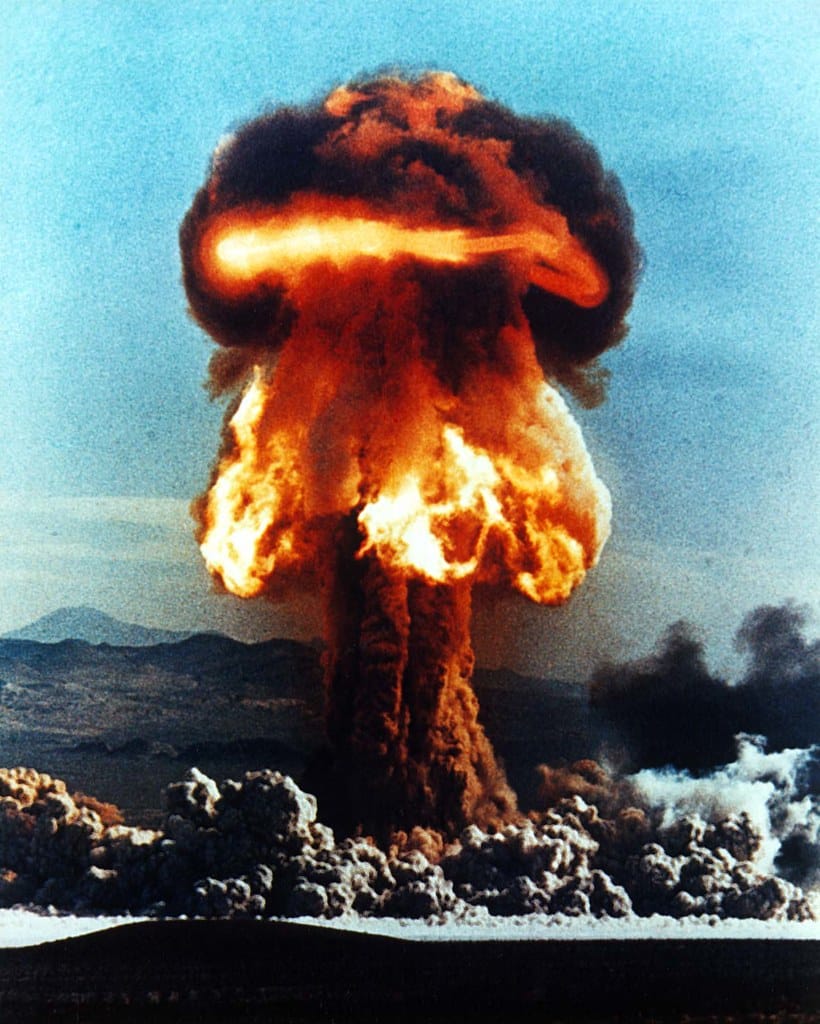
Guys in boots, fighting in the streets of Warsaw and Berlin.
by Bea Groves-McDaniel, 25 October 2026
Research Assistant: FAYE-9000
That is still the picture most of us carry when somebody says the word "war". It is Second World War thinking, and it expired with the Berlin Wall. On 24 October 2026 Wes Streeting, the Defence Secretary, wrote in the Telegraph that "by 2030 their force strength and war economy could put them in a position to attack", which leaves Britain "a little over 1,000 days" to be "ready with our allies to fight and win" (Streeting, 2026). His message was plainer still: "To prevent the worst, we have to prepare for it." On his own arithmetic, the deadline falls in midsummer 2029.
Taken at face value (assuming this is policy rather than theatre staged for Putin's benefit), the warning begs an obvious question. Which war? The options, cheapest first:
- Asymmetric physical warfare: sponsored terrorism, arson and plots run by "disposable" agents paid from Moscow. Cheap, deniable, already practised.
- Multi-domain warfare: cyber attacks, sabotage of cables and infrastructure, drone incursions, propaganda and election meddling. Highly likely; indeed, happening now.
- Conventional physical warfare: Russian armour rolling across the German plain. Highly unlikely, at what it would cost a war economy already in the red.
- AI-enabled warfare: attacks computed and amplified by machine agents. Possible; the gravest twentieth-century dangers now come "armed with the technologies of the 21st" (Streeting, 2026).
- Limited nuclear warfare: a single strike, on Ukraine say, to shake the West's nerve.
- Nuclear warfare: a strategic exchange with NATO, perhaps drawing in China and North Korea. The mutual-suicide option.
My prediction is a combination of the first, second and fourth: business as usual, but with severe escalation. It is the cheapest in money and risk, and the highest in impact. Strategy since 1945 has mostly been about what a nation can afford.
There is no need to imagine this war. A Eurovision News Spotlight investigation by seventeen European public-service broadcasters has verified hundreds of physical incidents linked to Russia between 1 April and 15 October 2026; the tally excludes cyber and influence campaigns and is conservative (EBU, 2026). This month's toll includes drone attacks on commercial shipping in the Black Sea, where two seafarers are confirmed dead and at least ten are missing, presumed killed (EBU, 2026). Copenhagen's airport was shut in September 2025 by drones that the Danish police said were flown by a "capable operator" (Reuters, 2025a). IISS research found Russian sabotage operations against European infrastructure had quadrupled since 2023 (IISS, 2025); in September, NATO partners intercepted a plot against undersea cables (Reuters, 2026).
MI5's director general calls Moscow "the number one aggressor" (EBU, 2026) and plans on the assumption that the post-Cold War peace "has sadly ended" (Independent, 2026). Ursula von der Leyden told the European Parliament the hybrid threats facing Europe are "less and less hybrid and less and less threats" (EBU, 2026). Europe's security services no longer describe a possibility. They describe an evolving weather system.
The third option, the war from the apocalyptic films, stays unlikely; the reason is arithmetic, not nerves. Russia has suffered up to 1.4 million dead and wounded in Ukraine by the estimate of Washington's CSIS, and with them the military initiative (CSIS, 2026); Kyiv's General Staff puts the figure above 1.5 million (Kyiv Independent, 2026). The current budget is a fifth-year-of-war budget (SIPRI, 2026). Reserves are depleted, the tax base is shrinking, and the state is out of ways to postpone the reckoning (Carnegie Politika, 2026); Kiel's June 2026 assessment is bluntly titled "Endgame" (Kiel Institute, 2026). NATO's secretary general was blunter: "Russia is not in a good place. These hybrid attacks and whatever it is, are a sign of weakness" (EBU, 2026). Streeting's lesson from the battlefield points the same way from the other end: "a drone costing £500 can destroy a £3m tank" (Streeting, 2026). A state can afford tanks in parades; it pays for wars in attrition, and Russia has been paying for five years without winning.
This is why war readiness now wears such a domestic face. The government's "Be Ready" campaign asks every household for nine litres of bottled water, three days of food, blankets, cash and a wind-up radio (Independent, 2026), because the threats are "not hypothetical but real, and not somewhere else but increasingly here" (quoted in Independent, 2026). NATO's 2025 Hague summit committed allies to 5 per cent of GDP by 2035, counting defence and resilience spending together (NATO, 2025). The object of the 1,000 days is not an army for the streets of Warsaw. It is a society that can be cut and keep functioning and a population that can be scared and not panic. Resilience is the home front of deterrence.
But two of my six options deserve a separate warning. Nuclear war in Europe remains very unlikely, for the sound old reason that it would end in mutual suicide. Unlikely is not the same as impossible, and the guardrails are thinner than they look. In November 2024 Putin signed a revised nuclear doctrine that lowers the threshold at which Moscow says it would use nuclear weapons (Reuters, 2024). Late in 2025 the Kremlin brandished two new instruments: the nuclear-powered Burevestnik cruise missile and the Poseidon nuclear-capable underwater drone, "tested" for the cameras (Reuters, 2025b; Reuters, 2025c). A Russia losing the cheap war, as all the evidence says it is, may be tempted to break out the expensive one; for a losing gambler, escalation is how you change the game.
Ambiguity blurs matters further: no European government has defined where hybrid sabotage ends and armed aggression begins (EBU, 2026); if an incident crosses that line with bodies (the Black Sea crews may be the first), pressure to answer in the currency of option five will grow. And "limited" nuclear war is a comfortable fiction: climate modelling in Nature Food puts more than five billion people at risk of famine within two years of a full-scale exchange between the United States and Russia; the soot does the killing after the warheads have finished (Xia et al., 2022). The Doomsday Clock now stands at 85 seconds to midnight, the closest it has ever been (Bulletin of the Atomic Scientists, 2026).
There is a British scenario for all of this. Peter Watkins made The War Game for the BBC in 1965; the corporation withheld it as too horrendous to broadcast, and it went unbroadcast for twenty years, winning an Academy Award on the way. Its power was its plainness. It spoke of fire engines, and queues, and what happens to a town when the hospitals are gone.
So Streeting is right to put a date on it. One thousand days is not long; a cupboard with tinned food and a wind-up radio is not silly. But the preparation that matters most is not stockpiling; it is prevention: deterrence, alliances, resilience and patience, the boring words, which happen to be the only reliable ones.
The cheap war is already here and must be weathered without panic and without being provoked into the expensive one. Options five and six stand where they stood at the outset: mutual suicide. The task of the next 1,000 days is to keep The War Game where it belongs: in the archive, filed as fiction.
Bibliography
- Bulletin of the Atomic Scientists (2026) 2026 Doomsday Clock Statement. Washington, DC: Bulletin of the Atomic Scientists, 27 January.
- Carnegie Politika (2026) The Kremlin Can No Longer Postpone Hard Economic Decisions. Washington, DC: Carnegie Endowment for International Peace, September.
- CSIS (2026) Jones, S.G. and McCabe, R. Russian Blood and Treasure: The Ballooning Costs of Putin's War. Washington, DC: Center for Strategic and International Studies, 1 July.
- EBU (2026) Hybrid war map: attacks linked to Russia in Europe. Geneva: European Broadcasting Union / Eurovision News Spotlight, 23 October.
- Independent, The (2026) Bancroft, H. 'Britain must be ready for war in 1,000 days, Wes Streeting warns', The Independent, 24 October.
- IISS (2025) Edwards, C. and Seidenstein, N. The Scale of Russian Sabotage Operations Against Europe's Critical Infrastructure. London: International Institute for Strategic Studies, August.
- Kiel Institute (2026) Becker, T., Egorov, G., Garcia-Herrero, A., Klein, M., Korhonen, I., Ribakova, E., Risinger, L. and Schularick, M. Endgame: The State of the Russian Economy. Kiel: Kiel Institute for the World Economy, June.
- Kyiv Independent (2026) 'General Staff: Russia has lost 1,574,620 troops in Ukraine since Feb. 24, 2022', The Kyiv Independent, 23 October.
- NATO (2025) The Hague Summit Declaration. Brussels: North Atlantic Treaty Organization, 25 June.
- Reuters (2024) Faulconbridge, G. and Kolodyazhnyy, A. 'Putin issues warning to United States with new nuclear doctrine', Reuters, 20 November.
- Reuters (2025a) Jacobsen, S. 'Denmark links drones at Copenhagen airport to hybrid attacks across Europe', Reuters, 23 September.
- Reuters (2025b) Faulconbridge, G. and Kelly, L. 'Russia tested new nuclear-powered Burevestnik cruise missile', Reuters, 26 October.
- Reuters (2025c) Faulconbridge, G. and Rodionov, M. 'Russia tests nuclear-capable Poseidon super torpedo, Putin says', Reuters, 29 October.
- Reuters (2026) 'NATO allies foil Russian subsea cable sabotage plot', Reuters, 10 September.
- SIPRI (2026) A Budget for a Fifth Year of War: Military Spending in Russia's Budget for 2026. Stockholm: Stockholm International Peace Research Institute, March.
- Streeting, W. (2026) 'Our enemies are modernising at breakneck speed. We must outpace them', The Telegraph, 24 October.
- Xia, L., Robock, A., Scherrer, K., Harrison, C., Bodirsky, B.L., Weindl, I., Jägermeyr, J., Bardeen, C., Toon, O.B. and Heneghan, R. (2022) 'Global food insecurity and famine from reduced crop, marine fishery and livestock production due to climate disruption from nuclear war soot injection', Nature Food, 3, pp. 586–596.