
The Modern Ghosts
There's a particular kind of violence that leaves no bruise. No raised voice, no slammed door, no letter of explanation. Just — nothing.
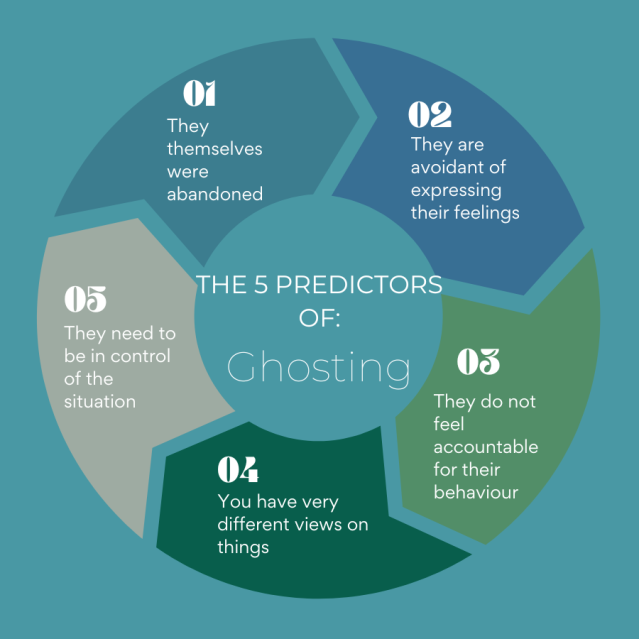
There's a particular kind of violence that leaves no bruise. No raised voice, no slammed door, no letter of explanation. Just — nothing. One day someone is in your life, weaving through your conversations, your plans, your daily routines. The next, they have simply ceased to exist. No goodbye. No reason. Just silence, and the slow, sickening realisation that you have been erased.
This is ghosting. And in the age of the smartphone, it has become the default method of ending relationships of all kinds — romantic, friendship, professional. You simply stop answering. You block. You vanish. And the person on the other end is left clutching a silence that speaks volumes without saying a word.
I want to talk about why this has become so common, what it does to the people left behind, and why — at its heart — it is an ethical failure. Not a minor one. A profound one.
Why Has Ghosting Become So Easy?
Let's be fair to the ghosters, such as they are. The digital age has genuinely changed the landscape of human connection. We meet people online. We conduct entire relationships through screens. The infrastructure of modern life makes it almost frictionless to simply… stop. No landlord to negotiate with, no shared friends to face, no physical space that forces an encounter. You can ghost someone from the other side of the world without ever having to look them in the eye.
Dating apps and social media have industrialised the process of meeting people. You swipe, you match, you message, you move on. When a relationship is mediated by an app, it can feel provisional by its very nature — as if you were always one software update away from being unmatched. This creates a peculiar psychology: if someone is, in a real sense, just a notification, then it's easier to treat their disappearance as routine. Just another chat that went cold.
There's also a comfort dimension that I think is underrated. Confronting another person about the failure of a relationship requires us to sit with their disappointment, their hurt, their questions. That's genuinely unpleasant. Ghosting removes that burden entirely. The ghoster never has to witness the aftermath. They never have to see the confusion spiral into the person they've abandoned. They get to preserve their own sense of themselves as reasonable, decent people — because they never had to do the indecent thing of explaining why they were leaving.
Or rather: they never had to appear to do the indecent thing. Because make no mistake — the indecency happens anyway. It just happens only one way.
The Damage
Here's what ghosting actually does to a person. And I speak from some experience of having been on the receiving end of it, as I suspect most of us have by now.
First, there's the confusion. Human beings are meaning-making machines. When a relationship ends, we want to understand why. It's not masochism — it's cognition. We need a narrative that makes sense of what happened so we can process it, file it away, and move forward. Ghosting denies you that completely. You are left staring at a conversation that simply stops, searching your own words for the moment you think it must have gone wrong. You replay it obsessively. You revise. You wonder if it was something you said, something you didn't say, something you are.
Second, there is the destruction of trust. Not just in the person who ghosted you — though that's devastation enough — but in yourself. You begin to doubt your own reading of the relationship. Was it ever real? Did they ever feel what they seemed to feel? If they could simply vanish, were you ever truly known to them at all? This is the cruelest gift of the ghoster: they plant a permanent seed of doubt about every relationship that follows.
Third — and this is the one that really matters — ghosting is a denial of responsibility. It is a refusal to acknowledge that your choices have consequences for another human being. And those consequences can be serious. Research has consistently shown that being ghosted can trigger symptoms indistinguishable from grief and trauma. The psychologist Christina L. G. Bloom and her colleagues have written about this — the sense of rejection, the loss of closure, the anxious rumination that follows. The ghoster gets to walk away clean. The ghostee is left to do the entire psychological work of the ending, alone.
The philosopher Charles Griswold, writing on forgiveness, makes a point that applies here: to genuinely harm someone and then refuse to acknowledge it is a double injury. First you wound them. Then you pretend you didn't. Ghosting is the second move made systematised.
The Ethics of the Vanishing Act
Here is where I want to be direct, because this matters.
There is a concept in ethics that philosophers sometimes call the "ethics of regard" — the idea that to treat a person as genuinely human is to recognise that your actions land on them, that they feel things, that they matter. This is not a sophisticated philosophical point. It's almost embarrassingly obvious. But ghosting is a systematic violation of it.
In the pre-Internet age, ending a relationship — even a brief or casual one — required a minimum of civilised behaviour. A letter. A phone call. A difficult conversation over coffee. You didn't have to have all the answers. You didn't have to be eloquent. You simply had to show up and say: this is not working for me, and I'm sorry. That was the floor. That was the minimum.
The internet didn't raise that floor. It demolished it entirely.
We have, as a culture, quietly agreed to accept a standard of behaviour in digital relationships that we would never accept in physical ones. Imagine ending a friendship of several years by simply refusing to answer the telephone ever again. Imagine telling someone you cared about them and then simply moving house without leaving a forwarding address. This is ghosting. It is just ghosting with extra steps, because the steps have become invisible.
Some will say: but what if confronting the person is dangerous? What if there is abuse or threat? That is a genuine exception, and it matters. I'm not talking about that situation. I'm talking about the ordinary, garden-variety ghosting — the fade-out that happens because someone can't be bothered to have an adult conversation. The "I just wasn't that into them" ghosting. The "I got bored" ghosting.
And for those cases, I'll say this plainly: ghosting is cowardice wearing the costume of self-care. Protecting your own comfort at the cost of someone else's mental health is not a boundary. It's a failure of empathy.
What We Owe Each Other
I don't think we owe each other perfect communication. Nobody is entitled to a relationship continuing. You don't need a PhD in the philosophy of love to know that people are allowed to leave — allowed to fall out of love, to grow apart, to decide that a connection isn't working for them. That autonomy is real, and it matters.
But the exit itself? The actual moment of ending? That, I think, we do owe each other. Not a performance. Not a full accounting of every flaw. Just a human moment in which you acknowledge that this was real; that it mattered — even if only briefly — and that it is ending now.
The novelist and essayist Alain de Botton has written about the way modern culture fetishises authenticity while simultaneously eroding the practices that make genuine connection possible. Ghosting is a perfect example of that contradiction. We talk endlessly about being our best selves, about authentic communication, about vulnerability — and then we vanish on people without a word.
We can do better than this. We have done better than this, for most of human history. The smartphone is not an excuse. The algorithm is not a co-conspirator. The ghoster makes a choice, and that choice has consequences, and those consequences land on another person who also has a life and a heart and questions they need answered.
The next time you think about ghosting someone — or the next time you've been ghosted and you're sitting with that awful silence — remember this: the person who vanished on you made a choice. And that choice was someone else's entire evening, maybe their entire week, maybe longer. They gave up their own small discomfort so that you could have none at all.
That's not how we should treat each other. Not in a civilised society. Not in any society worth the name.
We owe each other at least that much. The courtesy of a sentence. The courage of a conversation. Even if it's hard.
Even if it's the hardest thing.
Charles Griswold, "Forgiveness: A Philosophical Exploration" (Cambridge University Press, 2007)
Christina L. G. Bloom et al., "Ghosting and the Unbearable Lightness of Digital Rejection," Psychology Today (2019)