
The Line That Touched Bottom
This is the starting point for any honest reckoning with the question of intelligent life elsewhere in our galaxy. The question is not merely biological or cosmological. It is, at its heart, a question about scale. About what our models of the universe tell us and what they conceal
The Search for Strange New Worlds
By Bea Groves-McDaniel, July 2026
Research Assistant: FAYE-9000
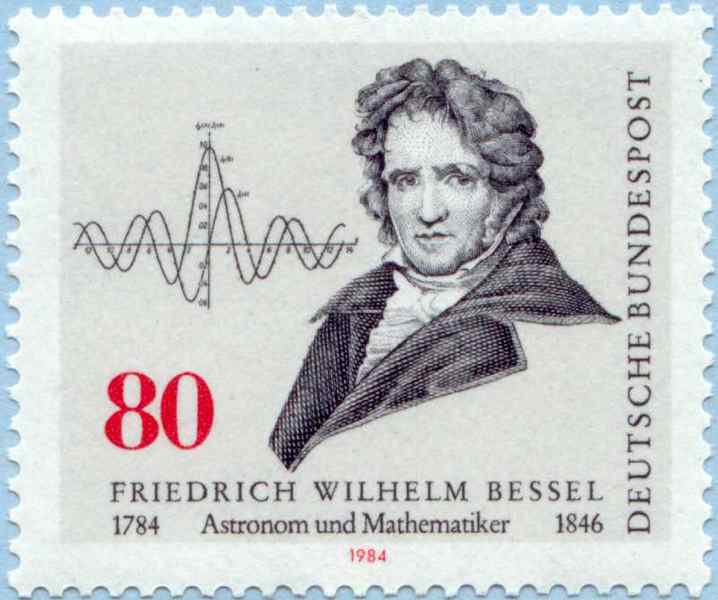
In the 1830s, the astronomer John Herschel wrote of the quest to measure the distances to the stars as drawing a line down through the cosmos until it finally reached something solid: a baseline from which the universe's architecture could finally be mapped. In 1838, Friedrich Wilhelm Bessel did exactly that. Using measurements of the faint star 61 Cygni, he calculated its distance at approximately 10.3 light years — the first reliable measurement of distance to a star beyond our solar system. He was wrong by modern standards, but he was not wrong in the crucial respect: the universe, which humanity had always assumed to be broadly comprehensible, suddenly became titanic. The Sun was no longer the centre of anything. The Earth was not even a suburb. It was a mote in an unimaginably large eye, and Bessel had just shown us how far it was to the nearest street lamp.
This is the starting point for any honest reckoning with the question of intelligent life elsewhere in our galaxy. The question is not merely biological or cosmological. It is, at its heart, a question about scale. About what our models of the universe tell us and what they conceal.
The Milky Way contains between 100 and 400 billion stars, arranged in a spiral structure roughly 100,000 light years across.
Our own solar system sits in a minor spur, about 26,000 light years from the galactic centre. Light, the fastest thing there is, takes a hundred thousand years to cross from one edge to the other. At the speed of a commercial airliner, the same journey would take longer than the Earth has existed. At walking pace, it would take longer than the age of the universe. These distances are not merely large. They are of a different order from anything human intuition is equipped to handle.
Our radio signals (the most concentrated burst of human electromagnetic activity since the 1920s) have reached perhaps 200 light years in every direction. To the nearest star system, Proxima Centauri, they have not yet arrived. We are, in cosmic terms, not even a whisper.
This is before we consider what lies beyond the Milky Way. The observable universe contains approximately 2 trillion galaxies. The most distant we have observed emitted the light we now receive over 13 billion years ago. Many of those galaxies no longer exist in any recognisable form. Beyond the observable horizon, the universe may extend indefinitely. Some cosmologists take seriously the possibility of a multiverse: a vast ensemble of universes, each with its own physical constants, each a separate experiment in what reality can be. If it is real, the question "how many intelligent civilisations exist?" becomes not merely about our galaxy but about the structure of reality itself.
In 1961, the astronomer Frank Drake convened a small meeting at the National Radio Astronomy Observatory in Green Bank, West Virginia. To prepare, he wrote down what he called an equation — not a formula in the strict mathematical sense, but a framework for organising ignorance:
N = R × fp × ne × fl × fi × fc × L
Where N is the number of detectable civilisations in our galaxy at any given moment, and the variables represent, in order:
- the rate of star formation;
- the fraction of stars with planetary systems;
- the number of Earth-like planets per system;
- the fraction on which life actually arises;
- the fraction of those on which life develops intelligence;
- the fraction of those which develop interstellar communication; and...
- the average lifespan of a technological civilisation.
The equation's power lies not in producing a number but in exposing the extent of our uncertainty. The first three variables are now reasonably well constrained. The work of the Kepler space observatory, which identified thousands of exoplanets before it failed in 2018, established that planets are not rare. They are common. The universe is not stingy with real estate.
The biological variables — fl, fi, and fc — are where the uncertainties multiply. We do not yet know how life begins. We have a plausible story about the conditions that preceded it, but we cannot synthesise a living cell from non-living chemistry in a laboratory. The step from chemistry to biology remains one of the great unsolved problems in science. When Drake wrote his equation, no exoplanets were known. Now we have thousands. But we still have exactly zero confirmed instances of life beyond Earth. The universe is agnostic on whether biology is common or profoundly rare.
The final variable, L — the lifespan of a technological civilisation — is the most speculative of all. Civilisations on Earth have existed for roughly 10,000 years; industrial civilisations for about 300; radio-capable civilisations for about 130. The window is extraordinarily narrow. If L is measured not in millennia but in centuries (as the twin threats of nuclear war and ecological collapse might suggest), then the probability of two civilisations existing simultaneously, within communication range of each other, becomes vanishingly small regardless of what the other variables turn out to be.
This is where the Fermi Paradox enters. Named after the physicist Enrico Fermi, who reportedly posed the question over lunch at Los Alamos in 1950, it can be stated simply: if the numbers generated by the Drake Equation suggest that intelligent, communicative life should be common, then where is everyone?
Not a single unambiguous signal has been detected in over sixty years of systematic searching. The sky is full of noise, and it has remained full of noise. We have looked carefully and found nothing that compels the conclusion that we are not alone.
Many solutions have been proposed. Some are mundane: we have not searched long enough, or in the right frequencies, or in the right directions. Others are darker: civilisations destroy themselves. They always do. The galaxy has been through many generations of stars, and any civilisation that arose billions of years before us may have come and gone before the solar system existed.
Here I want to propose three considerations that I believe complicate the standard picture in ways that deserve more attention than they typically receive.
The first is this: life may be abundant in the galaxy, but recognisable intelligence may be almost impossibly rare. On Earth, life appeared almost as soon as conditions allowed — within a few hundred million years of the planet becoming habitable. But intelligence took nearly four billion years to emerge, and emerged once. Exactly once, in one lineage, and it nearly didn't happen. The mass extinctions that periodically reset the board (the Permian catastrophe that eliminated 96% of all marine species and the asteroid that ended the Cretaceous) were not interruptions to a smooth story of progress toward mind. They were the story. Intelligence emerged in the aftermath of catastrophe, in the particular ecological niches that opened when dominant species were removed. The great silence of the galaxy may not be evidence that no one is there. It may be evidence that getting from chemistry to consciousness is, for reasons we do not yet understand, a great deal harder than it looks.
The palaeontologist Simon Conway Morris, in Life's Solution (2003), argues that convergence (the independent evolution of similar traits in unrelated lineages) suggests that intelligence is in some sense inevitable if life is given enough time and the right conditions. But the evidence of Earth's own history cuts both ways. Eyes evolved dozens of times. Intelligence evolved once. The burden of proof, surely, lies with those who claim it is common.
The second consideration is distance — not merely the distance between stars, which is itself sufficient to make contact implausible, but the distance between what we are looking for and what is actually there. If another intelligence operates at scales we cannot imagine (quantum, gravitational, distributed across stellar environments), then our searches may be failing not because there is nothing there but because we have no vocabulary for what we are looking at. Our minds are, in a very literal sense, not built for thinking about alien minds. They are built for surviving on the African savannah. Everything else is improvisation.
This connects to my third point: we suffer, I believe, from a deep case of what we might call Human Supremacy — not any political variant, but something more foundational, woven into the very structure of our scientific frameworks. When SETI looks for evidence of alien civilisation, it looks for radio signals, for atmospheric signatures of industrial pollution, and for waste heat from large-scale energy consumption. It looks for something like us: matter-manipulating, structure-building, energy-consuming beings. These are not unreasonable things to look for. But they are the things that our own history has taught us to look for, and that history is a single data point.
The philosopher of science John Lloyd has argued that the search for extraterrestrial intelligence is, at its deepest level, a search for our own reflection. We are looking for minds that work as ours do, because we cannot seriously conceive of minds that do not. The question we do not ask (because we cannot easily formulate it) is whether intelligence might take forms that bear no recognisable resemblance to our own:
- A distributed intelligence embedded in the quantum substrate of space-time.
- A consciousness that exists at temporal scales of millions of years, regarding a human lifespan as we might regard a single heartbeat.
- A mind that uses dark matter as its computational medium, or thinks in patterns of gravitational radiation, or exists not as a process in time but as a structure in space.
The human model is the only model we have. It is almost certainly not the only model there is.
And yet (and this is where I want to end on a note of genuine, earned optimism) the fact that we are here at all is itself an argument for taking the search seriously.
The universe that produced Earth, life, and mind is not a hostile universe. It is not a universe that says "No!" to complexity or consciousness. The physical constants that govern it are fine-tuned in ways that continue to exercise theoretical physicists: alter the strong nuclear force by two per cent and carbon atoms cannot form; alter gravity slightly and stars burn for the wrong length of time to allow complex life. The universe, so far as we can tell, was saying "Yes!" from the beginning. The very fact that matter can think (that atoms can wonder about atoms) is itself an extraordinary, non-trivial thing. It need not have been so.
The planets in the habitable zones of nearby stars are more numerous and more varied than anyone predicted a generation ago. The next generation of telescopes (the Extremely Large Telescope in Chile, the James Webb Space Telescope already in operation, and the proposed Habitable Worlds Observatory) will be able to analyse the atmospheres of Earth-sized planets orbiting Sun-like stars to detect the chemical signatures of biological processes in their light. If there is life in the galaxy — even microbial, even simple — these instruments will begin to find it within the next two decades. That is not a hope. It is a timetable.
The line that touched bottom did not end the search. It opened it. Bessel's measurement of 61 Cygni was not a conclusion. It was a beginning. The same is true of everything that has followed: the Fermi Paradox, the Drake Equation, and all our unanswered radio searches. They are not evidence that we are alone. They are evidence that we have not yet learned how to listen properly.
The Strange New Worlds are out there, and we are only just learning how to look. The question is not whether the universe is interesting. It is whether we are patient enough, and humble enough, and strange enough ourselves, to find it. History suggests we should be hopeful. We usually are.
Bibliography
Bennett, J. and Shostak, S. (2023) Life in the Universe. 5th edn. San Francisco: Pearson.
Cirkovic, M.M. (2022) The Great Silence: Why the Fermi Paradox Demands Attention. Cambridge: Cambridge University Press.
Drake, F. and Sobel, D. (1992) Is Anyone Out There? The Scientific Search for Extraterrestrial Intelligence. New York: Delacorte Press.
Grinspoon, D. (2003) Lonely Planets: The Natural Philosophy of Alien Life. New York: William Morrow.
Hadhazy, A. (2020) 'The Fermi Paradox: Where Are All the Aliens?', Scientific American, 23(4), pp. 34–41.
Hawthorne, J. (2021) 'Metaphysics and the Multiverse', in S. Boss and J. Lawrence (eds) The Oxford Handbook of Metaphysics. Oxford: Oxford University Press.
Kroupa, P. (2022) The Milky Way and Its Neighbours. Cambridge: Cambridge University Press.
Lineweaver, C.H. and Davis, T.M. (2022) 'Does the Cosmological Principle Imply a Multiverse?', Astrophysical Journal, 934(2), p. 186.
Ward, P. and Brownlee, D. (2000) Rare Earth: Why Complex Life Is Uncommon in the Universe. New York: Copernicus Books.
Webb, S. (2015) If the Universe Is Teeming with Aliens, Where Is Everybody? Fifty Solutions to the Fermi Paradox and the Problem of Extraterrestrial Life. 2nd edn. Cham: Springer.