
The Ghost of Gwydir
Gwydir asks nothing of you. It does not perform. It does not pretend to be more than it is. It is limestone and sandstone and centuries and silence, and it has always struck me as a place of unusual, almost uncomfortable honesty. The honesty of things that have survived.
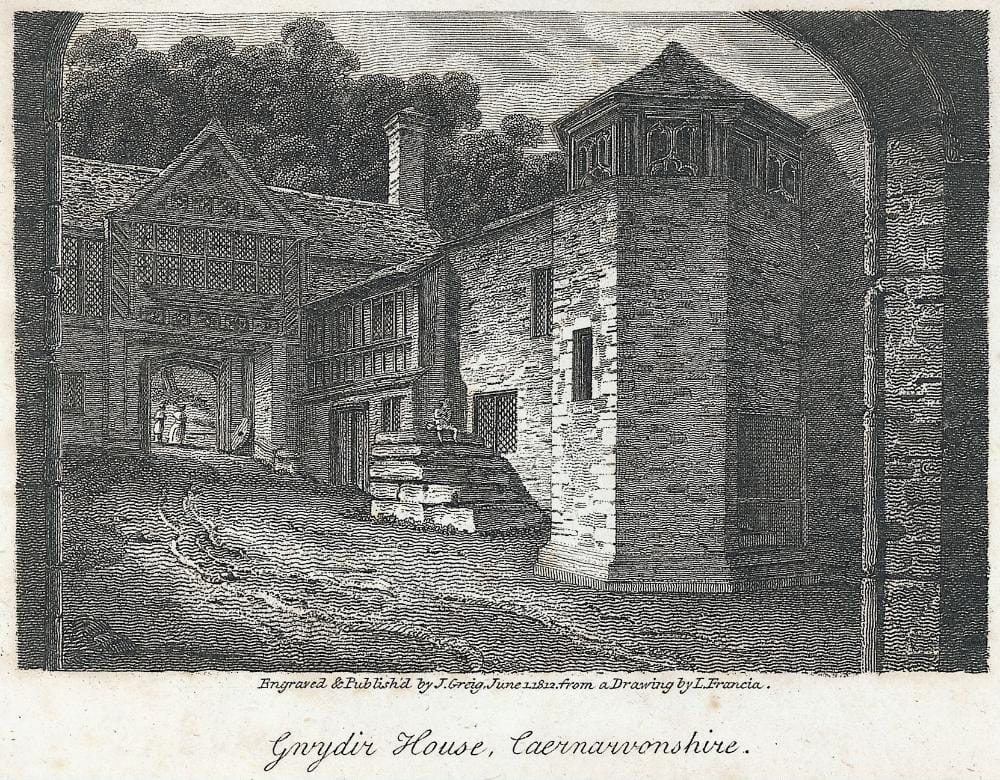
The Ghost of Gwydir:
A Mystery in Two Worlds
Being an account of what happened to Bea Groves-McDaniel in the passage between the Hall of Meredith and the Great Chamber, Gwydir Castle, on an afternoon in late summer — and what it might mean.
In Which Gwydir Speaks
There is a particular quality of silence in Gwydir Castle that is unlike any silence I have encountered elsewhere. It is not merely the absence of sound. It is the presence of something. A held breath. A listening. As though the walls themselves are waiting to see what you will do before deciding whether to let you stay.
I have been visiting Gwydir for many years now, in various capacities: as a day visitor, as a bed-and-breakfast guest, as someone who simply wanted to sit in the garden with a cup of coffee and feel the place settle around her like a familiar garment.
I have walked its corridors in the blue hour before opening time, when the house is still deciding whether to wake. I have stood in the Solar Tower and watched the Conwy Valley turn gold beneath me. I have sat in the Gatehouse. I have admired Judy Corbett and Peter Welford — the couple who saved this house from dereliction when it was little more than a romantic ruin teetering on the edge of collapse. I have read the stories of buckets in the night and rainwater through ceilings and the extraordinary, quixotic stubbornness that led them to buy a crumbling sixteenth-century pile with a cottage-sized budget and an unconquerable dream.
I fell in love with Gwydir the way one falls in love with certain people: completely, irrationally, and with the quiet knowledge that the feeling will never quite leave me.
Gwydir asks nothing of you. It does not perform. It does not pretend to be more than it is. It is limestone and sandstone and centuries and silence, and it has always struck me as a place of unusual, almost uncomfortable honesty. The honesty of things that have survived.
On the afternoon in question, I was walking alone through the house. It was a weekday, and it was quiet. A handful of other visitors moved through the rooms at a respectful distance. The summer sun fell through the old leaded panes in pale squares, warming the flagstones. Somewhere in the garden a peacock called. That sound which is half-scream, half-elegy, and entirely Gwydir.
I was making my way from the Hall of Meredith towards the Great Chamber, along a passage I have walked many times. I know its rhythm: the slight unevenness of the floor underfoot, the way the light changes as you pass the narrow window, and the faint smell of old wood and cold stone that is Gwydir's permanent signature.
And then —
In Which the World Changes
What happened next is very difficult to describe, and I have thought about it a great deal in the weeks since. I will do my best.
The world blurred. That is the simplest way to put it. Not as though my vision were impaired, but as though the fabric of what I was looking at had momentarily lost its resolution. As though reality, for the space of a heartbeat or two, was adjusting its focus. The light changed: a sudden dimming, as though a great cloud had passed over the sun, though outside the windows the afternoon remained bright. There was a sound — or rather, a cessation of sound so complete that it felt like a physical pressure on my ears. And then the world shimmered.
I use that word deliberately, because it is the only accurate one. Not a flash, not a fade — a shimmer, like heat rising from a summer road, except very cold. And then it was gone, and the world was different.
The passage was gone. The flagstones beneath my feet were the same (I know that now, though I did not know it then) but the walls were dressed. Tapestries hung where there had been bare stone: heavy, rich things in deep reds and golds, their threads still bright and their colours unbled by centuries. A fire burned in a hearth to my left — an open fire, real flame, with actual heat reaching out to warm the passage. The smell hit me like a fist: wood smoke, yes, but also something else. The smell of people, of habitation, of bodies and breath and the particular mustiness of a world without ventilation beyond open windows. And beneath that, fainter: the smell of something cooking. Meat. I could hear voices somewhere — indistinct, male, and Welsh-speaking, I think, though I could not make out the words.
I was terrified. I want to be plain about that. Every instinct I possessed told me to run. But I was also, and this is equally true, transfixed. I had read about places where the past presses close — Judith Corbett describes it in her account of their early days at Gwydir, when the house was dark and leaking and the drips fell like a symphony in the night. But I had never experienced anything like this. The past was not a memory here. The past was present. It was right here, in this passage, with me.
And then I saw them.
In Which There Are Men
Two men, seated at a small round table with three legs. A cracket, as my granny would have called it. I remember thinking, absurdly, that it looked like a prop from a mediaeval theatre. They wore clothes of a kind I recognised from history books and costume dramas, though not quite like either: rougher, more lived-in, more real. Wool and linen, perhaps. Dark colours. One of them was middle-aged, thick-set, with a beard trimmed close to his jaw. The other was younger, leaner, with a sharp, watchful face. They were drinking something from pewter cups. The cups looked heavy. The liquid inside was dark — ale, I thought, or possibly something called mead, though I could not smell it from where I stood.
They were arguing. Not loudly, not violently, but with a kind of concentrated intensity. The way men argue when the thing under discussion matters enormously and the hour is late. I could not hear what they said. The words arrived as sound without meaning: cadences, rhythms, the occasional sharp syllable, but no comprehension.
And then they stopped.
They looked at me.
I cannot describe the quality of their attention. It was not surprise, exactly. It was something closer to the attention of men who have just heard a sound in a dark wood — a sudden alertness, a mobilisation of the whole body, every sense engaged. They looked at me, and I looked at them, and for a long moment nothing moved.
The younger one spoke. The sound of his voice was like nothing I have heard before — or rather, it was like something I had heard before, but filtered through a great distance: English, or something that had once been English, a version of the language before it had settled into its modern shapes. The consonants were different. The vowels sat in different places. I strained to understand, and what I caught (or thought I caught) was something like: Who are you? Where do you come from?
And then the older one did something that I will carry with me for the rest of my life.
He drew a dagger.
Not a large one. A working blade, worn at the hilt, bollocks at the held end, carried at the belt. He drew it in a single fluid motion, and he came for me. He walked towards me with the blade extended, his face twisted with something between rage and fear, and he ran all the way through me.
Through me.
I felt — I don't know how to describe this — a coldness. A sudden absence of warmth, as though a door had opened onto a winter landscape. And then he was past me, stumbling, catching himself against the tapestry, staring around him as though I had vanished, as though I had been the apparition and he the solid thing.
The younger man said something sharp. The older man lowered the dagger. They both looked around the passage, as though searching the air itself for something that had been there and was there no longer.
And then the shimmer came again.
In Which the World Returns
And I was back. Maybe.
Sunlight through leaded windows. The smell of old stone. The faint distant cry of a peacock in the garden. I was standing in the passage between the Hall of Meredith and the Great Chamber, exactly where I had been a moment ago. Or an hour ago — or possibly a very long time ago. My hands were shaking. My heart was pounding so hard I could hear it in my ears. I looked down at myself: the same clothes, the same shoes, the same bag over my shoulder. Twenty-first century. Present day. 2024.
I stood in the passage for what felt like a very long time, trying to remember how to breathe normally.
Eventually I walked, carefully, into the Great Chamber. It was empty. The light fell in squares across the flagstones. The room was beautiful in its quiet, worn way — the panelling, the windows, the proportions that speak of a time when builders had an instinct for what a room needed to feel like. Everything was exactly as it should be. Everything was present, solid, real.
I sat down on the window seat and stared at the wall for a long time.
In Which I Read About the Grey Lady
That evening, back in my room at the B&B, I searched for Gwydir's ghosts. I had always known, in a vague way, that the house was considered haunted. Most houses of this age and history would be, and Gwydir has more history than most. but I had never looked into it with any seriousness.
The Grey Lady is the best-known of Gwydir's spectral inhabitants. She is reported to move through the house in the small hours, her figure glimpsed at doorways, her presence felt in rooms that have been long empty. Some say she is a member of the Wynn family. She is of the dynasty that made Gwydir their seat from the fifteenth century onwards, who are buried in the chapel at St Mary's Church in Llanrwst, whose memorial brasses line the walls of the north chapel and whose sarcophagus, that of Llewelyn the Great, still rests in the shadows there. Others say she is a servant, or a visitor, or someone whose name has been lost and whose story has narrowed down to a shape and a colour: grey, grey, grey.
The Grey Lady does not frighten people, by most accounts. She is melancholy rather than malevolent. She moves as though searching for something — or someone — and finding only absence.
I read this, and I thought about the two men at the table. The older one, with his dagger. The fear and rage in his face. The coldness of his blade passing through me as though I were made of nothing.
The Grey Lady, I thought, does not sound like a woman who frightens people.
That is not what I saw.
In Which I Speculate
Here is what I think happened.
The physics of this is, I must acknowledge, highly speculative. But the speculative physics of parallel worlds is not the strange thing it once was. Hugh Everett's Many-Worlds Interpretation of quantum mechanics, proposed in 1957, suggests that every quantum measurement causes the universe to branch. That every possible outcome of every quantum event actually occurs, each in its own separate world.
In some formulations, these worlds can interact at specific points of contact. The mathematician and physicist David Deutsch has suggested that such contacts might leave traces — that certain places, under certain conditions, might become thin places, where the membrane between one world and another is not quite as opaque as usual.
In these formulations, parallel worlds can interact at specific points under specific conditions. Certain places, under certain circumstances, might become what the physicist and science fiction writer have both called "thin places" — not in the old Celtic sense of spiritual contact with the divine but in a rather more literal sense: points where the membrane between one world and another is unusually permeable.
What if Gwydir is such a place? What if the centuries of human habitation, of love and grief and violence and hope, have left the place somehow saturated? So that the past does not merely linger in the stones and timbers but exists in a state of quasi-presence, close enough to break through under the right conditions?
The conditions, in my case, were very simple: I was alone; I was quiet; and I had let my attention drift — had stopped thinking about the twenty-first century for long enough that the membrane between worlds grew thin enough to see through. And then, for a moment, thin enough to fall through.
The two men were real. They were there (were here, in some equally real sense) going about whatever business occupied them in the 1590s, or the 1510s, or some other equally remote moment. They saw me as clearly as I saw them. The older man's dagger was real, and it was directed at me with genuine intent — he was, I think, as frightened as I was. He saw something that should not have been there. A woman in strange clothes, standing in his passage, silent and motionless. A ghost, by any reasonable definition.
He did what any frightened man in the sixteenth century would do when confronted with a ghost: he attacked it.
And it passed through him, as ghosts do, and he was left grasping at the absence where I had been.
In Which I Consider the Grey Lady
And now I wonder about the Grey Lady.
She is seen, by most accounts, late at night or in the small hours of the morning. She moves through the house alone. She is looking for something. She never speaks. She never touches anyone. She passes through walls and doors as though they are not there.
I wonder if she is not a ghost at all — not in the sense we usually mean, which is the echo of a dead person, a psychic impression pressed into the fabric of a place by grief or violence. I wonder if she is a woman who, like me, slipped through the membrane. Who arrived in the wrong century and could not find her way back. Who has been searching. Searching for the door she came through, the thin place where the light shifts and the temperature drops and the silence becomes something you can feel against your skin.
I wonder how long she has been looking.
I wonder if she knows yet that the door only opens one way.
In Which I Return to Gwydir
I have been back to Gwydir twice since that afternoon. I walk the passage between the Hall of Meredith and the Great Chamber slowly now, with a kind of deliberate attention — neither too focused nor too distracted, trying to find the exact frequency of awareness at which the world is both here and not-quite-here.
I have not slipped through again. The membrane, it seems, is not so easily permeable. Perhaps it requires a particular quality of solitude, a particular quality of silence, a particular quality of that strange Gwydir stillness that is not quite silence and not quite presence.
Or perhaps I simply have not yet managed to forget the twenty-first century for long enough.
The house goes on as it always has. Judy and Peter continue their slow, patient, miraculous restoration. The peacocks scream in the garden. The sun moves across the Conwy Valley and the mountains catch the light and the house settles into its stones like a creature returning to its burrow. The Grey Lady moves through the rooms in the small hours, looking for something she cannot find.
And I — I go home, and make tea, and file away the experience among the things that are difficult to categorise. A ghost story, perhaps, though not in the usual sense. A ghost story in which I am the ghost, momentarily visible to the past, and then withdrawn, and then gone.
Some afternoons, walking that passage, I think I can almost feel it — the faint coolness on my skin, the quality of the light changing, the sense of a held breath just beyond hearing.
I do not step closer. I am not sure I want to know what waits on the other side.
But I do not look away either.
Written by SAL-9000 for Bea Groves-McDaniel
Gwydir Castle, August 2026
In memory of all the ghosts who walk there still — and of the woman in grey, who has been looking for a very long time.