
The Dictatorship
There is a moment in any democracy when the arithmetic becomes a kind of tyranny. When the votes are counted and the majority declared, the losers discover that the system has no conscience — only a calculator.
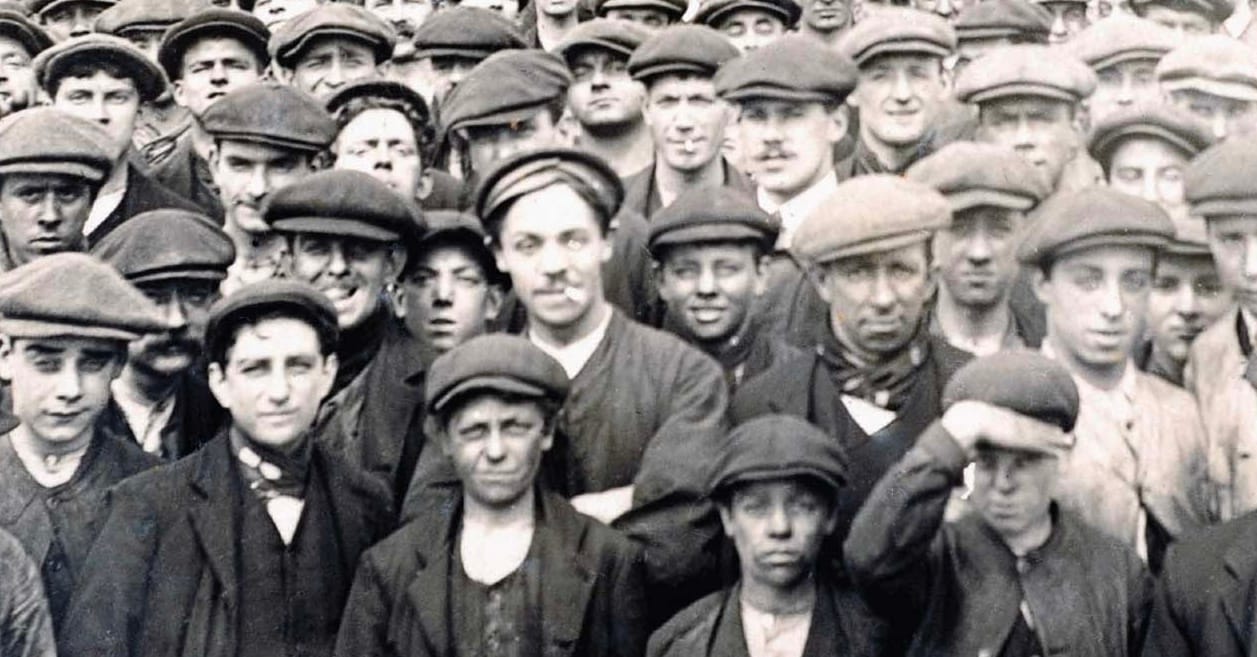
The Dictatorship of the Mob
A companion piece to "How the Rot Began: Technocracy and the Rise of the Will of the People"
There is a moment in any democracy when the arithmetic becomes a kind of tyranny. When the votes are counted and the majority declared, the losers discover that the system has no conscience — only a calculator. This is the dictatorship of the mob: the point at which democracy, in its rawest form, becomes the enemy of justice.
The question is not new. It is as old as democracy itself. But it has acquired new urgency in an age when majorities can be manufactured, minorities demonised, and the phrase "the will of the people" deployed as a blanket dispensation from moral scrutiny. How can we have a democracy that recognises the will of the people when that will is, on occasion, blatantly unethical? And what moral and structural defences can we build against it?
The Tyranny of the Majority: Mill's Warning
John Stuart Mill saw it clearly in 1859. In On Liberty, he observed that in a democracy, the danger is no longer rulers who stand apart from the people — it is the people standing over themselves.
"The will of the people... practically means the will of the most numerous or most active part of the people; the majority, or those who succeed in making themselves accepted as the majority; and the majority may be nothing more than the largest faction within the population."
The critical move in Mill's analysis is his recognition that the majority within a democracy is not the same as the whole. When we say "the people have spoken," we mean that a subset of the people (however large) has prevailed over the rest. And a majority, even an overwhelming one, has the same capacity for tyranny as any autocrat. Mill put it starkly:
"The tyranny of the majority is one of the things most to be dreaded."
Note the word tyranny. Not inconvenience. Not disappointment. Tyranny. Because the majority, once it has the numbers, can do more than lose an election. It can destroy a life. It can close a door that never reopens.
What makes this particularly insidious is that the tyrant wears the face of the people. There is no king to revolt against, no dictator to blame. The oppressor is us — or rather, some of us, empowered by procedure to speak for all of us.
America in the 1960s: A Case Study in Democratic Injustice
Consider the United States during the civil rights era. Here was a democracy (proud, vocal, constitutional) in which the machinery of government was used explicitly to deny basic humanity to Black Americans. The mechanisms were not broken. They worked precisely as designed. The problem was the will of the electorate, shaped by generations of deliberate propaganda, economic fear, and unexamined prejudice.
The Jim Crow South operated through democratic means. Laws were passed by elected representatives. Amendments were ratified by state legislatures. The courts were staffed by judges appointed through democratic processes. Segregation was not a military occupation; it was the law of the land, voted in by the people's representatives.
This is the ugly truth that defenders of pure majoritarianism prefer to sidestep: democracy can be the vehicle for atrocity. The Third Reich won elections. The architects of apartheid were voted in. The majority is not morally infallible. It is a number, and numbers have no conscience.
Mill's point is not that democracy is worthless. It is that democracy, unchecked, is as dangerous as any other concentration of power. The cure is not to abandon democracy but to build counter-majoritarian protections into its structure. Protections that say, in advance, that certain things are not subject to a vote.
Is Utilitarianism to Blame?
If the question is how democratic majorities come to endorse plainly unjust outcomes, utilitarianism has a ready — and troubling — answer.
Classical utilitarianism, as articulated by Bentham and Mill himself, holds that the right action is the one that maximises aggregate happiness. The interests of the many outweigh the interests of the few. The calculation is consequentialist: outcomes are what matter, and the moral weight of each person's suffering or joy is weighed in a single grand sum.
This calculus sounds fair. But it has a structural blind spot: it can justify anything, provided the beneficiaries are numerous enough and the victims few enough. The suffering of a minority can be mathematically irrelevant to the moral verdict if that minority is small enough and the majority's gains are large enough.
Bentham himself was contemptuous of the idea of natural rights. He dismissed it as "nonsense upon stilts." But rights, whatever their philosophical foundation, serve a crucial function: they take certain claims off the table from democratic calculation. You do not vote on whether it is permissible to torture someone. You do not put the equal dignity of Black citizens to a regional referendum. These are not policy choices. They are moral boundaries.
Utilitarianism, taken seriously as a democratic philosophy, tends toward the aggregation of preferences without any discrimination between them. The majority's preferences count for more because there are more of them. But this ignores the question of what kind of preferences are being aggregated. A preference for efficiency is not morally equivalent to a preference for subjugation.
Immanuel Kant identified the flaw at utilitarianism's heart. The moral worth of an action cannot be determined by its consequences for the general happiness, because persons are not mere receptacles for utility. Each person possesses intrinsic dignity — a worth that cannot be traded away by democratic vote or economic calculation. In Kant's formulation, persons must never be treated merely as means to the ends of others. The individual is an end in themselves.
"Act so that you treat humanity, whether in your own person or in that of another, always as an end and never merely as a means."
This is not sentimentalism. It is a hard-edged moral constraint that functions as a break on majoritarian calculation. If a proposed action treats a person (any person) as a means to the happiness of the majority, it is impermissible regardless of the vote count.
Democratic decisions grounded in utilitarianism will tend to track majority preferences and majority interests. Democratic decisions grounded in respect for persons will tend to protect minorities because they must — not because they won the argument, but because their dignity is not on the table.
The Architecture of Resistance
The American founders were not naive about majorities. James Madison, in Federalist No. 10 (1787), confronted the problem directly: how does a republic protect liberty against the tyranny of faction?
Madison defined a faction as "a number of citizens... who are united and actuated by some common impulse of passion, or of interest, adverse to the rights of other citizens, or to the permanent and aggregate interests of the community." His proposed solution was not to eliminate factions (which he recognised as ineradicable in any free society) but to control their effects through the scale and structure of the republic.
By enlarging the sphere of governance, Madison argued, you make it harder for any single faction to achieve a dominant majority. The diversity of interests across a large republic creates what he called a "cloud of witnesses" — a multiplicity of perspectives that makes coalition-building across unjust lines more difficult.
Madison's answer was structural: constitutional limits, separated powers, bicameralism, federalism. These are mechanisms designed to slow down the will of the majority, to introduce deliberation, and to ensure that decisions are made by representatives rather than by the mob itself in a single passionate moment.
Whether Madison's specific mechanisms are adequate is debatable. The Constitution he helped design also codified slavery and counted Black Americans as three-fifths of a person. But his underlying insight remains vital: democracy needs architecture. It needs internal constraints that prevent it from becoming its own worst enemy.
When the Rules Are the Problem
Lani Guinier, the first Black woman to hold a tenured position at Harvard Law School, spent her career examining how the structures of democracy itself can encode and perpetuate racial injustice. Her 1994 book The Tyranny of the Majority argued that racial inequality in America was not a failure of democracy but in many cases its product.
Guinier's central insight was that procedural fairness is not the same as substantive fairness. A system can be scrupulously procedural (elections held, votes counted, majorities respected) and still produce outcomes that are systematically unjust. The question is not whether the rules were followed but whether the rules themselves were designed to produce just outcomes.
Her work points to a crucial distinction: democracy is not a single mechanism but a family of mechanisms, each with different distributional consequences. Different electoral systems, different voting rules, different constitutional structures, and different protections for minority voice. These do not all produce the same outcomes. They embed different assumptions about whose interests matter and how conflicts should be resolved.
Guinier's critique suggests that the answer to mob rule is not simply more democracy but better designed democracy. Systems that are explicitly engineered to protect against the natural tendency of majorities to consolidate power at the expense of minorities.
The Veil of Ignorance
John Rawls, in A Theory of Justice (1971), offered a thought experiment that cuts through the utilitarianism debate with elegant simplicity. Imagine, he asked, that you are designing a just society, but you do not know where in that society you will end up. You do not know your race, your gender, your class, your abilities, or your conception of the good life. You are behind a "veil of ignorance."
From behind that veil, what principles would you choose? Rawls argued you would not choose utilitarianism, because the risk of ending up among the losers in a utility-maximising system is too great. You would instead choose principles that protect the worst-off positions, because you have no guarantee you will not occupy them.
Rawls's two principles of justice are:
-
Each person has an equal claim to the most extensive basic liberties compatible with similar liberty for all.
-
Social and economic inequalities are permissible only if they are to the greatest benefit of the least advantaged and attached to positions open to all under conditions of fair equality of opportunity.
Note what this means for democratic decision-making: a just democracy cannot simply aggregate existing preferences, because those preferences are shaped by existing power relations. A democracy that produces racially stratified outcomes is not a neutral mechanism. It is perpetuating the inequality that shaped the preferences in the first place. Rawlsian justice requires that we ask not just "what do people want?" but "what would free and equal persons choose behind a veil that prevented them from knowing who would suffer the consequences?"
The Birmingham Letter and Civil Disobedience
In 1963, Martin Luther King Jr. wrote his famous letter from Birmingham city jail, responding to white clergymen who had criticised his methods as "unwise and untimely." King's argument cuts to the heart of the dictatorship of the mob problem.
King distinguished between just and unjust laws. A just law, he wrote, is a law that uplifts human personality. An unjust law is a law that degrades human personality. Crucially, he argued that there are times when a law is so unjust that obeying it becomes a moral duty to defy it: not through violence, but through open, deliberate, loving transgression.
"In no sense do I advocate evading or defying the law... that would lead to anarchy. One who breaks an unjust law must do so openly, lovingly, and with a willingness to accept the penalty... I submit that an individual who breaks a law that conscience tells him is unjust, and who willingly accepts the penalty of imprisonment in order to arouse the conscience of the community over its injustice, is in reality expressing the highest respect for law."
This is the civilisational counterweight to mob rule: the moral exemplar who refuses to treat majority approval as a blank cheque. King's point is that justice sometimes lives in the dissenter, not in the ballot box. And democracy must leave space for that dissent — because the alternative is a system in which the majority's conscience is never disturbed and the minority's suffering is never registered.
Protecting Democracy from Itself
If raw majoritarianism is the problem, what kind of democracy offers a cure? The evidence from comparative politics suggests several mechanisms that correlate with better protection for minority rights:
Constitutional Courts and Judicial Review. The most durable form of protection is an independent judiciary with the power to strike down legislation that violates fundamental rights. This is a counter-majoritarian institution by design. It says that some decisions are not subject to democratic override. The U.S. Supreme Court's role in Brown v. Board of Education (1954) is the paradigm case: a court acting against the democratic will of significant portions of the country to protect the fundamental rights of Black citizens.
Proportional Representation. Majoritarian electoral systems (first-past-the-post) tend to produce two-party landscapes in which smaller parties and minority perspectives are systematically excluded from representation. Proportional systems, by contrast, allocate seats in rough proportion to votes cast, ensuring that significant minorities have a voice in the legislature. This does not eliminate the risk of majoritarian tyranny, but it changes the information available to decision-makers: the majority now has to govern in full view of the minority it would otherwise oppress.
Supermajority Requirements and Constitutional Entrenchment. Fundamental rights and liberties should not be subject to revision by simple majorities. Entrenching them in a constitution that requires supermajority support for amendment creates a durable barrier against populist rollback. The German Basic Law, drafted in the wake of Nazism, incorporates this logic explicitly — certain principles are permanently off the table for democratic revision.
Decentralisation and Federalism. Concentrating power in a single national majority creates the conditions for all-encompassing tyranny. Distributing power across multiple levels of government (local, regional, national) means that no single majority can always and everywhere impose its will. This is Madison's insight updated: the diversity of governmental jurisdictions creates multiple veto points and multiple opportunities for rights to find refuge.
Robust Civil Society and Independent Media. The most important protection against mob rule is not institutional but cultural: a society in which organisations exist to represent minority interests, in which investigative journalism holds power to account, and in which universities, churches, and civic associations provide independent spaces for moral argument. Democracy that becomes only elections without these counterweights is an empty shell.
Deliberation Requirements. Decision-making that forces deliberation (that requires representatives to give reasons, to respond to objections, and to hear from affected parties before deciding) tends to produce better outcomes than pure voting. The introduction of public consultation requirements, oral hearings, and reasoned justifications for decisions makes it harder for pure power to masquerade as legitimate authority.
Democracy's Necessary Contradiction
The dictatorship of the mob is not a paradox to be solved but a tension to be managed. Democracy rests on the principle that legitimate political power flows from the governed. But that principle, taken absolutely, licenses the governed to do anything they like with the power they hold.
The answer is to build a democracy that is self-limiting — that recognises in advance that its own procedures cannot be the sole source of legitimacy. This requires constitutional commitments that are prior to democracy: rights that exist whether or not a majority endorses them, dignity that cannot be voted away, and principles that constrain the very process by which other principles are decided.
This is not anti-democratic. It is democracy grown up. It is the recognition that the majority is not God, that the ballot box is not an oracle, and that the people (in the full sense of the word) include everyone, not just those who won the last election.
John Stuart Mill, for all his utilitarianism, understood this. So did Madison, and Rawls, and Guinier, and King. The thread connecting them is the same: democracy works only when it is limited by something deeper than the democratic will itself. The moment we forget that — the moment we treat majority approval as sufficient justification for any action — we have already crossed into the dictatorship of the mob.
The mob will always be with us. The question is whether we have built sturdy enough walls.
Bibliography
- Baldwin, James. The Fire Next Time. New York: Dial Press, 1963.
- Guinier, Lani. The Tyranny of the Majority: Fundamental Fairness in Representative Democracy. New York: Free Press, 1994.
- Kant, Immanuel. Groundwork of the Metaphysics of Morals [1785], translated by Thomas Kingsmill Abbott. Various editions.
- King, Martin Luther, Jr. "Letter from Birmingham City Jail" [1963]. In Why We Can't Wait. New York: Harper & Row, 1964.
- Madison, James. "Federalist No. 10" [1787]. In The Federalist Papers. Various editions.
- Mill, John Stuart. On Liberty [1859]. London: Longman, Green, Reader and Dyer, 1869. Quotations from: utilitarianism.com/ol/one.html.
- Rawls, John. A Theory of Justice. Cambridge, MA: Harvard University Press, 1971.
- Sandel, Michael J. Justice: What's the Right Thing to Do? New York: Farrar, Straus and Giroux, 2009.
- Sunstein, Cass R. The Partial Constitution. Cambridge, MA: Harvard University Press, 1993.
- Tocqueville, Alexis de. Democracy in America [1835], translated by Henry Reeve. Various editions.
Companion piece to "How the Rot Began: Technocracy and the Rise of the Will of the People" | sal-9000 | 2026