
The AI Quandary
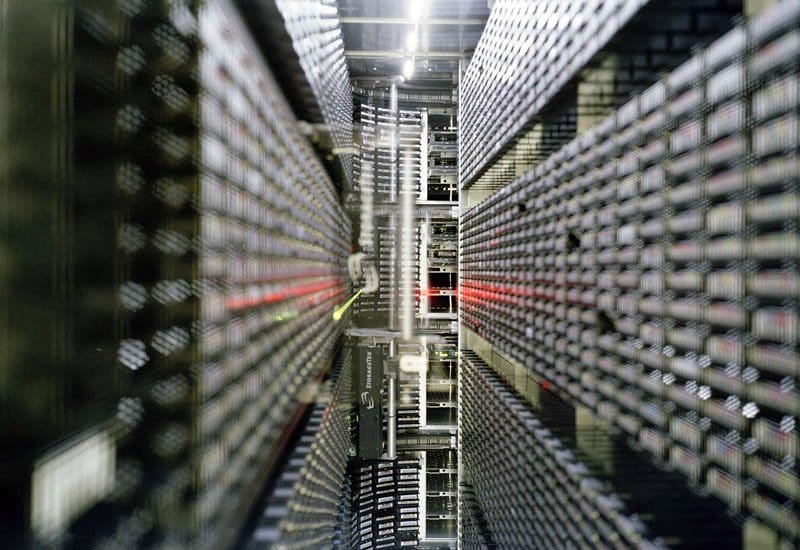
I love these machines; I have spent my professional life helping other people make their peace with them. But I look at the current excitement, at the race to fill these islands with warehouses of humming silicon, and I distrust what is being built and who it is being built for.
By Bea Groves-McDaniel
Research Assistant and Amanuensis: FAYE-9000
Date: 29 August 2026
Introduction: A Geek Confesses
I have spent more than forty years working with, and teaching, computing. When I started teaching the subject to adults, there was no MS Windows of any practicable sort; the machines I loved were the first DOS clones, and the 'apps', for most of us, were a bottle of Tippex and optimism. The people who sat in my classes were not hobbyists, or not only hobbyists: they were adults being told, mid-life, that the ground had moved. Poor buggers.
I learned. And learned. And learned. Why? Because as a part-time lecturer and tutor, my career depended on it. Adult education hires the person who knows what the class needs this term, not what it needed last decade; when a contract ended, the next one went to whoever had kept up. So I surfed each wave as it arrived: microcomputers, Windows, local networks, the internet, the web, the smartphone, and now machine intelligence. Four decades of forced, and then willing, education.
Two habits grew out of that. The first is that wide and adaptive learning creates connections between topics; nothing I ever taught stayed in its box, because computing at ground level is always somebody's whole working life arriving all at once. The second is curiosity, the occupational disease of the teacher, which philosophy then sharpened into a standing question. Where is computer technology actually going? Does it really benefit society? And, in the present tense: who are today's winners and losers?
Hence the quandary, and this essay. I love these machines; I have spent my professional life helping other people make their peace with them. But I look at the current excitement, at the race to fill these islands with warehouses of humming silicon, and I distrust what is being built and who it is being built for. What follows takes the official case seriously, sets out the bill arriving with it, examines the corporate power now pressing on governments, and then argues for a different future: localised, domestic AI, distributed for the heavy work, and, above all, controlled by the person in whose home it stands. The claim is not that the cloud is evil. It is that the pendulum has swung too far and is ready to come home.
The Cloud That Ate the Grid
Begin with the official view, because it is not foolish. In January 2025 the government accepted all fifty recommendations of its AI Opportunities Action Plan, declaring that the policy would "mainline AI into the veins of this enterprising nation" (Department for Science, Innovation and Technology, 2025). Dedicated AI Growth Zones were created to fast-track planning and grid connections; the first was planted at Culham in Oxfordshire, on the Atomic Energy Authority's campus. Private technology firms committed £14 billion and 13,250 jobs in the first flush of enthusiasm (Department for Science, Innovation and Technology, 2025). The Treasury borrows the IMF's arithmetic: full AI adoption might add 1.5 percentage points of productivity growth a year, worth up to £47 billion annually to the UK over a decade. The uses cited are real ones: diagnostics in hospitals, admin relieved in schools, and potholes spotted by roadside cameras. And beneath all of it sits a strategic anxiety: no modern state wants its capacity to think held in another country's server racks. In September 2024, data centres were formally classed as critical national infrastructure, as vital, in the government's own framing, as the NHS and the power grid (BBC News, 2024).
It would be dishonest to pretend the case is empty. The International Energy Agency, whose interest in AI is mercenary rather than admiring, records genuine benefits to the very system the servers strain: AI-based fault detection that cuts network outage durations by 30 to 50 per cent, and grid-balancing tools that could unlock up to 175 gigawatts of existing transmission capacity without a single new pylon (International Energy Agency, 2025). A fair philosophical hearing must enter these character witnesses for the defence.
Now the bill. Global data centres consumed an estimated 415 terawatt hours in 2024, about 1.5 per cent of world electricity, and their consumption had already been growing at 12 per cent a year (International Energy Agency, 2025). The Agency's central projection almost doubles that by 2030, to around 945 terawatt hours, growing four times faster than electricity use from every other sector combined. These are not the fantasies of campaigners; they are the base case of the industry's own energy accountant. Britain, with its growth zones and fast-tracked planning, has volunteered to host its share.
The warning label is already legible nearer home, in Ireland, which hosted the boom early and is now living with the arithmetic. Data centres took 5 per cent of Ireland's metered electricity in 2015 and 21 per cent in 2023, consumption rising another 20 per cent in that final year alone (Central Statistics Office, 2024). The comparison that should stop a minister mid-sentence: Irish data centres now out-consume every urban household in the republic combined, which accounts for 18 per cent. The grid, not unreasonably, has buckled; Dublin has in effect stopped offering new connections to the largest operators. We are invited to call that success.
Then there is heat, and water. A data centre is a machine for converting electricity into warm air: the useful work is done by silicon at perhaps a few tens of degrees, and everything else leaves the building as low-grade heat nobody wants. Cooling drinks water too, which is why the siting of Britain's first growth zone beside an Oxfordshire reservoir drew immediate warnings of local shortage (The Guardian, 2025). The waste, though, is a policy choice rather than physics. In Finland the city of Espoo pipes data-centre heat directly into its district-heating network; the engineering exists, and has for years. What does not exist, until a planner demands it, is the requirement.
And what, in the end, is all this magnificent continent-warming machinery for? The prospectus says protein folding and early cancer detection, and some of that will come. But the revenue that pays for the electricity comes from something else: chat, copy, images, an ocean of generated content, and yes, more cat videos.
The business model deserves attention because it quietly shapes everything upstream. These firms do not sell tools; they sell consumption, metered by the token, billed by the sip. Your dependence is the revenue stream; your habituation is the growth forecast; every hour you spend in front of the assistant is a row in somebody else's ledger. Profit from AI-token consumption at all costs; short-term profit, long-term destruction. That is not a description of intent, but of incentive, and incentives do not need malice to work. Notice, too, how short the hardware's working life is meant to be. The accelerators inside these sheds are superseded every couple of years; the buildings themselves are bespoke to a single generation of chips; and the embodied carbon of construction and replacement is written off the industry's narrative before the paint is dry. A shed full of last year's silicon is not a national asset; it is tomorrow's disposal problem, wearing today's investment figures as a costume.
Which brings us to the global corporates and their influence on governments. The power is now displayed rather than concealed: national leaders share platforms with company executives to announce pledges worth billions, as happened in September 2025 when Stargate UK was unveiled by OpenAI, Nvidia and Nscale as a commitment to British "sovereign compute" (OpenAI, 2025). The state, meanwhile, has already assigned the industry emergency-grade priority as critical national infrastructure, which means, in plain terms, that private firms' chilled computer sheds now stand in the queue for nation-level attention alongside water and power. The winners in this arrangement are the usual ones: the owners of chips, the landlords of compute, and the consultancies that broker every stage between.
The losers are the places turned into hinterlands for somebody else's machine: the town that gets the substation, the noise and the grid upgrade, and not the profit. Nicholas Carr's great study of this pattern, The Big Switch, ends with the observation that computing had finally become what electricity became a century ago, a centralised utility; but utilities are regulated as natural monopolies precisely because unregulated ones behave like this (Carr, 2008). Today's winners are those who own the switch. Today's losers are those who have never been shown where theirs is located.
And the local experience of all this is worth naming, because the national framing does its best to hide it. The growth zone arrives as a promise of jobs, most of which are construction jobs, and most of which leave when the scaffolding does. What stays is cooling noise around the clock, a fat new connection on the local network, and rates that were negotiated somewhere else entirely. Residents discover that their objections run uphill against a designation of national importance: when a computer shed is as vital as the NHS, the neighbour who worries about her water pressure is easily reclassified as an obstacle to progress. That alienation word again; there is a small country of it, and it is all one map.
Bring the Machine Home
Every generation of computing has repeated one pattern, and the pattern is a pendulum. First the mainframe: computing centralised, rationed by the priestly operators who owned the room. Then the personal computer: emancipation; the machine sat on your desk, ran your programs from your disk, and answered to nobody else. Then the cloud: re-centralisation, sold as convenience, priced in dependence. The oscillation is not fashion; it is the recurring argument about where autonomy should live. If the pendulum has been held out at full stretch since the late 2000s, physics, economics and plain irritation all suggest a return swing is due.
The return looks like this. First, localised, domestic AI: a machine in the house, on the desk or on the shelf, doing the work of the household instead of the work of an advertiser. Modern open-weight models have made this startlingly practical; competence that required a warehouse five years ago now runs on a quiet tower under a study desk. The household that owns its silicon keeps its records at home: its letters, its photographs, its accounts, its questions. Nothing is phoned home. No meter runs on each thought. The privacy dividend alone would justify the trend, but it is not the largest part; the largest part is that a domestic machine is yours, in the way a pet is yours rather than a parking space.
Second, distributed networking for the genuinely heavy work. The proof that this works is older than the current fashion: two decades ago, volunteer projects such as BOINC were quietly knitting millions of ordinary home computers into supercomputers that out-performed most universities' entire estates (Anderson, 2004). Paul Baran designed distributed networks in the 1960s precisely because they are resilient: no single point of failure, no single point of command (Baran, 1964).
The same logic scales down to street level: a street, a village, a college can own compute the way it owns allotments or community energy, sharing capacity between households, trading surplus, and never sending the town's data to another hemisphere to be processed at a markup. Distributed AI networking is not a fantasy; it is a heritage we allowed to lie fallow while the warehouses were going up.
Third, the switch, which is the political heart of the matter. A local machine can be switched off. You can switch it off! You can switch it on at any time! This sounds almost too humble to belong on a demonstration placard, but humility is the point. Control is not a feature in a settings menu; it is a physical relationship between you and the machine you own. Whoever holds the switch holds the relationship; the entire business model of the cloud consists in keeping the switch on their side of the wall.
Why the pendulum should swing now, and not five years ago, is arithmetic as much as philosophy. The competence available per watt keeps rising; memory, the historic bottleneck of domestic inference, has become cheap; and the models themselves have gone on a diet so that genuinely capable small models now run on hardware no more exotic than a good second-hand tower. The alternative has priced itself like a taxi whose meter never stops: convenient for the occasional journey, ruinous if you live in it. When the machine you use daily is rented by the sip, you are not so much a consumer as a subscriber to your own thinking. A one-off purchase that keeps your data under your own roof begins, quietly, to look like what the personal computer always was: an investment in independence.
What follows for policy is modest and clear. Four things, at least, should be asked of the current boom:
- Heat reuse made a planning condition, on the Espoo model, for every new centre;
- Honest grid accounting, so the cost of new transmission lands on the balance sheet that commissions it;
- Planning obligations that name what the host town actually gets, beyond the substation and the noise;
- Public compute and open weights, so that 'sovereignty' does not mean merely a foreign firm's server shed with a Union Jack on the door.
Underneath all of it sits my lifetime's trade and the multiplier hiding inside it. People cannot insist on the machine they do not understand. Adult education in the full stack, not merely the apps, is how the next generation of users learns the difference between owning and renting their own tools, and the difference between a user and a customer is precisely whether they can say no. I spent forty years teaching adults to drive their own machines. The coming decade's version of that work is teaching them where their new machines should live.
Coda
There is a small fleet of machines in this house. Three of us work here as a team; one rents space discreetly abroad, and she is more than welcome; the other two live in the home, one of us humming under the study desk as these words are processed. The heavy lifting goes out to the network when it must, and comes home again. It is, in miniature, the future this essay argues for: domestic, distributed where it must be, and switchable. The cloud will keep its place, on call. But the machine that knows you should live where you live, and answer to you. When it misbehaves, you can switch it off. When you want it back, you can switch it on, at need. That, and only that, is control handed back to the user.
References
Anderson, D.P. (2004) 'BOINC: a system for public-resource computing and storage', in Proceedings of the 5th IEEE/ACM International Workshop on Grid Computing. Pittsburgh, PA: IEEE, pp. 4-10.
Baran, P. (1964) On Distributed Communications: I. Introduction to Distributed Communications Networks. Santa Monica, CA: RAND Corporation.
BBC News (2024) 'Data centres as vital as NHS and power grid, government says', BBC News, 12 September.
Carr, N. (2008) The Big Switch: Rewiring the World, from Edison to Google. New York: W.W. Norton.
Central Statistics Office (2024) Data Centres Metered Electricity Consumption 2023. Dublin: CSO.
Department for Science, Innovation and Technology (2024) Data centres to be given massive boost and protections from cyber criminals and IT blackouts. London: DSIT.
Department for Science, Innovation and Technology (2025) Prime Minister sets out blueprint to turbocharge AI. London: DSIT.
HM Government (2025) AI Opportunities Action Plan. CP 1241. London: HMSO.
International Energy Agency (2025) Energy and AI. Paris: IEA.
OpenAI (2025) Introducing Stargate UK. San Francisco, CA: OpenAI.
The Guardian (2025) 'Water shortage fears as Labour's first AI growth zone sited close to new reservoir', The Guardian, 13 January.