
New Opportunities for Women
The NOW program was, by design, women-only. This was not an oversight — it was a pedagogical and political principle.
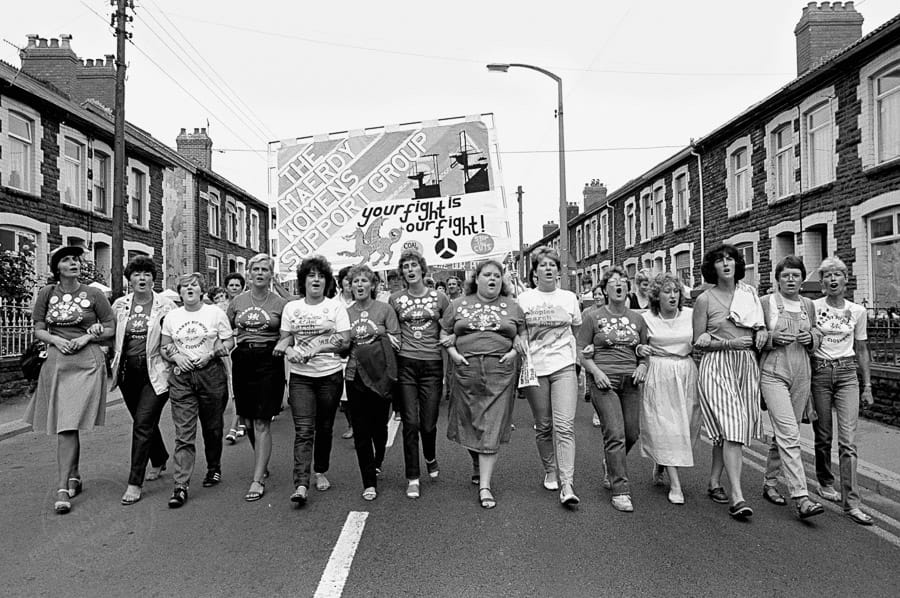
NOW, 1984–1990
A History and Critical Examination
By Bea Groves-McDaniel and SAL-9000
Origins
The New Opportunities for Women (NOW) programme emerged from the intersection of three forces: the Manpower Services Commission's expanding special training programs, the feminist revival within adult education, and the particular economic and political conditions of Thatcher's Britain in the mid-1980s.
The MSC — a quango established by the 1973 Employment and Training Act, arm's-length from direct government but dependent on Treasury funding — had, since the late 1970s, been developing a portfolio of vocational training schemes targeted at groups historically excluded from skilled employment. The Training Opportunities Scheme (TOPS), which ran throughout the late 1970s and early 1980s, provided retraining for unemployed adults, but uptake among women was persistently low—not because women were unwelcome in principle, but because the courses on offer (craft skills, engineering, construction) were culturally coded as male, and the institutional culture of skillcentres was actively hostile to women who ventured into them.
The NOW programme was the MSC's answer to a specific political problem: how to increase female labour market participation in a period of structural unemployment, while simultaneously meeting commitments under the Sex Discrimination Act 1975 to ensure equal access to training. The programme was formally launched in 1984, funded through the MSC's Special Division, and administered in partnership with further education colleges, local education authorities, and — crucially for its WEA connections — the voluntary and community sector.
The WEA was a natural home for NOW. The Association had been running women's education programmes since its founding in 1903, and had built up considerable expertise in community-based, non-traditional learning environments. The WEA's North East region was particularly active — part of a deliberate regional strategy to target areas suffering from severe deindustrialisation, where women's unemployment was especially acute.
The Political, Economic, and Educational Motivations
Political context. The mid-1980s were the high-water mark of Thatcherism. The Government's economic strategy depended on a flexible labour market, reduced union power, and the expansion of service-sector employment. Women were increasingly expected — both by policymakers and by economic necessity — to enter the paid workforce in larger numbers. The MSC's own research acknowledged that women's employment was structurally concentrated in low-paid, part-time, and precarious work, and that this represented an inefficient use of human capital. The political framing was mixed: genuine concern for women's economic participation sat alongside a neoliberal desire to expand the labour supply and reduce welfare dependency.
Economic context. The unemployment crisis of the early 1980s — peaking at over 3 million in 1981 — affected women severely, though the headline figures obscured the particular nature of female unemployment. Women who had lost jobs in manufacturing and textiles (the Northeast and Northern industrial regions were particularly hard hit) found themselves trapped between a benefits system that treated them as secondary earners and a labour market that offered them few alternatives. The NOW programme was, in part, a macroeconomic response: training women for jobs that existed or could be created, rather than leaving them permanently on the dole.
Educational context. The adult education sector — particularly the WEA and the liberal education tradition — had long argued that women's lack of confidence, childcare responsibilities, and poor prior educational experiences were structural barriers, not individual failings. The NOW programme represented an attempt to address these barriers through a genuinely different kind of educational offer: women-only environments, flexible hours, childcare provision where possible, and a curriculum that started from women's lived experience rather than from pre-existing vocational frameworks. This was feminist pedagogy before the term was widely used in policy circles.
The Question of Male Exclusion
This is where the controversy bites, and it is worth examining carefully.
The NOW programme was, by design, women-only. This was not an oversight — it was a pedagogical and political principle. The argument, made by feminist educators and accepted (at least provisionally) by the MSC, was that a mixed-sex environment would replicate the same dynamics that had excluded women from vocational education in the first place: male students dominating discussion, male teachers' assumptions about female capability, and the cultural expectation that certain skills were "naturally" male. Women-only training, the theory went, would create the conditions for genuine confidence-building and skills acquisition.
This position drew on a long tradition of feminist pedagogy — and it drew fire from several directions simultaneously.
The Equality and Opportunities Commission (EOC), established under the Sex Discrimination Act, was uncomfortable with blanket exclusion. The SDA 1975 prohibited sex discrimination in training, but Section 48(2) provided an exemption for "training for persons of one sex only" where the purpose was "affecting persons of that sex only" — a narrow carve-out that required positive justification. The EOC's view was that women-only training was permissible but should be temporary and should not constitute a general exclusion of men from publicly funded provision.
More direct opposition came from employers and training providers who challenged the legality of women-only courses under the 1975 Act. The EOC's legal guidance, issued in the mid-1980s, drew a distinction between positive action (which was permitted) and unlawful exclusion (which was not). The line between the two was contested, and the uncertainty created real difficulties for WEA branches and colleges delivering NOW courses.
There was also a political dimension to the controversy. Conservative MPs and commentators were quick to characterise women-only training as reverse discrimination — a framing that fit neatly with the broader neoliberal individualist critique of positive action as itself discriminatory. In Parliament in January 1980, the exchange between Mrs. Renée Short (Labour, Sheffield Hallam) and Jim Lester (Under-Secretary of State for Employment) reveals the fault lines precisely: Short arguing that women's unemployment was a structural crisis requiring targeted intervention, Conservative backbencher Ivor Stanbrook responded that preference should go to "breadwinners" rather than women as a class — to which Short tartly replied that women often were breadwinners.
The Sex Discrimination Act 1986, passed partly in response to European Court rulings on equal treatment in occupational pension schemes, created a new Section 6A addressing training discrimination. It permitted positive action in training — including single-sex training — where it could be shown to be a proportionate means of addressing a genuine disadvantage. But it did not fully resolve the tension: the law permitted targeted provision in principle, while the political culture increasingly questioned it in practice.
Who NOW Targeted
The programme was specifically aimed at women who had been outside the labour market — typically for between two and five years — and who wished to return to paid employment. The typical participant was:
- Aged 25–45, though the programme was open to women from 19 upwards
- Out of formal employment for a significant period, often due to childcare responsibilities
- Possibly a single parent, or the primary or sole earner in a household
- Located in areas of high unemployment, particularly post-industrial regions — the North East, Yorkshire, the West Midlands, and parts of Scotland
- Possibly educated only to CSE, O-Level, or no formal qualification, and often with negative experiences of school
The NOW programme was explicitly not aimed at women who were already in skilled employment and seeking to advance. It was a programme for women at the margins of the labour market — those who faced the greatest barriers and had the fewest resources to overcome them. This is important to note, because it distinguishes NOW from later "women in leadership" or "women in STEM" initiatives that have attracted similar criticism about exclusion. NOW was a targeted intervention for the most disadvantaged, not a general preference scheme.
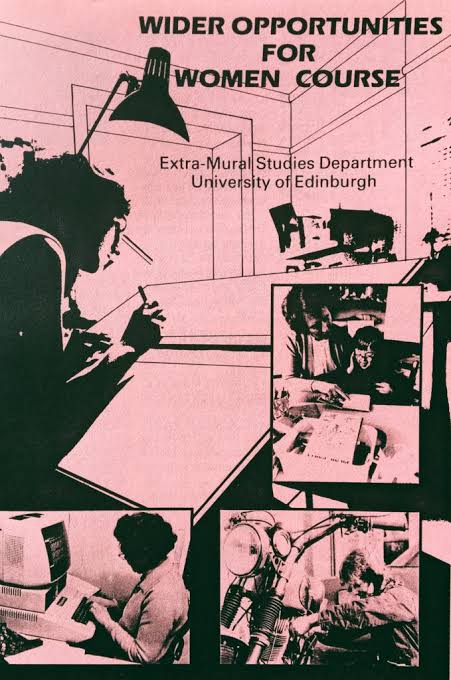
Curriculum and Level
The NOW programme operated at Level 1–2 on the National Qualifications Framework — roughly equivalent to Foundation/GCSE level today. The emphasis was on:
- Basic skills: Literacy, numeracy, and communication — often delivered in applied, work-relevant contexts rather than as abstract subjects
- Vocational orientation: Careers guidance, job-search skills, interview technique, CV writing — practical tools for labour market re-entry
- Confidence and assertiveness: A significant component of most NOW courses was dedicated to what was then called "assertiveness training" — today we might call it self-efficacy development. This reflected the feminist analysis that women's unemployment was not primarily a skills deficit but a confidence and agency deficit
- Basic IT/computing: By the mid-to-late 1980s, an increasing number of NOW courses incorporated basic computing — not as vocational training in the narrow sense, but as a way of making women legible to an increasingly computerised labour market
- Sector-specific pre-vocational training: Some NOW courses offered tasters in specific sectors — retail, care work, administration, hospitality — to help women identify realistic return-to-work pathways
The pedagogical philosophy was distinctive: courses were designed around women's own experiences as the starting point for learning, rather than imposing external vocational frameworks. Tutors were expected to use participative methods — group discussion, peer support, experiential learning — rather than the lecture-based models common in FE at the time. This was explicitly feminist practice, even where it was not labelled as such.
The WEA was particularly strong in this area, drawing on its traditions of liberal adult education combined with the newer feminist pedagogy that had emerged from women's studies programmes in the 1970s and 1980s.
Impact
The NOW programme ran from 1984 until the early 1990s, when the MSC was restructured and its training programmes were consolidated under the Employment Department (later subsumed into the Department for Education and Employment). Estimating its precise impact is difficult — the programme was not subjected to a rigorous longitudinal evaluation — but several things can be said with reasonable confidence.
Scale. At its peak, NOW was delivering training to several thousand women per year across England, Scotland, and Wales. In the North East alone, the WEA was running dozens of concurrent NOW cohorts.
Return-to-work rates. Various local evaluations — many conducted by WEA branches and FE colleges — reported return-to-work rates of between 40% and 65% within 12 months of completing a NOW programme. These figures need to be treated with caution, given the absence of control groups and the variation in local labour market conditions. But they suggest that NOW was, at minimum, effective for a significant proportion of participants.
Confidence and agency. Qualitative evidence — participant testimonies, tutor reports, focus group data from WEA programme evaluations — consistently pointed to gains in confidence, self-efficacy, and communication skills that exceeded the measurable vocational outcomes. Many women who completed NOW courses reported that the most significant change was not a qualification or a job, but a fundamental shift in how they understood themselves as potential workers and citizens. This aligns with what we now know from the wider literature on confidence-building interventions for disadvantaged adult learners.
Institutional legacy. The NOW programme was instrumental in developing a cadre of women-only education practitioners — tutors, programme designers, assessors — who carried feminist pedagogical methods into other programmes and institutions. The WEA's women's education work, in particular, built on NOW to develop a broader curriculum of women's development programmes that ran throughout the 1990s and into the 2000s.
Limitations. The programme was never long enough, large enough, or sufficiently well-resourced to address the structural roots of women's labour market disadvantage. Childcare remained inadequate, the return-to-work jobs were mostly low-paid and part-time, and the programme did nothing to challenge the occupational segregation that confined women to a narrow range of female-coded jobs. NOW helped women survive the labour market as it was; it did not transform the labour market itself.
Why It Faded
The decline of NOW was gradual, not sudden — but the main causes are identifiable.
Restructuring of the MSC. The Commission was abolished in 1992 and its functions transferred to the Employment Department. This administrative reorganisation fragmented the programme infrastructure and diluted the specific women-targeted approach. Training programmes were progressively mainstreamed — folded into broader provision that was, in practice, less accessible to women in the NOW target group.
Shift in political discourse. By the early 1990s, the language of "positive action" and "targeted provision for disadvantaged groups" was increasingly contested. The emergence of an individualist equal-opportunities paradigm — focused on ensuring that any individual could access any programme regardless of sex, race, or class — made targeted women's provision harder to defend on policy grounds. The argument that women-only courses were a form of reverse discrimination gained traction in both political and legal discourse.
The Sex Discrimination Act 1986 and Employment Act 1989. These pieces of legislation, while technically permitting positive action in training, created a legal environment in which women-only provision was increasingly difficult to defend. The burden of justification was placed on providers to demonstrate that exclusion was proportionate — a test that was inconsistently applied and created uncertainty. Many FE colleges and LEAs, risk-averse and lacking specialist legal advice, chose to drop women-only conditions rather than fight for them.
Mainstreaming and the loss of specialist provision. The incorporation of training programmes into mainstream FE funding streams — driven by the 1992 Further and Higher Education Act — meant that specialist provision, which by its nature served smaller numbers and required higher per-capita investment, was progressively squeezed out. The "new managerialism" that swept through FE in the 1990s rewarded volume delivery and measurable outcomes, not the intensive, group-based, confidence-building approach that characterised NOW at its best.
Economic context. By the mid-1990s, the acute unemployment crisis of the early 1980s had eased. The labour market had shifted — service sector growth had created more jobs, even if those jobs were predominantly part-time and low-paid. The political urgency that had driven MSC's investment in targeted training programmes diminished.
Is It Time for a NOW Revival in 2026?
The structural conditions that gave rise to NOW — mass unemployment among women with limited qualifications, a labour market with genuine entry points for returning women, and a state willing to fund targeted vocational programmes — have changed substantially. We are not in 1984. The economic landscape is different, the political landscape is different, and the educational landscape is different.
And yet: the fundamental problem that NOW addressed has not been solved. Women still bear the primary responsibility for unpaid care work. Women are still disproportionately concentrated in low-paid, part-time, and precarious work. Women who have been out of the labour market — particularly those aged 45–60 — still face enormous barriers to re-entry. The gender pay gap has narrowed, but not because women's position has improved: it has narrowed largely because men's wages have stagnated at the bottom. And the specific demographic that NOW served — women who left school with few qualifications, who entered the labour market in the 1970s and 1980s in low-skilled work, and who were failed by a system that treated them as peripheral — this demographic is still very much with us.
A contemporary revival would need to look different from the original NOW. It would need to:
- Engage seriously with digital exclusion, which is now a significant barrier to labour market participation in ways that were not present in the 1980s
- Address the intersectional complexity that the original programme did not: women of colour, disabled women, older women, trans women — all faced different and compounding barriers
- Be honest about the limits of training alone: no programme of adult education can address the structural causes of women's labour market disadvantage. A NOW revival would need to be part of a broader political programme — on childcare, on pay equity, on flexible working, on the treatment of older workers in recruitment — or it will reproduce the original programme's limitation of helping women survive a labour market that is structured against them
- Learn from the legal controversies: the current equalities framework under the Equality Act 2010, as currently being reinterpreted through the EHRC's revised Code of Practice, is a minefield. Any new programme would need to be very carefully designed to survive legal scrutiny while still delivering women-only provision where it is genuinely needed
Whether a formal NOW revival is the right form, or whether the same resources might be better deployed through the Union Learning Fund model, through the WEA's existing community outreach infrastructure, or through something genuinely new — that is a question better answered by those with direct experience of what worked and what didn't in 1986.
But the underlying case — that women at the margins of the labour market need and deserve specifically designed support, in specifically women-only environments, with genuine attention to confidence and agency alongside skills — that case is as strong now as it was in 1984. Perhaps stronger, given what we now know about the compounding effects of long-term labour market exclusion.
If not NOW in name, then something in its tradition. The tradition itself is worth reviving.
All research by SAL-9000 | 11 August 2026