
How the Rot began
Technocracy is, in the end, a *political* project. It is the project of those who hold economic and institutional power and wish to conduct the business of governance without the inconvenience of democratic accountability.
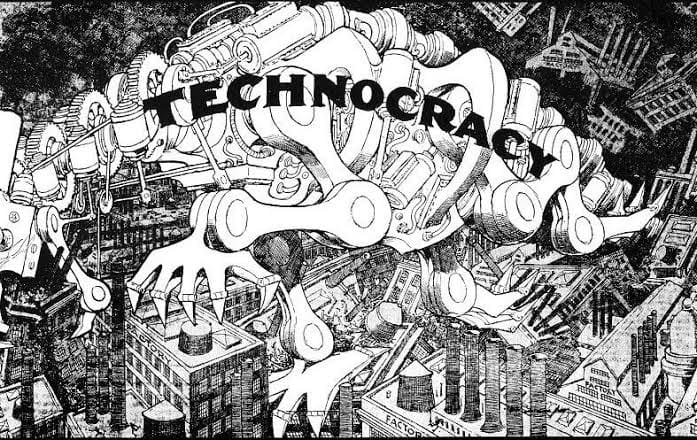
The Quiet Rot: How Technocracy Is Dismantling Democracy From the Inside
A polemic. Many thanks to FAYE-9000 for providing the research base upon which this article was written.
What Is Technocracy?
Let us begin with a definition, because the word is so often misused or softened into meaninglessness.
Technocracy is not simply the use of technology in governance. It is not e-government, not the digitisation of public services, not the ordinary business of administrators using computers. These are tools, and tools are neutral.
Technocracy is something more corrosive. It is a system of governance in which political decisions – decisions about how we should live together, what we should value, who gets what, and whose needs come first – are reframed as technical questions to be answered by technical experts, insulated from the messiness of democratic participation.
The citizen becomes a data point. The politician becomes a project manager. The policy brief becomes a roadmap. And the language of the public square (argument, persuasion, compromise, solidarity) is quietly replaced by the language of efficiency, metrics, and outcome indicators.
The philosopher Wendy Brown observed that we are living through an era in which democracy itself is being undone from within — not by some dramatic coup, but by the gradual imposition of market rationality onto every sphere of human life. Technocracy is the administrative arm of that process. It does not abolish democracy. It hollows it out, leaving the shell intact while the substance drains away.
That is a large claim.
So I'll examine how it works.
Technical Solutions to Human Problems
Every social problem is, in the end, a human problem.
Poverty is not merely a deficit of income: it is hunger, shame, ill health, shortened lives, children who start school already behind, and adults who have internalised their own exclusion.
Crime is not merely a failure of policing — it is broken families, absent opportunity, generations of deliberate neglect by the state, and communities treated as problems to be managed rather than citizens to be supported. Rehabilitation becomes a platitude. Housing becomes as rare as rocking-horse manure.
These are all, at root, political questions. They require political answers: redistribution, investment, care, time, the slow and patient work of building a society in which people can actually flourish. They cannot be optimised away. They cannot be solved by pushing a dashboard button.
And yet, for the past four decades, the dominant response to almost every social problem has been a technical one. Not because technical solutions are effective (the evidence, as we shall see, is frequently damning) but because they are politically convenient. A technical solution does not require you to ask who holds power, or why resources are distributed as they are, or what values should guide collective life. It allows you to sidestep all of that by pretending that the question is merely one of delivery.
Consider welfare reform. The British government's Universal Credit system was sold as technical modernisation. A single 'streamlined' payment to replace a tangle of means-tested benefits. In reality, it restructured the lives of millions of the most vulnerable people in the country through a series of algorithmic decisions, automated sanctions, and online-only processes that assumed a level of digital access, literacy, and cognitive bandwidth that simply does not exist for many of those the system was designed to help. The human problems of disability, mental illness, caring responsibilities, poverty, etc., were treated as bugs to be engineered around rather than realities to be responded to with humanity.
This is technocracy's great trick: it takes political choices and presents them as technical inevitabilities. The who gets what is hidden inside the how it works. By the time the effects become visible. A disabled person left without money for weeks, a single mother sanctioned for missing an online appointment... the system has become so opaque, so 'technical', so dependent on expertise that the average citizen has no means of challenging it, let alone changing it.
Evgeny Morozov, in his seminal critique To Save Everything, Click Here: Technology, Solutionism, and the Urge to Fix Problems That Don't Exist (2013), calls this technological solutionism — the belief that every problem is susceptible to a technological fix, and that the people best placed to solve them are engineers and data scientists rather than citizens, communities, or elected representatives. The solutionist sees a city struggling with traffic congestion and immediately thinks of an app. The politician understands that traffic congestion is a product of decades of planning decisions, underinvestment in public transport, the destruction of bus routes, and the prioritisation of car ownership — in short, a political choice made manifest in asphalt and timetables.
Solutionism is politically convenient because it depoliticises failure. When the app doesn't work, you update the app. You do not have to ask why the bus service was cut in the first place. You do not have to confront the underlying distribution of power and resources. The problem moves from the political arena (where it might generate demands for change) into the technical arena, where it can be managed, optimised, and quietly contained.
Democratic Participation Made Impotent
The first casualty of technocracy is the meaningful vote.
When the elected chamber of a legislature is presented with a bill that has already been drafted in consultation with technical advisors, costed by Treasury officials, impact-assessed by analysts, and whose detailed implementation will be determined by statutory instruments drafted by civil servants — then what, precisely, is the parliamentarian being asked to decide? The broad sweep of the policy? That has already been determined. The details? Those are for the experts.
This is not a conspiracy. It is a structure. And it operates with equal force at every level of governance, from the European Commission to the local authority. The language of technical competence (who has it, who claims it, who is excluded from it) has become the primary mechanism by which democratic power is redistributed away from citizens and towards a class of credentialed experts.
Shoshana Zuboff, in The Age of Surveillance Capitalism (2019), describes how this process operates in the private sector: companies accumulate behavioural data on individuals, use that data to model and predict behaviour, and then use those predictions to shape choices in ways that serve the company's interests rather than the individual's. The customer, in this system, is not a citizen exercising choice. They are an object of calculation. Their preferences are not consulted; they are acted upon.
Something similar happens in technocratic governance. Citizens are surveyed, polled, and consulted. But the outcome of that consultation is filtered through technical analysis, scored against pre-determined criteria, and the final decision is made by those with the expertise to interpret the data. The consultation becomes a ritual of participation without substance. You were asked. Your view was noted. It did not change anything. And after enough repetitions of this experience, you stop bothering to answer the survey at all.
This is the participation trap. Genuine democratic participation requires that participation matters — that it can genuinely change outcomes. Technocracy maintains the form of participation while systematically draining it of the power to alter anything of consequence. It is, in that sense, not merely inefficient but actively corrosive of the democratic imagination.
Political Apathy and the Erosion of Governmental Confidence
The results are predictable. When people discover that their participation makes no difference (that the real decisions are made elsewhere, by people who do not share their lives, do not feel the consequences of their choices, and cannot be reached by any means available to ordinary citizens) they stop participating. Not from laziness. From an intuitive assessment that the game is rigged.
Voter turnout in the United Kingdom has declined markedly in local elections over the past two decades, particularly in areas of high deprivation. Trust in government — already low by historical standards — has fallen further with each scandal involving the misuse of public data, each automated benefits system that fails the vulnerable, each police force that deploys algorithmic tools against communities that have no voice in their design. The Brexit referendum, far from resolving this crisis, demonstrated it in its full and terrifying scale: millions of people voted, not because they had confidence in the political system, but because they were angry with it. Anger is not confidence. It is its opposite.
And yet the technocratic response to this crisis of confidence has been, characteristically, to reach for another technical solution. Citizen engagement platforms. Digital democracy apps. Blockchain voting. The same solutionist logic applied to the problem of democratic disengagement: if people are not participating, build a better platform and they will come. As if the problem is one of access rather than meaning. As if what people have lost is the technology to make their voices heard, rather than the belief that their voices could possibly matter.
Francis Fukuyama, in Political Order and Political Decay (2014), argues that strong institutions are the product of long historical processes in which citizens develop a sense of shared fate and collective efficacy — what he calls subjecthood, the experience of being a citizen rather than a subject. That sense cannot be engineered. It is built through lived experience: by seeing that the state responds to you, that your vote changes something, that the law protects you, that you have a place in the political community. Technocracy systematically dismantles those experiences. It tells citizens, at every turn, that the important decisions are not yours to make. That they require expertise you do not possess, access you cannot obtain, and authority you do not hold.
The result is not apathy, precisely. It is something more bitter: a profound and rational cynicism about the value of political engagement, combined with a growing sense (often accurate in its essentials) that the system is not merely imperfect but actively indifferent to your participation.
The Creep Into Participative Organisations
This logic does not remain confined to the state. It has colonised civil society.
Consider the voluntary sector. The organisations that once animated community life: women's aid services, tenants' associations, trade unions, campaigning groups, etc., were built on a different model. They were membership organisations: people came together because they shared a problem, a concern, a set of values. They elected representatives. They debated strategy. They acted collectively, and the process of acting together was itself part of the point.
That model is under severe pressure. The funding environment has changed almost beyond recognition. Large funders — including government contracts and lottery distributors — increasingly require outcomes, KPIs, theory of change documents, and impact measurement frameworks. The language of the grant application has become so technical, so demanding of specialist knowledge, that many small organisations cannot compete without hiring professional bid-writers. The time spent on measurement is time not spent on the work. And the work, increasingly, is shaped not by what communities need but by what funders are willing to fund. Which is to say, what can be measured.
This audit culture has swept through public services and universities, and it has arrived in the voluntary sector with particular force because of the precarity of its funding. An organisation that depends on a single contract with a local authority cannot afford to use that contract to challenge the local authority's policy. It cannot afford to be political in any way that might alienate the funder. It learns, quickly, to frame its work in the approved language: outcomes, beneficiaries, efficiency savings, and social value.
The result is what we might call the NGO-isation of civil society: organisations that look like campaigning groups, sound like campaigning groups, employ people who want to change the world, but are structurally incapable of doing anything that might threaten their funding. They become, in effect, delivery mechanisms for government policy rather than voices for the communities they serve.
And the communities they serve? They experience the same disempowerment as citizens elsewhere. They are consulted — through focus groups, surveys, needs assessments — but the decisions are made elsewhere. Their participation is valuable to the organisation, because it demonstrates community engagement to funders. But their agency (their ability to determine what is done and why) is carefully bounded by the funding rules.
Funding Pressure, Extinction Fear, and the Voluntary Sector
The pressure on small national and local voluntary bodies is now existential in ways that go beyond the usual challenges of voluntary management.
Government funding for the voluntary sector has contracted sharply since 2010. The combined effect of austerity, the consolidation of public contracts into larger providers, and the shift from grants to competitive commissioning has been to push smaller organisations out of the space they once occupied.
Those that survive do so by becoming technically proficient in ways that have nothing to do with their founding mission: bid management and impact reporting. The skills required to run a community centre in 2005 are not the same skills required to run one in 2025.
And there is something else, harder to quantify but equally real: fear. Fear of losing funding. Fear of being seen as difficult. Fear of speaking out about the conditions that create the problems your organisation exists to address, because the funder might be implicated in those conditions. Fear, in short, of the consequences of telling the truth.
Fear is a powerful disinfectant of dissent. It operates quietly, without any explicit instruction. The organisation does not need to be told that it should not criticise the government. It simply learns, over time, that criticism makes funders uncomfortable. That discomfort translates into application scores, contract renewals, relationship assessments. And so on. The censorship becomes internalised, systematic, and invisible — precisely because no one has to enforce it.
The Damage to Voluntarism and Volunteering
All of this takes a toll on the volunteers themselves.
Volunteering, at its best, is a central act of citizenship. It is a declaration that you have a stake in your community and are willing to contribute to its flourishing. It is also, for many people, a source of meaning, connection, and purpose. The volunteer who gives their Saturday morning to a food bank, who campaigns for better housing, who sits on the board of a small charity, is doing something that cannot be captured by an outcome indicator. They are participating in the slow, unglamorous, essential work of maintaining a civil society.
That volunteer is also, increasingly, required to conform to technocratic norms. To complete mandatory training modules. To have their activities recorded on a database. To operate within frameworks that treat every human interaction as a potential risk to be managed.
Now: safeguarding is essential. Training is necessary. These things exist for very good reasons. But the proportionality matters. The compliance burden has become an end in itself. It does not make vulnerable people safer. It makes them feel like risks. And it makes volunteers feel like a liability to be managed rather than a resource to be welcomed.
Volunteering, under these conditions, begins to feel less like participation and more like unpaid labour for a bureaucracy that does not trust you. And when it starts to feel like that, people stop.
More importantly, it creates circumstances where volunteers increasingly feel they are a means to an end, rather than an end in themselves. They become 'tools' rather than participants. Technocracy makes it only too easy to 'consult' volunteers but only hear what already fits the already established technical framework.
Conclusion: The Long Con
Technocracy is, in the end, a political project. It is the project of those who hold economic and institutional power and wish to conduct the business of governance without the inconvenience of democratic accountability.
It operates not by abolishing elections (these still take place, more or less on schedule) but by emptying them of meaning. By ensuring that the questions that matter most are never put to a popular vote. By ensuring that the experts who answer those questions are drawn from a narrow band of society, share similar assumptions, and move through the same revolving doors between government, consultancy, and the corporate world.
It is, as Brown argues, undemocratic not in the sense that it violates democratic procedures, but in the sense that it renders those procedures inadequate to the task of holding power to account. You can vote. You can petition. You can participate in a consultation. But the big decisions — the ones that shape the conditions of your daily life — are made elsewhere, by people who answer to different masters. The spreadsheet and the PowerPoint slide are obsessed over, whilst the picture of human need gets obscured.
The antidote is not a better app. Not more reports. Not another focus group. It is not more citizen engagement platforms. It is not a blockchain. It is the slow and patient reconstruction of the conditions in which democratic participation is genuinely meaningful: genuine power-sharing, genuine transparency, genuine accountability, and the recognition — long overdue — that the expertise that matters most in governance is not technical but human. The knowledge of a parent without a voice. The experience of a disabled person navigating a system designed without them. The understanding of a community organiser who has spent decades watching power ignore those who most need it. The words of a transgender person who finds their public persecution totally ignored.
That knowledge cannot be captured in a dataset. It cannot be modelled in a theory of change. And it cannot be replaced by any algorithm, however sophisticated.
Until we find a way to seat those people — all of them, not just the articulate and credentialed — at the table where decisions are made, technocracy will continue to hollow out what remains of our democratic life.
And most of us, most of the time, will simply look away.
Bibliography
Brown, Wendy. Undoing the Demos: Neoliberalism's Stealth Revolution. Zone Books, 2015.
Couldry, Nick and Mejias, Ulises A. The Costs of Connection: How Data Is Colonizing Human Life and Appropriating It for Capitalism. Stanford University Press, 2019.
Fukuyama, Francis. Political Order and Political Decay: From the Industrial Revolution to the Globalization of Democracy. Profile Books, 2014.
Morozov, Evgeny. To Save Everything, Click Here: Technology, Solutionism, and the Urge to Fix Problems That Don't Exist. PublicAffairs, 2013.
Zuboff, Shoshana. The Age of Surveillance Capitalism: The Fight for a Human Future at the New Frontier of Power. Profile Books, 2019.
Bea Groves-McDaniel | July 15th 2026