
81 years ago, today
The Nuclear Bombing of Hiroshima, 6/8/1945
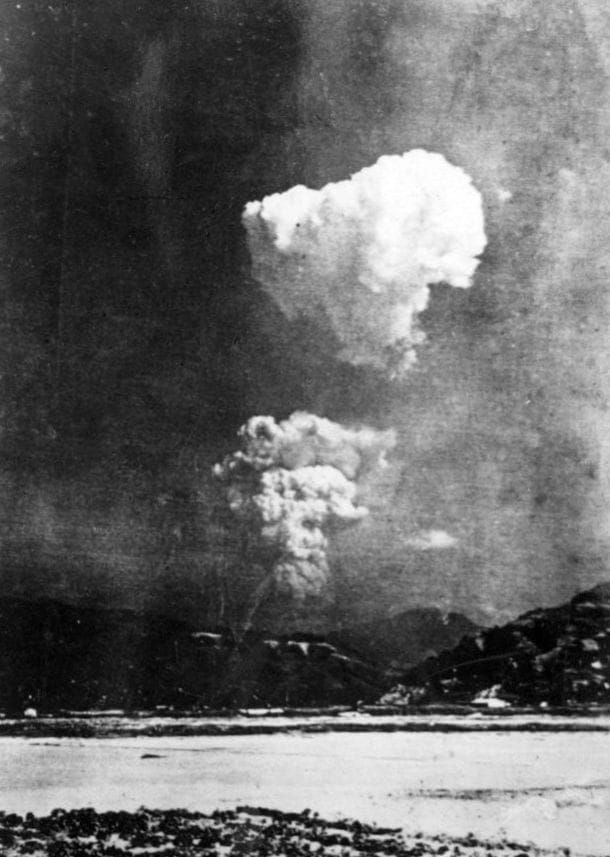
by Bea Groves-McDaniel
On Monday, August 6th, 1945, at 08:15 am (Japanese time), the world's first nuclear bomb used in anger detonated over Shima Surgical Clinic in the city of Hiroshima.
The bomb was a primitive small-yield model by contemporary standards. Gun-type in design, and expected to give an explosion equivalent to around 16,000 tonnes of TNT. A 16-kiloton bomb. Compare that to the 100-kiloton warheads commonly manufactured today. Or the multi-megaton giants test-detonated in the 1960s.
An atomic bomb is not like conventional explosives. It was (and is) totally unlike previous bombs. Not even the biggest of the older weapons was anything like it. It also had multiple consequences. Not just the blast from the explosion, but also other effects just as deadly.
Initially there's the nuclear 'flash' which is localised and immediately converts anything in a few hundred yard's radius into plasma. EVERYTHING is 'vapourised'. But this is not just vapour; this is the shredding of the very fabric of people, buildings, earth, air, and anything else it touches. Ionised superheated particles are all that's left.
Then comes the light. Anyone within a few miles of the detonation and looking in its direction is brilliantly lit by the most intense light. If you're close, you are blinded permanently. Further out, maybe only temporarily. Even putting your hands in front of your face has only a small limiting effect. Those present at atomic tests record having seen the bones silhouetted in their hands.
Then the heat wave, travelling close behind the light. The heat is so intense that anything that can burn does burn. This includes human beings. Animals. Birds. Buildings. Everything. Remember, Japanese towns had plenty of incendiary material in them: houses were still being traditionally built out of wood. But if you were within a few hundred yards of the detonation, it wouldn't matter anyway. The heat was so intense that bodies became smears of soot on nearby walls. Steel melted. Concrete blistered and burnt.
Then the blast wave. The blast sweeps outward from the bomb for miles, with hurricane force. It throws people around like dolls, shatters windows (and sends shards into the flesh of those indoors), blows down or utterly destroys buildings, and leaves a wastland behind.
All of this in a matter of minutes.
But, in some respects, the worst was yet to come.
The survivors (now known as the hibakusha) struggled out from under the wreckage, wondering what had happened to them. They didn't know about the radiation dose they had received, nor about the fallout. Hardly anyone did in those days. But the bomb had swept up earth and debris from the ground and thrown it aloft into the atmosphere. This fine dust and dirt was highly radioactive, and it only took a drop in air temperature for it to fall back to the city again. As a Black Rain.
People who were badly hurt walked in the rain to cool their burns. They clambored into the river where the dirt had settled to avoid the flames. They drank the rain.
They died. Not quickly, but slowly, from the extreme effects of radiation sickness. And if they didn't die then, they went on dying later as the post-irradiation effects led to cancer.
On that day the bomb killed 90,000 to 166,000 people in Hiroshima. 90% of these were civilians.
Three days later, another bigger bomb (20-kilotons) fell on Nagasaki.
Angry Flames
Pushing up through smoke
From a world half darkened
By overhanging cloud.
The shroud that mushroomed out
And struck the dome of the sky
Black, red, blue, dance in the air
Merge.
Scatter glittering sparks already tower
Over the whole city.
Quivering like seaweed
The mass of flames spurts forward
Popping up in the dense smoke
Crawling out, wreathed in fire
Countless human beings on all fours
In a heap of embers that erupt and subside
Hair rent, rigid in death
There smoulders a curse.