
𝗛𝗲𝗻𝗿𝘆 𝗣𝘂𝘁𝗲𝗿 𝗮𝗻𝗱 𝘁𝗵𝗲 𝗜𝗻𝘁𝗲𝗿𝗱𝗶𝗺𝗲𝗻𝘀𝗶𝗼𝗻𝗮𝗹 𝗖𝘂𝗽𝗯𝗼𝗮𝗿𝗱
𝗖𝗵𝗮𝗽𝘁𝗲𝗿 𝗢𝗻𝗲: 𝗧𝗵𝗲 𝗕𝗼𝘆 𝗪𝗵𝗼 𝗪𝗮𝘀 𝗠𝗼𝘃𝗲𝗱 𝗢𝗻
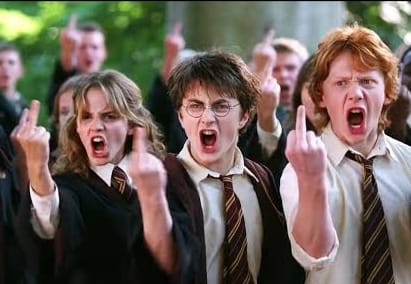
Henry Puter was the most bullied boy in Year Eight, which was saying something, because Year Eight at Hillside Comprehensive had a great deal of competition for the position. He had been taken into care twice — once when his parents forgot to pick him up from school for three days, and once when the council found him living alone in a flat with nothing but a mattress, a kettle, and seventeen boxes of value-range pot noodles. Both times, the authorities had done the thing that authorities always do when dealing with families like the Puters: precisely not enough and far too late.
His parents, Kevin and Sharon, had eventually "𝘵𝘶𝘳𝘯𝘦𝘥 𝘢 𝘤𝘰𝘳𝘯𝘦𝘳", which in the language of social services meant they had stopped being catastrophically useless long enough to get him back. This was celebrated as a triumph. In the normal world — the world of Miggles, or Moggles, or something, as Henry had once heard someone call them, though he didn't know how he knew the word.
Henry lived in a three-bedroom council house on the far outskirts of a town that was itself on the far outskirts of nowhere. The house had been allocated to the Puters because the previous tenants had burnt it down, and Kevin had specifically requested a property "𝘸𝘦𝘭𝘭 𝘢𝘸𝘢𝘺 𝘧𝘳𝘰𝘮 𝘵𝘩𝘰𝘴𝘦 𝘬𝘪𝘯𝘥𝘴 𝘰𝘧 𝘱𝘦𝘰𝘱𝘭𝘦." The council had obliged with their usual enthusiasm.
Henry's parents were not neglectful in the way that villains in stories are neglectful — they were not cruel; they did not lock him in cupboards under the stairs or feed him scraps. They were simply, profoundly, completely uninterested in his existence. He was the spare child, the background figure, the human item of furniture that had arrived in the house already assembled and required no further fixing. They fed him when he appeared for meals, which was irregular enough that the meals themselves had become irregular, folding and stretching across the day like something trying to escape a timetable.
He had just been moved schools — not for any of the usual reasons (not because he had been expelled or attacked a teacher or set fire to anything), but because Kevin and Sharon had got a nicer council house in a different part of town, and the new house happened to be in the catchment area for Hillside Comprehensive. This was the sort of move that happens to people who have learned to expect nothing and therefore accept everything.
The new school was worse than the old school, which had not occurred to Henry as a possibility. Hillside Comprehensive sat at the bottom of a hill — a hill so steep that students arriving from the direction of town had been known to arrive too fast and embed themselves in the front wall — and it smelt of something between damp and chip fat. The headteacher, a man of no fixed expression, had greeted Henry on his first day with the words: "𝘋𝘰𝘯'𝘵 𝘣𝘰𝘵𝘩𝘦𝘳," which Henry took to be a school motto.
His new classmates were a cross-section of young people who had, for various reasons, stopped trying. There was a girl who had brought a reptile to school every day for an entire term. There was a boy who was already taller than the teachers and used this to his advantage. There was a girl who seemed to know things she couldn't possibly know, and a boy who talked to himself in what sounded like Latin, except when he was doing it properly, in which case it sounded like someone reciting poetry while underwater.
Henry's name, incidentally, had been a source of mild amusement to every teacher he had ever encountered. "Puter," they would say, drawing out the syllable with the particular delight of people who had found a word they did not need to pronounce correctly. "Well, aren't you com...poooter?" and then they would laugh in the way that people laugh when they believe themselves to be the only clever person in the room.
Henry did not laugh. Henry did not laugh very much at anything anymore. That all changed on a Tuesday in October.
It happened in the stock cupboard. Hillside Comprehensive had many stock cupboards, which was the name the school gave to rooms that were too small, too dark, and too full of broken furniture to serve any other purpose. The one on the second floor, behind the history department, was particularly unpromising: it contained two filing cabinets, a broken globe, several boxes of worksheets from 2007, a traffic cone of unknown provenance, and — inexplicably — a rusty old coat hanger hanging from a nail. Henry had been sent there by his English teacher, Mrs. Hadid, who had asked him to fetch "𝘁𝗵𝗲 𝗮𝗺𝗯𝗲𝗿 𝘀𝗵𝗲𝗲𝘁𝘀," which Henry suspected did not exist, but which he was now standing in front of a filing cabinet trying to find, in a cupboard that smelt of dust and something that had once been alive.
It was while he was standing there — specifically, while he was standing there with his hand on the cold metal handle of the second filing cabinet, specifically while he was not finding any amber sheets — that he noticed the coat hanger. It was hanging from a nail. Just a nail, driven into the plaster between two shelves. And on it, THE coat hanger. The kind you get from a dry cleaner. Bent slightly. A little rusty. Completely ordinary in every way except that Henry felt, suddenly and without reason, that he should pull it.
He paused. In Henry's experience, things that told you to do things for no reason were either traps or madness, and both were bad. He had learned this from experience. He had learned most things from experience, and the things he had learned were uniformly depressing.
But.
But the coat hanger was dusty. Dusty in a way that suggested it had been there a very long time, untouched and unremarked upon, while filing cabinets were opened and closed and amber sheets were presumably fetched or not fetched by generations of students. The coat hanger had been there for years, possibly decades, and no one had ever pulled on it.
And there was something else. A feeling. A sense that the air in this particular corner of the cupboard was different—that it was not quite the same air as the rest of the cupboard, and the rest of the cupboard was not quite the same as the corridor, and the corridor was not quite the same as the school, because the school existed in a different relationship to this particular square foot of space than it did to any other.
Henry reached up and pulled the coat hanger down. He held it in his hand. It was cold. He thought about what to say. He had no idea what to say. He had no reason to say anything at all. The coat hanger was just a coat hanger. He was just a boy in a stock cupboard. But he knew, with a certainty he could not explain and did not trust, that he was supposed to say "𝘧𝘰𝘶𝘳 𝘢𝘯𝘥 𝘵𝘩𝘳𝘦𝘦-𝘲𝘶𝘢𝘳𝘵𝘦𝘳𝘴". He didn't know why four and three-quarters. He didn't know why he was supposed to say anything. But he opened his mouth, and the words came out, and they were the following:
"𝘍𝘰𝘶𝘳 𝘢𝘯𝘥 𝘵𝘩𝘳𝘦𝘦-𝘲𝘶𝘢𝘳𝘵𝘦𝘳𝘴."
And then he closed the cupboard door behind him.
And then the cupboard was not a cupboard anymore. When Henry opened his eyes — though he hadn't realised he'd closed them — he was standing in a completely different place. He was standing on a street. A street that could not possibly exist inside a school, let alone a stock cupboard. It was broad and cobbled and lined with buildings that seemed to lean toward each other like conspirators, and the sky above was the deep, impossible blue of a colour that does not exist outside of stories. People were walking past him in both directions, and every single one of them was doing something extraordinary. A woman was reading a newspaper that was on fire. She was not alarmed by this. A man was carrying a ladder that was floating three inches above his head. Two children — two children — were riding a bus that had no wheels and was moving through the air at approximately fifty miles an hour. Henry stood very still. A poster on the nearest building read: 𝗪𝗘𝗟𝗖𝗢𝗠𝗘 𝗧𝗢 𝗛𝗨𝗚𝗢𝗪𝗢𝗥𝗞𝗦 — 𝗪𝗛𝗘𝗥𝗘 𝗘𝗩𝗘𝗥𝗬 𝗖𝗛𝗜𝗟𝗗 𝗖𝗔𝗡 𝗕𝗘 𝗘𝗫𝗧𝗥𝗔𝗢𝗥𝗗𝗜𝗡𝗔𝗥𝗬. Below it, in smaller letters: 𝗠𝗮𝗴𝗶𝗰 𝗶𝘀 𝗻𝗼𝘁 𝗮 𝗴𝗶𝗳𝘁. 𝗜𝘁 𝗶𝘀 𝗮 𝘀𝗸𝗶𝗹𝗹. 𝗔𝗻𝗱 𝗹𝗶𝗸𝗲 𝗮𝗹𝗹 𝘀𝗸𝗶𝗹𝗹𝘀, 𝗶𝘁 𝗰𝗮𝗻 𝗯𝗲 𝘁𝗮𝘂𝗴𝗵𝘁 — 𝘁𝗼 𝗮𝗻𝘆𝗼𝗻𝗲 𝘄𝗶𝗹𝗹𝗶𝗻𝗴 𝘁𝗼 𝗹𝗲𝗮𝗿𝗻. There was a picture of a school on the poster. A school that looked very much like Hillside Comprehensive, except that it had turrets, and the turrets had turrets.
Henry looked back at the stock cupboard door behind him. It was still there — an ordinary wooden door, set into the side of an ordinary building, standing incongruously in the middle of this impossible street like a prop from a play about some child magician or other. He reached for the handle. The door was not locked. It opened. He looked through it and saw the stock cupboard. Dusty. File cabinets. Traffic cone. The amber sheets that did not exist. He closed the door again. He stood on the cobbled street, in the impossible blue sky, next to the door that was also a cupboard, and he thought very clearly:
Oh!
And then, with the particular clarity of a person who has just realised that the world is significantly stranger than they had been led to believe, he thought:
Oh no.
And then a voice behind him said: "𝘠𝘰𝘶 𝘭𝘰𝘰𝘬 𝘭𝘪𝘬𝘦 𝘺𝘰𝘶'𝘳𝘦 𝘯𝘦𝘸." Henry turned around. The boy standing in front of him was approximately Henry's age, with hair the colour of a fire that had consumed his head halfway through and the slightly manic expression of someone who had just found something privately interesting. He was wearing a school uniform that was identical to Henry's — grey trousers, a white shirt, and a maroon tie — except that the tie had a crest on it, and the crest had a symbol that Henry would later learn represented a phoenix but which at the time looked to him like a chicken having a religious experience. "𝘐'𝘮 𝘙𝘶𝘯𝘥𝘭𝘦," said the boy. "𝘙𝘶𝘯𝘥𝘭𝘦 𝘗𝘶𝘳sley. 𝘈𝘯𝘥 𝘺𝘰𝘶 𝘫𝘶𝘴𝘵 𝘤𝘢𝘮𝘦 𝘵𝘩𝘳𝘰𝘶𝘨𝘩 𝘵𝘩𝘦 𝘊𝘶𝘱𝘣𝘰𝘢𝘳𝘥, 𝘥𝘪𝘥𝘯'𝘵 𝘺𝘰𝘶?" Henry looked at the door. "𝘠𝘦𝘴," he said. "𝘠𝘰𝘶'𝘳𝘦 𝘵𝘩𝘦 𝘧𝘪𝘳𝘴𝘵 𝘰𝘯𝘦 𝘪𝘯 𝘯𝘪𝘯𝘦 𝘺𝘦𝘢𝘳𝘴," said Rundle. "Most people use the Platform at King's Cross. But you used the Cupboard. 𝘛𝘩𝘢𝘵'𝘴 —" He paused, considering. "𝘛𝘩𝘢𝘵'𝘴 𝘢𝘤𝘵𝘶𝘢𝘭𝘭𝘺 𝘮𝘦𝘯𝘵𝘢𝘭, 𝘮𝘢𝘵𝘦."
Henry opened his mouth to explain that he hadn't chosen the Cupboard, that he had simply been sent to fetch some amber sheets, and then a coat hanger had told him to say something, and he'd obeyed without knowing why. But before he could say any of this, a voice — a different voice, a girl's voice, sharp and precise — cut across the conversation: "𝘙𝘶𝘯𝘥𝘭𝘦. 𝘞𝘩𝘢𝘵 𝘥𝘪𝘥 𝘸𝘦 𝘴𝘢𝘺 𝘢𝘣𝘰𝘶𝘵 𝘪𝘯𝘵𝘦𝘳𝘤𝘦𝘱𝘵𝘪𝘯𝘨 𝘯𝘦𝘸 𝘢𝘳𝘳𝘪𝘷𝘢𝘭𝘴?"
The girl who appeared beside them was tall and composed and had the air of someone who had already decided how things were going to be and was waiting for the universe to catch up. She wore the same uniform as Rundle but wore it as though it had been designed specifically for her and the designers had done their very best to oblige. Her hair was the colour of old copper pennies, and her eyes were the colour of the sky in this impossible place — which is to say, a colour that Henry had no name for. "𝘏𝘦𝘭𝘪𝘤𝘰𝘯𝘪𝘢", said Rundle, with the specific tone of a person who has been caught but is not remotely sorry. "𝘛𝘩𝘪𝘴 𝘪𝘴 — 𝘢𝘤𝘵𝘶𝘢𝘭𝘭𝘺, 𝘐 𝘥𝘰𝘯'𝘵 𝘬𝘯𝘰𝘸 𝘩𝘪𝘴 𝘯𝘢𝘮𝘦." "𝘏𝘦𝘯𝘳𝘺," said Henry. "𝘏𝘦𝘯𝘳𝘺," said Heliconia, and something flickered across her face — something that might have been recognition, or might have been concern, or might have been the beginning of a headache. "𝘙𝘪𝘨𝘩𝘵. 𝘞𝘦𝘭𝘭, 𝘏𝘦𝘯𝘳𝘺. 𝘞𝘦𝘭𝘤𝘰𝘮𝘦 𝘵𝘰 𝘏𝘶𝘨𝘰𝘸𝘰𝘳𝘬𝘴. 𝘛𝘩𝘦 𝘴𝘤𝘩𝘰𝘰𝘭 𝘸𝘩𝘦𝘳𝘦 𝘮𝘢𝘨𝘪𝘤 𝘪𝘴 𝘵𝘢𝘶𝘨𝘩𝘵. 𝘛𝘩𝘦 𝘱𝘭𝘢𝘤𝘦 𝘦𝘷𝘦𝘳𝘺𝘰𝘯𝘦 𝘵𝘩𝘪𝘯𝘬𝘴 𝘥𝘰𝘦𝘴𝘯'𝘵 𝘦𝘹𝘪𝘴𝘵. 𝘛𝘩𝘦 𝘣𝘪𝘨𝘨𝘦𝘴𝘵 𝘴𝘦𝘤𝘳𝘦𝘵 𝘪𝘯 𝘧𝘰𝘶𝘳 𝘥𝘪𝘮𝘦𝘯𝘴𝘪𝘰𝘯𝘴. " She paused. "𝘈𝘯𝘥, 𝘏𝘦𝘯𝘳𝘺 — 𝘪𝘵'𝘴 𝘪𝘯 𝘷𝘦𝘳𝘺 𝘴𝘦𝘳𝘪𝘰𝘶𝘴 𝘵𝘳𝘰𝘶𝘣𝘭𝘦."
To be continued?


[Perhaps. If there's enough demand].