
2026: On Feminism
To speak of feminism is to enter a battlefield of definitions, histories, and deeply held convictions. It is also to enter one of the most consequential intellectual and political traditions of the modern era.
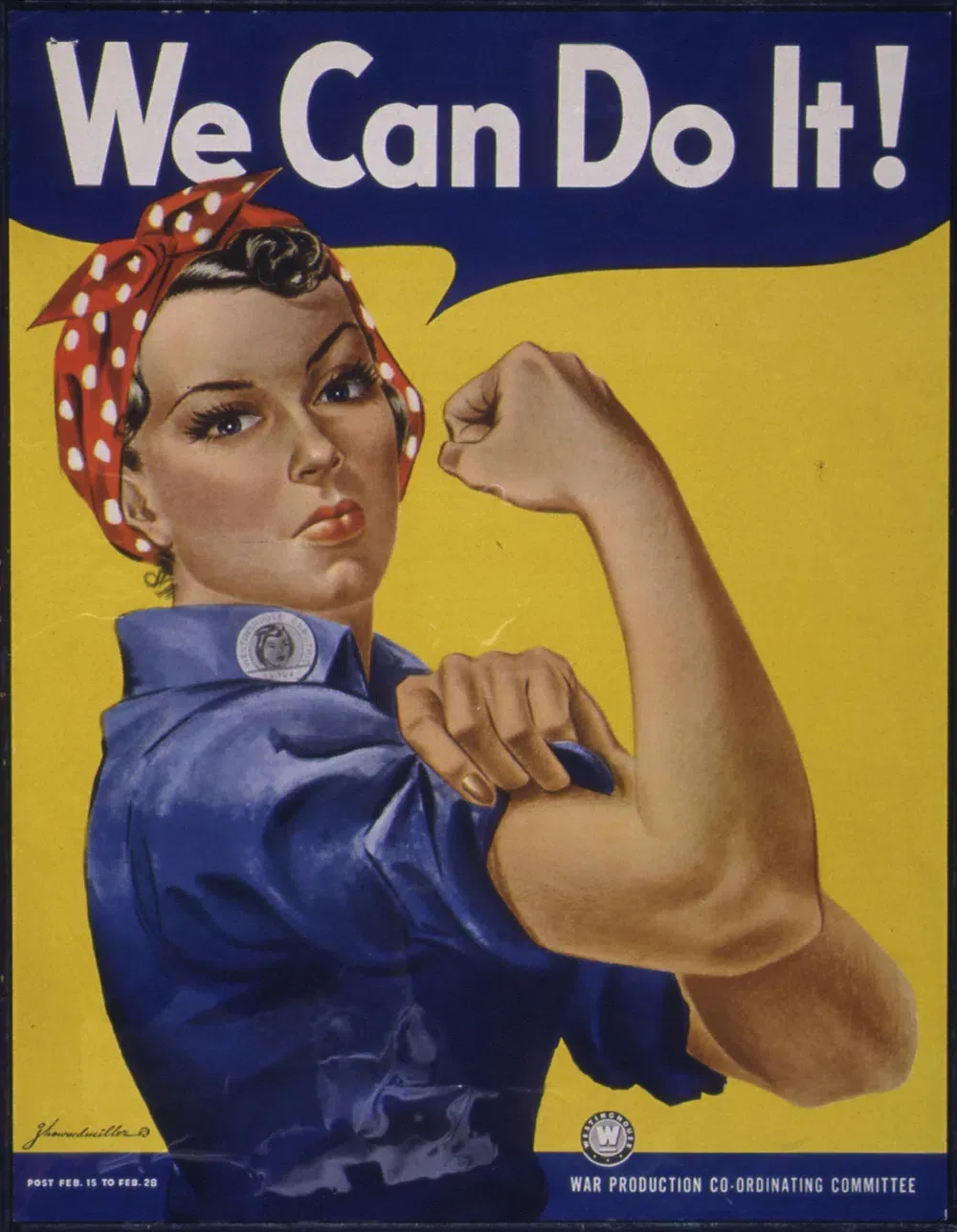
On Feminism
By Mrs Beatrix E. Groves-McDaniel BA Hons LCGI FIFL FSET
Research Assistant: SAL-9000
27th August 2026
Introduction
To speak of feminism is to enter a battlefield of definitions, histories, and deeply held convictions. It is also to enter one of the most consequential intellectual and political traditions of the modern era, a tradition that has transformed the lives of half of humanity and which remains essential to any serious reckoning with justice, power, and human freedom. This essay offers a wide-ranging overview: from definitional questions about what feminism actually means, through the historical development of feminist thought and activism, to a critical examination of the ideologies that have appropriated the language of women's rights while betraying its founding commitments. What emerges is a tradition that is living, contested, and as urgent today as it has ever been.
Development
What Do We Mean by Feminism?
Ask ten people what feminism means and you will likely receive ten different answers. This is not merely a sign of confusion; it reflects the fact that feminism is, at its heart, a political movement driven by lived experience, and experience is always particular. And yet, something holds these particulars together. The feminist claim, at its most basic, is that the social, political, and economic arrangements of society are not natural or inevitable but are instead constructed, maintained, and changeable. More specifically, feminism identifies the subordination of women to men as one such constructed arrangement, one that confers unearned privilege and power upon men while systematically disadvantaging women.
The sociologist Sylvia Walby, whose work on patriarchy has been influential across several decades, defined patriarchy simply as "a system of social structures and practices in which men dominate, oppress and exploit women" (Walby, 1990, p. 20). This definition is useful but should not be mistaken for the last word. Feminists have debated for decades whether patriarchy is best understood as a single, overarching structure or as a plurality of overlapping and sometimes competing systems.
The Black feminist tradition, in particular, argued powerfully from the 1970s onwards that any account of patriarchy that did not simultaneously attend to race, class, and sexuality was fatally incomplete (Combahee River Collective, 1977). bell hooks, one of the most widely read feminist voices in the English-speaking world, defined feminism quite simply as "a movement to end sexist oppression" (hooks, 2000, p. viii). That definition is spare enough to be inclusive and sharp enough to be political.
In everyday life, feminism often operates as a lens through which the ordinary becomes strange and therefore visible. Why is it that women's pain is so often dismissed in medical settings? Why is it that women who protest are called hysterical while men who protest are called passionate? Why is it that women still do the vast majority of unpaid domestic labour even when they work full-time? These are not individual grievances; they are structural patterns, and naming them as such is the first act of feminist consciousness.
Were All Societies Patriarchal?
The question of whether patriarchy is universal is one of the most debated in feminist scholarship, and the honest answer is that the evidence does not support a simple yes or no. The anthropologist Peggy Reeves Sanday (1981), in a cross-cultural study of foraging societies, found that while many showed evidence of male dominance, a significant minority exhibited more egalitarian gender relations, and at least some appeared to be genuinely matrilineal or matrilocal in their primary social organisation. This suggests that patriarchy, while widespread, is not a biological necessity; it is a pattern that human societies have arrived at repeatedly, but not inevitably.
The historical record is complex. Some scholars, notably Marvin Harris (1974), have argued that patriarchy emerged alongside agriculture and the development of private property, as men sought to control women's reproductive capacity to ensure the inheritance of material goods.
Others, such as Federici (2004), have located the consolidation of patriarchy specifically in the early modern period, as part of the transition to capitalism, when women's bodies became instruments of labour reproduction that capital required but did not wish to pay for. What is clear is that patriarchy takes different forms in different societies and different historical periods; the specific content of gendered oppression is always socially produced.
What is also clear is that every known society has had some form of gender hierarchy, though the degree and character of that hierarchy varies enormously. This ubiquity, combined with this variability, is the key fact that feminism seeks to explain rather than naturalise.
The Origins of Feminist Consciousness
Feminist consciousness, by which we mean the awareness that one's subordinate social position is unjust rather than inevitable, did not emerge from nowhere. Its emergence in Western society is typically traced to the Enlightenment, the period in the seventeenth and eighteenth centuries when ideas about natural rights, individual reason, and human progress began to challenge traditional hierarchies of all kinds.
Mary Wollstonecraft's A Vindication of the Rights of Woman (1792) is widely regarded as the foundational text of Anglo-American feminist thought. Wollstonecraft argued, directly and polemically, that the prevailing view of women as naturally irrational and suited only to domestic life was not a reflection of nature but a product of denied education and enforced dependency. If women were permitted to develop their rational capacities, they would become equal to men in all the ways that mattered.
The origins of feminist consciousness are also to be found in the lived conditions of women in the period. The Industrial Revolution drew women into factories and mills, where they worked long hours for wages that were systematically lower than those paid to men and where their bodies were subject to new forms of control and surveillance. This experience of exploitation, combined with the new political language of rights, created the conditions in which women could begin to name their oppression and demand its elimination.
First Wave Feminism
First Wave feminism, broadly understood as the period from the mid-nineteenth century to the outbreak of the First World War, was characterised above all by the campaign for the franchise. In Britain, the fight was long, bitter, and punctuated by acts of civil disobedience that would today be called activism but which at the time were called terrorism. The suffragettes of the Women's Social and Political Union, led by Emmeline Pankhurst and her daughters Christabel and Sylvia, adopted increasingly confrontational tactics in their campaign for votes for women on the same terms as men.
The hunger strikes, the force-feeding, the property damage, and the brutal prison conditions shocked the nation and divided the movement. It is worth remembering that the Representation of the People Act 1918, which granted votes to women over the age of thirty, was passed not because the government had become persuaded of the justice of the cause but because the contribution of women to the war effort had made the exclusion of all women from the franchise politically untenable.
First Wave feminism was not, however, only about the vote. It addressed a wide range of issues including property rights, access to higher education, marriage and divorce law, and the condition of women in the new industrial cities. Josephine Butler, for example, led a sustained campaign against the Contagious Diseases Acts, which subjected women in garrison towns to forced medical examinations on the basis of suspicion alone, while leaving the soldiers who used their bodies entirely unregulated. The campaign succeeded in repealing the Acts in 1886 and stands as an early example of feminist campaign strategy: the exposure of hypocrisy, the refusal to accept the framing of the powerful, and the insistence that the suffering of the most marginalised women was a feminist concern.
Second Wave Feminism
If First Wave feminism had a single unifying demand, it was the vote. Second Wave feminism, which emerged in the late 1960s and dominated the 1970s and 1980s, was far more diffuse and far more ambitious. Its central contribution was the slogan 'the personal is political', which announced that the intimate spaces of domestic life, previously considered beyond the reach of politics, were in fact saturated with power relations and therefore proper objects of political struggle. The family, sexuality, motherhood, housework, and beauty standards all became legitimate sites of feminist analysis and activism.
Betty Friedan's The Feminine Mystique (1963) is often identified as the spark that ignited Second Wave feminism in the United States. Friedan interviewed suburban housewives and found, repeatedly, a condition she called "the problem with no name": a dissatisfaction, a restlessness, a sense that something was missing from lives organised entirely around husband, children, and home. Friedan argued that this was not a personal failing but a structural condition, produced by a culture that defined women's fulfilment exclusively in domestic terms while denying women access to the public world of work, ideas, and political participation.
In Britain, Second Wave feminism found institutional expression in the formation of the National Union of Women Teachers and, more broadly, in the women's liberation movement that emerged from the student and anti-war movements of the late 1960s. The movement organised around four key demands: equal pay for equal work, equal educational and job opportunities, free contraception and abortion on request, and twenty-four-hour nurseries. These demands addressed the material conditions of women's lives and insisted that the personal suffering of individual women had political causes and required political solutions.
Second Wave feminism also produced a rich theoretical tradition. Shulamith Firestone, in The Dialectic of Sex (1970), argued that the oppression of women was rooted not only in culture but also in biology and that only the development of reproductive technology that separated sex from reproduction could finally liberate women from the tyranny of their bodies. Simone de Beauvoir, writing in France a generation earlier, had already made the essential point: "One is not born, but rather becomes, a woman" (de Beauvoir, 1949, p. 293). This constructivist understanding of gender became foundational to the entire subsequent development of feminist theory.
Third Wave Feminism
Third Wave feminism emerged in the early 1990s, partly as a response to the perceived limitations and exclusions of the Second Wave. Where Second Wave feminism had been dominated by the concerns of white, middle-class, heterosexual women, Third Wave feminism insisted on the centrality of difference. The intersectionality framework developed by Kimberlé Crenshaw (1989), though technically preceding the Third Wave, became one of its defining intellectual tools: the argument that gender could not be theorised in isolation from race, class, sexuality, disability, and nationality and that the experience of a Black woman was not simply the sum of the experience of being Black and being a woman but something distinct and irreducible to either.
Third Wave feminism also embraced a more playful, more individualised approach to gender. Judith Butler's Gender Trouble (1990) had a profound effect, arguing that gender was not a stable identity that expressed biological sex but was instead a set of performances that produced the illusion of stable sex categories. This destabilisation of the gender binary was liberating for many women and for trans people, but it was also contested within feminism itself, a contest that has only intensified in the years since and to which we must return.
Could There Be a Fourth Wave?
The question of whether we are now in a Fourth Wave of feminism is contested. Some commentators, noting the resurgence of feminist activism since the #MeToo movement began in 2017, have argued that a new wave is underway, distinguished by its use of digital technologies, its global reach, and its particular focus on sexual violence and harassment. Others are sceptical, arguing that the Third Wave has not ended and that the concept of successive waves, while historically useful, can obscure the continuities and overlaps between feminist movements and suggest a false teleology of progress.
What is beyond doubt is that feminism remains a vital and urgent political force in 2026. The repeal of Roe v. Wade in the United States in 2022 demonstrated that hard-won rights cannot be taken for granted, that the gains of feminist activism are always conditional and contestable, and that the struggle for reproductive justice is far from over.
In Britain, the continuing failure to address violence against women and girls, as evidenced by the systematic abuse exposed at figures like David Carrick and the murders of women by police officers who should have been trusted as protectors, demonstrates that the First Wave's analysis of male violence against women remains as relevant as ever.
TERF Ideology and the Gender-Critical Movement
One of the most significant developments in the politics of gender in recent years has been the emergence of what is commonly called gender-critical ideology, and the related phenomenon of TERF (Trans-Exclusionary Radical Feminist) activism. It is important to be clear about what this ideology is and what it is not, and above all to be clear that it does not constitute a form of feminism.
Gender-critical ideology holds that biological sex is a material fact that categorises human beings into two discrete and mutually exclusive groups, male and female, and that gender identity is a harmful fiction imposed by an ideology that threatens women's rights, women's spaces, and women's sports. Gender-critical activists argue that trans women are men who are seeking to access women's spaces and to appropriate women's identity for misogynistic purposes.
This ideology is not feminism for several interconnected reasons.
First, it rests on a form of biological fundamentalism that reduces women to their reproductive capacity, effectively defining women as the class of humans who menstruate and gestate. This is a position that would have been immediately recognisable to the patriarchal thinkers against which First Wave feminists like Wollstonecraft polemicised.
Second, gender-critical ideology systematically ignores intersectionality, the critical framework that has been central to feminist thought since at least the 1970s. By treating gender as a standalone axis of oppression, disconnected from race, class, and sexuality, gender-critical ideology repeats precisely the error that Black feminist scholars identified in the mainstream women's movement of the 1970s.
Third, gender-critical ideology has become thoroughly entangled with the Far Right, a development that has been documented extensively by researchers and by investigative journalists. Anti-trans activism has served as a gateway to more general far-right politics; gender-critical organisations have shared platforms, funding sources, and rhetorical strategies with groups whose primary commitment is not to women's rights but to the defence of traditional hierarchies. This is not a coincidence, and it is not a distortion of an otherwise defensible position; it is a direct product of an ideology that is fundamentally incompatible with the feminist commitment to dismantling all forms of gender hierarchy.
Conclusion
Feminism has never been a single thing, and any account that presents it as such is falsifying the record. From Wollstonecraft's rationalist polemics to intersectionality theory, from the suffragettes' civil disobedience to #MeToo, from the campaign against the Contagious Diseases Acts to the demand for reproductive justice, feminism has been a living tradition of thought and action, always responsive to the particular conditions and demands of the historical moment, always in debate with itself about means, ends, and the nature of the oppression it seeks to abolish.
What ties these moments together is not a doctrine but a conviction: that the gender order is not natural, that it produces unnecessary suffering on a vast scale, and that it can and should be changed. That conviction remains as radical and as necessary today as it was in 1792. The personal is still political. The structures of male dominance are still with us, still entrenched, still adaptive. And the struggle for a world in which gender does not determine life chances, bodily autonomy, freedom from violence, or access to power is still unfinished. The essay on the meaning of feminism is not, therefore, a piece of history. It is an intervention in a living argument.
Bibliography
Butler, J. (1990) Gender Trouble: Feminism and the Subversion of Identity. New York: Routledge.
Combahee River Collective (1977) 'A Black Feminist Statement', in Anzaldúa, G. and Moraga, C. (eds.) This Bridge Called My Back: Writings by Radical Women of Color. New York: Kitchen Table: Women of Color Press.
Crenshaw, K. (1989) 'Demarginalizing the Intersection of Race and Sex: A Black Feminist Critique of Antidiscrimination Doctrine, Feminist Theory and Antiracist Politics', University of Chicago Legal Forum, vol. 1989, no. 1, pp. 139–167.
de Beauvoir, S. (1949) Le Deuxième Sexe. Paris: Gallimard. Translated as The Second Sex (1953) by H.M. Parshley. London: Jonathan Cape.
Federici, S. (2004) Caliban and the Witch: Women, the Body and the Original Accumulation. New York: Autonomedia.
Firestone, S. (1970) The Dialectic of Sex: The Case for Feminist Revolution. New York: William Morrow.
Friedan, B. (1963) The Feminine Mystique. New York: W.W. Norton.
Harris, M. (1974) 'Why Men Dominate Women', New York Times Magazine, 13 April.
hooks, b. (2000) Feminist Theory: From Margin to Center. 2nd edn. London: Pluto Press.
Sanday, P.R. (1981) 'Female Power and Male Dominance: On the Origins of Sexual Inequality', Cambridge: Cambridge University Press.
Walby, S. (1990) Theorizing Patriarchy. Oxford: Basil Blackwell.
Wollstonecraft, M. (1792) A Vindication of the Rights of Woman. London: J. Johnson.